
Salt pan (salt flat): formation, characteristics, distribution and uses
A salt pan (salt flat) is a flat landscape covered by salt and evaporite minerals, formed where water evaporates faster than it arrives—important for ecology, mineral resources, and distinctive landforms.
Overview
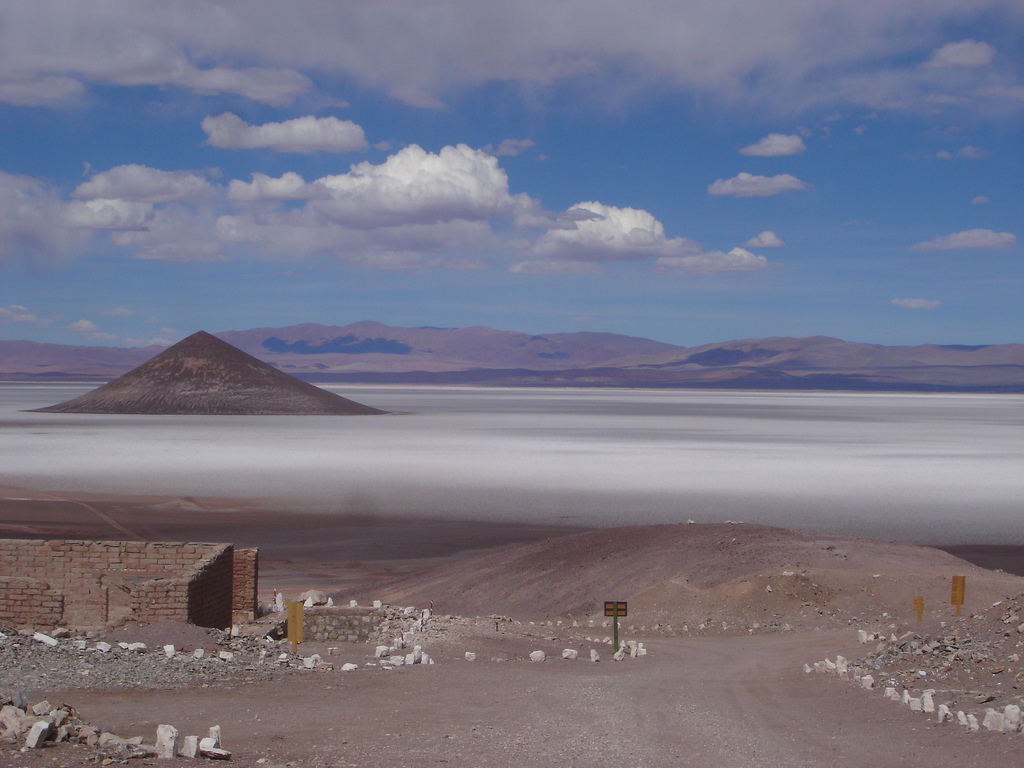
A salt pan, also called a salt plain or salt flat, is a broad, flat expanse of ground where evaporite minerals — most notably salt and other minerals — concentrate on the surface. These surfaces are typically pale or white when dry and may become glossy or mirror-like when intermittently flooded. They form in landscapes where evaporation exceeds water input, leaving dissolved solids behind as water evaporates.
Image gallery
4 Images


Formation and characteristics
Salt pans commonly occupy closed basins (endorheic basins) where water drains into a shallow depression but does not exit to the sea. Seasonal or episodic standing water from rainfall or inflow accumulates, then evaporates. Over time, repeated cycles produce a crust of salts and other evaporites. Important processes include capillary transport of saline groundwater to the surface, chemical precipitation of halite and gypsum, and mechanical cracking that creates polygonal patterns. The surface can vary from a thin, powdery crust to hard plates several centimeters thick.
Key traits include:
- High albedo (reflective surface) when dry.
- Polygonal desiccation cracks and crystalline textures.
- Seasonal variability — pans may be muddy or flooded after rains and hard-packed the rest of the year.
- Association with arid or semi-arid climates where evaporation outpaces precipitation.
Distribution and notable examples
Salt pans appear worldwide wherever conditions concentrate salts, including interior deserts and coastal sabkhas. Well-known inland examples include South America’s Salar de Uyuni and North America’s Bonneville Salt Flats, while other significant flats occur across the Sahara and in large basins of the desert world. Specific regions with prominent pans include the Kalahari, the Rann of Kutch, parts of the western United States, and the central deserts of Australia. Smaller pans form where former lakes or ponds have dried up.
Uses, ecology and cultural importance
Salt pans are economically and ecologically significant. Economically, they provide mineral resources such as sodium chloride, gypsum and, in some locations, lithium-rich brines beneath the surface. Flats like the Salar de Uyuni attract mining interest and also tourism; the flat, reflective surfaces are used for scientific calibration and photography. Ecologically, pans support specialized life: halophilic microorganisms, salt-tolerant plants at margins, and migratory birds that exploit seasonal wetlands and brine shrimp. Culturally, salt has been a trade good for millennia, and salt-producing landscapes have influenced human settlement and routes.
Distinctions and environmental concerns
Salt pans differ from coastal salt marshes and tidal flats (which are marine influenced) and from playas (which may be muddy rather than salt-crusted) or sabkhas (coastal, groundwater-influenced flats). Contemporary concerns include impacts from mining and groundwater extraction, which can alter hydrology and damage fragile habitats. Climate variability also affects flooding cycles and the balance of evaporation versus inflow, changing pan extent and surface characteristics.
Further reading and resources
For basic definitions and regional information, see general references and regional studies linked here:
Related articles
Author
AlegsaOnline.com Salt pan (salt flat): formation, characteristics, distribution and uses Leandro Alegsa
URL: https://en.alegsaonline.com/art/86551
Sources
- doi.org : 10.1111/j.1365-3091.1985.tb00478.x