
Rann of Kutch — salt marshes and seasonal salt plain of India and Pakistan
Vast seasonal salt-marsh plain spanning Gujarat (India) and Sindh (Pakistan), divided into the Great and Little Rann; noted for seasonal flooding, salt flats, migratory birds, Kutchi culture and conservation areas.
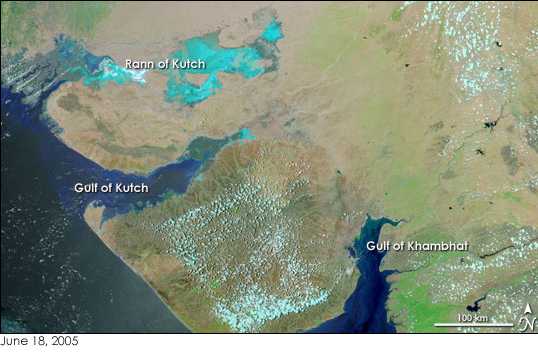
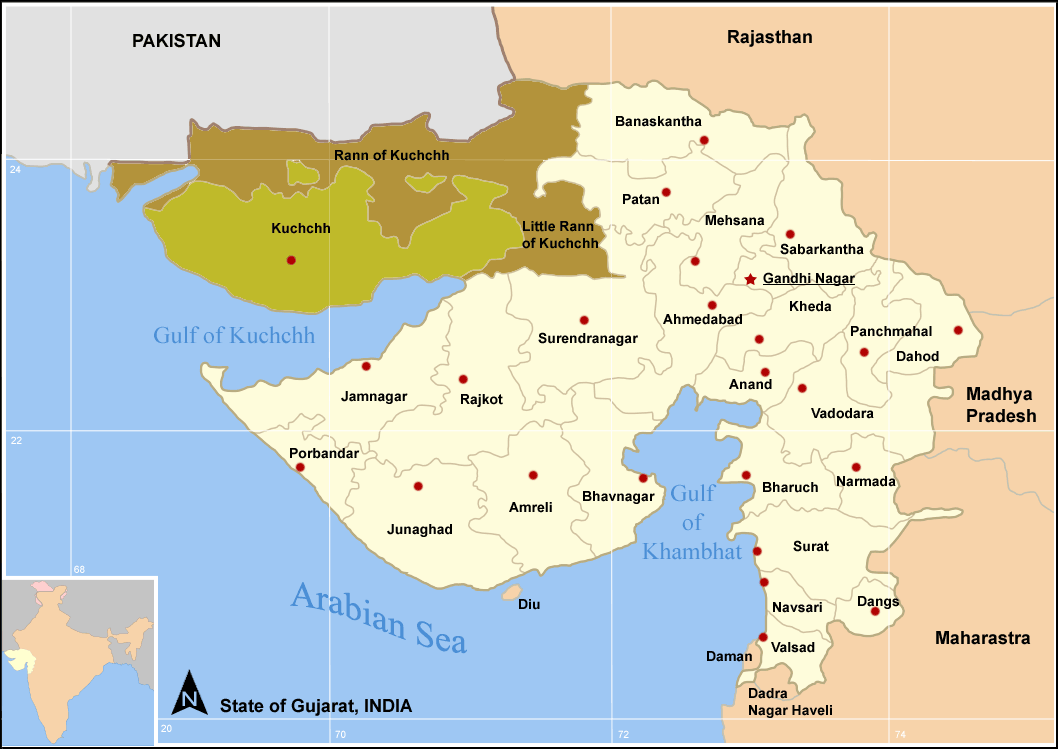
The Rann of Kutch is an extensive area of salt marshes and saline plains in the northwestern Indian subcontinent. It lies largely within the Kutch district of Gujarat and extends toward the southern edge of Sindh. The landscape is typically described in two principal parts: the Great Rann of Kutch and the smaller Little Rann of Kutch. The region is closely associated with the Kutchi people and is often referred to as part of the Kutchi homeland by local communities and cultural accounts.
Image gallery
10 Images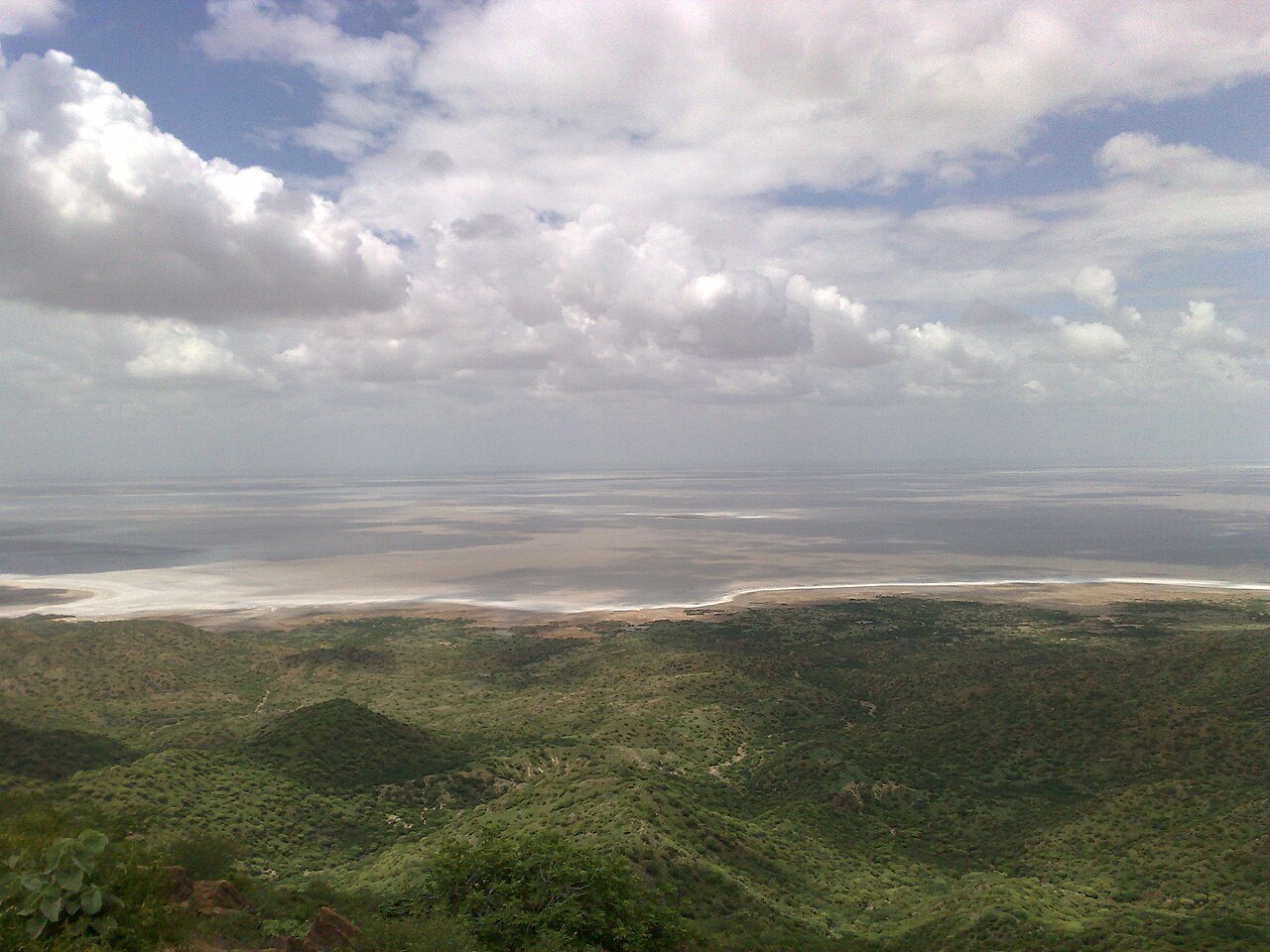



Geography and seasonal dynamics
The Rann covers an area often given as about 7,500 km² (roughly 2,900 sq mi) and is a vast, flat, low-lying salt plain. In the dry season it appears as a hard, white salt crust pierced by sparse salt-tolerant vegetation. During the summer monsoon and periods of high tide, parts of the plain are seasonally inundated with shallow water, transforming the salt flats into a broad, ephemeral wetland that supports breeding and stopover habitat for many bird species.
Ecology and wildlife
The Rann supports a specialised assemblage of brine-tolerant plants and invertebrates and is an important staging and wintering area for migratory waterbirds, including various species of flamingos, waders and waterfowl. The Little Rann contains protected habitat for the Indian wild ass and other desert-adapted mammals. Many local wetlands and grasslands at the Rann margin—such as the Banni plains—provide grazing and seasonal foraging areas that sustain both wildlife and pastoral livelihoods.
Geology and formation
Geologically the Rann is the remnant of an ancient shallow sea and coastal lagoon system that has been infilling with marine and alluvial sediments over long time scales. Periodic changes in sea level, sediment supply from rivers and tectonic adjustments have produced the present low-gradient plain of clays, silts and salts that responds strongly to seasonal rainfall and tidal influence.
Human use, culture and economy
Human presence around the Rann is long-established. Traditional activities include salt harvesting, seasonal pastoralism on adjoining grasslands, and small-scale agriculture where freshwater is available. The region is culturally rich: the Kutchi people maintain distinct languages, crafts, textiles and music. In recent decades the cultural landscape has attracted tourists to seasonal festivals and craft fairs, which highlight local handicrafts and bring additional income to rural communities.
Conservation, management and administration
Parts of the Rann are designated as wildlife reserves and sanctuaries to protect birds and rare mammals; conservation efforts focus on habitat protection, sustainable salt production and managing human-wildlife interactions. The area lies close to international and subnational boundaries and has seen differing administrative arrangements and occasional disputes; readers are advised to consult current sources for the latest status regarding any political claims or management jurisdictions (administrative claims).
Key facts
- Divisions: Great Rann (extensive, highly saline) and Little Rann (smaller, important for wildlife).
- Seasonality: alternates between a dry salt crust and a shallow, seasonally flooded wetland.
- Cultural and economic roles: salt extraction, pastoralism, craft production and seasonal tourism.
- Conservation: hosts protected areas and important migratory bird habitats; faces pressures from development, changing land use and climate variability.
The Rann of Kutch remains one of the subcontinent's most striking examples of a landscape where ecology, geology and human tradition converge: an extreme environment that supports distinctive wildlife and deeply rooted cultural practices, and that continues to draw scientific, cultural and conservation interest.
Related articles
Author
AlegsaOnline.com Rann of Kutch — salt marshes and seasonal salt plain of India and Pakistan Leandro Alegsa
URL: https://en.alegsaonline.com/art/81158
Sources
- gujarattourism.com : "Gujarat Tourism Document"
- wwf.panda.org : WWF - Rann of Kutch Flooded Grasslands
- books.google.com : The Indian forester, Volume 127, Issues 7-12
- gujarattourism.com : "Rann Utsav 2009 | Fairs & Festivals | Home"