
Ballet shoe
Lightweight soft shoes worn for ballet; includes slippers and pointe shoes. Covers materials, construction, history, types, care, and distinctions between practice and performance footwear.
Overview
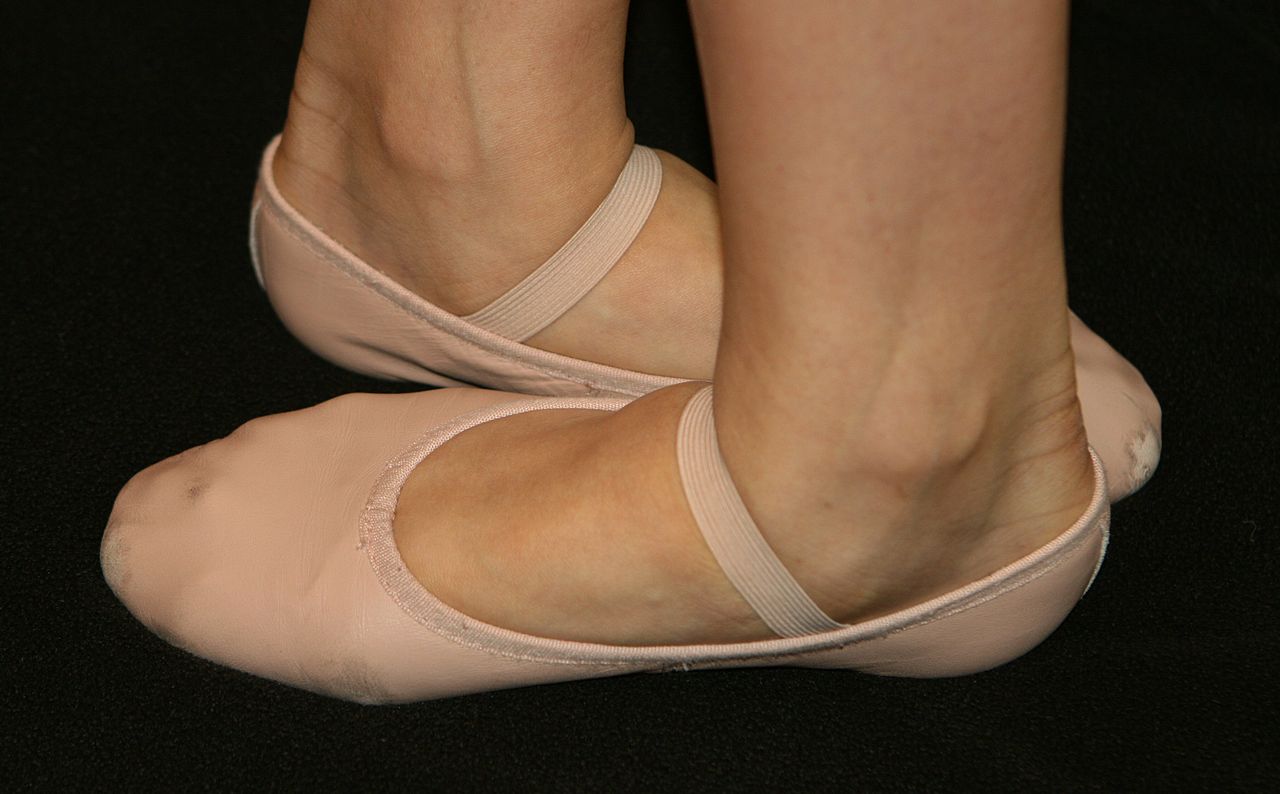
A ballet shoe is a lightweight, flexible shoe designed specifically for ballet dancing and training. It provides a close fit and unobstructed contact between the foot and the floor, allowing dancers to articulate the foot, point the toes, and move with precision. For more on the dance form itself, see ballet dancing.
Image gallery
3 Images

Materials and appearance
Common materials are soft leather, canvas or satin. Leather offers durability and a snug fit; canvas is breathable and easier to wash; satin is used mainly for stage slippers and pointe shoes because of its smooth finish. A typical sole is thin suede or leather to permit sliding and grip. Color choices often follow tradition: many women's slippers are pink while men's are commonly white, black or tan, and performance shoes may be dyed to match costumes—see traditional pink footwear at color conventions.
Construction and types
There are two broad categories: flat ballet slippers and pointe shoes. Slippers come with a full sole or a split sole; the split sole concentrates flexibility under the arch. Pointe shoes have a reinforced toe box and a stiff shank to enable dancers to rise and balance on the tips of their toes. For more on specialized footwear, consult references on pointe shoes.
Typical parts
- Upper: usually leather, canvas, or satin; provides the envelope for the foot (leather and satin variants noted).
- Sole: suede or leather patch, full or split.
- Drawstring or elastic: used to adjust fit at the throat.
- Ribbons and elastics: secure the shoe to the ankle (especially on pointe shoes).
History and development
Early ballet footwear evolved from court shoes; during the 19th century dancers moved toward softer, flatter shoes to enable greater articulation. The technique of dancing en pointe developed in the early 1800s and became a defining feature of classical ballet; pointe construction has been refined since that era to balance support, weight and sound for the stage.
Uses, care and notable distinctions
Ballet shoes are used for classes, rehearsals and performances, with distinct choices depending on activity: durable canvas or leather for daily training, satin or specially finished shoes for stage. Fit is critical—ill-fitting shoes can impede technique and cause injury—so dancers often break in shoes, sew elastics or add padding. Pointe shoes are not used by beginners and require professional fitting and gradual conditioning. Other notable facts include the variety of sole types (split versus full), gendered color traditions, and the short lifespan of performance shoes, which are replaced frequently.
For further reading on technique and footwear fitting, consult dedicated dance resources and manufacturer guides: ballet resources, material notes, fabric choices, costume color, and pointe shoe details.
Related articles
Author
AlegsaOnline.com Ballet shoe Leandro Alegsa
URL: https://en.alegsaonline.com/art/8541