
Saddleback toad (Brachycephalus) — tiny cloud-forest frogs
Small, often brightly colored frogs of the genus Brachycephalus, endemic to montane Atlantic Forests of southeastern Brazil; notable for miniature size, digit reduction and direct development.
Overview
The saddleback toads belong to the family Brachycephalidae and are members of the frog order Anura (frogs and toads). All currently recognized species are placed in the single genus Brachycephalus, which contains a cluster of small, often colorful species — about 28 species described so far. These frogs attract attention for their unusually tiny stature and restricted, mountain-top ranges.
Image gallery
10 Images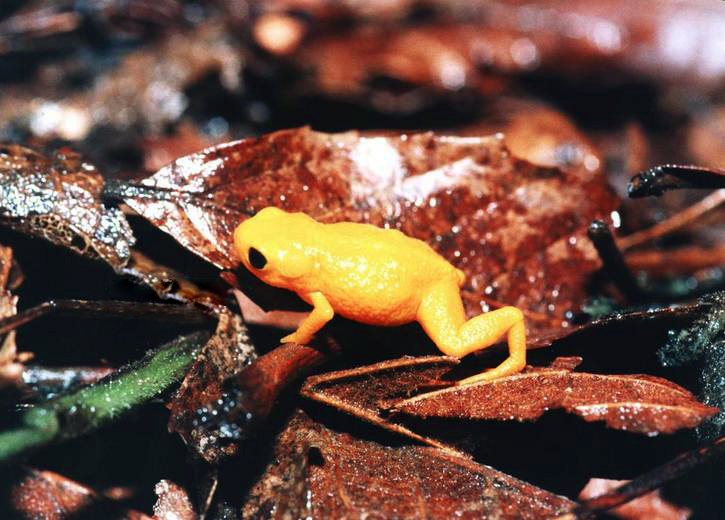



Physical characteristics
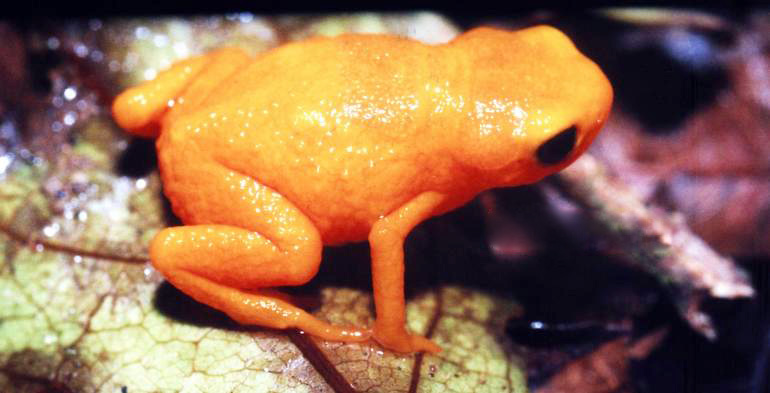
Saddleback toads are among the smallest terrestrial frogs in the world, most adults measuring roughly 1 centimetre in snout–vent length. Several species display bright yellow, orange or reddish coloration, while others are more cryptically brown. A distinctive morphological feature is digit reduction: individuals typically have three toes on each foot and two fingers on each hand, rather than the five toes and four fingers common in many other frogs. Their compact bodies and short limbs are adapted for life in leaf litter.
Distribution, habitat and speciation
These frogs are endemic to the cool, humid cloud and montane Atlantic Forests of southeastern Brazil. Populations are often restricted to isolated hilltops and mountain slopes in that region; as a result, different peaks commonly host different species. The combination of limited dispersal ability and steep environmental gradients between valleys and ridges favors a pattern of microendemism and local speciation. Many researchers highlight the unusually high diversity of Brachycephalus across small areas of the Serra do Mar and nearby ranges.
Behavior, diet and life cycle
Saddleback toads are primarily diurnal and live in the leaf litter and low vegetation on the forest floor. They feed on tiny invertebrates such as springtails and small insects. Reproduction is notable for direct development: eggs are deposited on the ground or in concealed leaf-litter sites and hatch directly into miniature froglets, bypassing a free-swimming tadpole stage. In some species, females place eggs in hidden microhabitats and clutches may be covered by leaf debris or soil to reduce exposure to predators and desiccation.
Conservation and significance
Because many Brachycephalus species occupy extremely small ranges, they are vulnerable to habitat loss, fragmentation and climate change. The Atlantic Forest is one of the most threatened biomes in the world, and montane specialists can be particularly sensitive to rising temperatures and altered moisture regimes. Conservation concern is heightened by the frogs' patchy distributions: the loss of a single mountaintop forest can imperil an entire species. At the same time, their distinctive morphology, tiny size and often vivid colors make them important subjects for studies of evolution, island-like speciation and amphibian diversity in tropical montane systems.
Distinctive facts and research interest
- Common names used include "saddleback toads" and "pumpkin toadlets" for some brightly colored species.
- The Brazilian golden frog, Brachycephalus didactylus, is among the smallest frogs in the southern hemisphere.
- Researchers studying Brachycephalus investigate digit reduction, coloration and how mountain isolation drives rapid speciation.
For general taxonomic information see the family entry at Brachycephalidae, for broader context on frogs consult Anura resources and for regional information about their range visit references on southeastern Brazil montane forests. The single-genus status of this group is summarized under Brachycephalus, and species lists and descriptions can be found in overviews that note the current count of described species and ongoing discovery. For life-history contrasts with species that have aquatic larvae, see notes on the absence of a free-swimming tadpole stage. Additional background and review studies can be located through regional and taxonomic portals (Anura, genus pages and conservation pages referencing Brazilian cloud forests).
Questions and answers
Q: What is the family name of the saddleback toads?
A: The family name of the saddleback toads is Brachycephalidae.
Q: How many species does the Brachycephalus genus have?
A: The Brachycephalus genus has 28 species.
Q: Where do saddleback toads live?
A: Saddleback toads live in the cool cloud Atlantic forests of south-eastern Brazil.
Q: What kind of ecosystems do saddleback toads inhabit?
A: Saddleback toads inhabit mountainous areas with cool cloud Atlantic forests.
Q: What is unique about the toes and fingers of saddleback toads?
A: Saddleback toads only have three toes on each foot and two fingers on each hand, which is different than the usual five toes and four fingers of most frogs.
Q: What time of day are saddleback toads active?
A: Saddleback toads are active during the day.
Q: How do the eggs of saddleback toads develop?
A: The eggs of saddleback toads hatch into miniature frogs, and there is no tadpole stage. The eggs are laid on the ground and covered in soil to protect them from heat and predators.
Related articles
Author
AlegsaOnline.com Saddleback toad (Brachycephalus) — tiny cloud-forest frogs Leandro Alegsa
URL: https://en.alegsaonline.com/art/85177
Sources
- commons.wikimedia.org : Brachycephalus
- bbc.co.uk : bbc.co.uk/news/science-environment-32991586