
Rotor (electric machine)
The rotor is the rotating part of an electric motor or generator. It works with the stator’s magnetic field to produce motion or electrical power.
The rotor is the rotating part of an electric machine, whether the machine is used as a motor or a generator. In most designs it sits inside the stator and turns around an axis, carrying conductors, windings, or magnets that interact with magnetic forces to create motion or electrical output.
Image gallery
3 Images
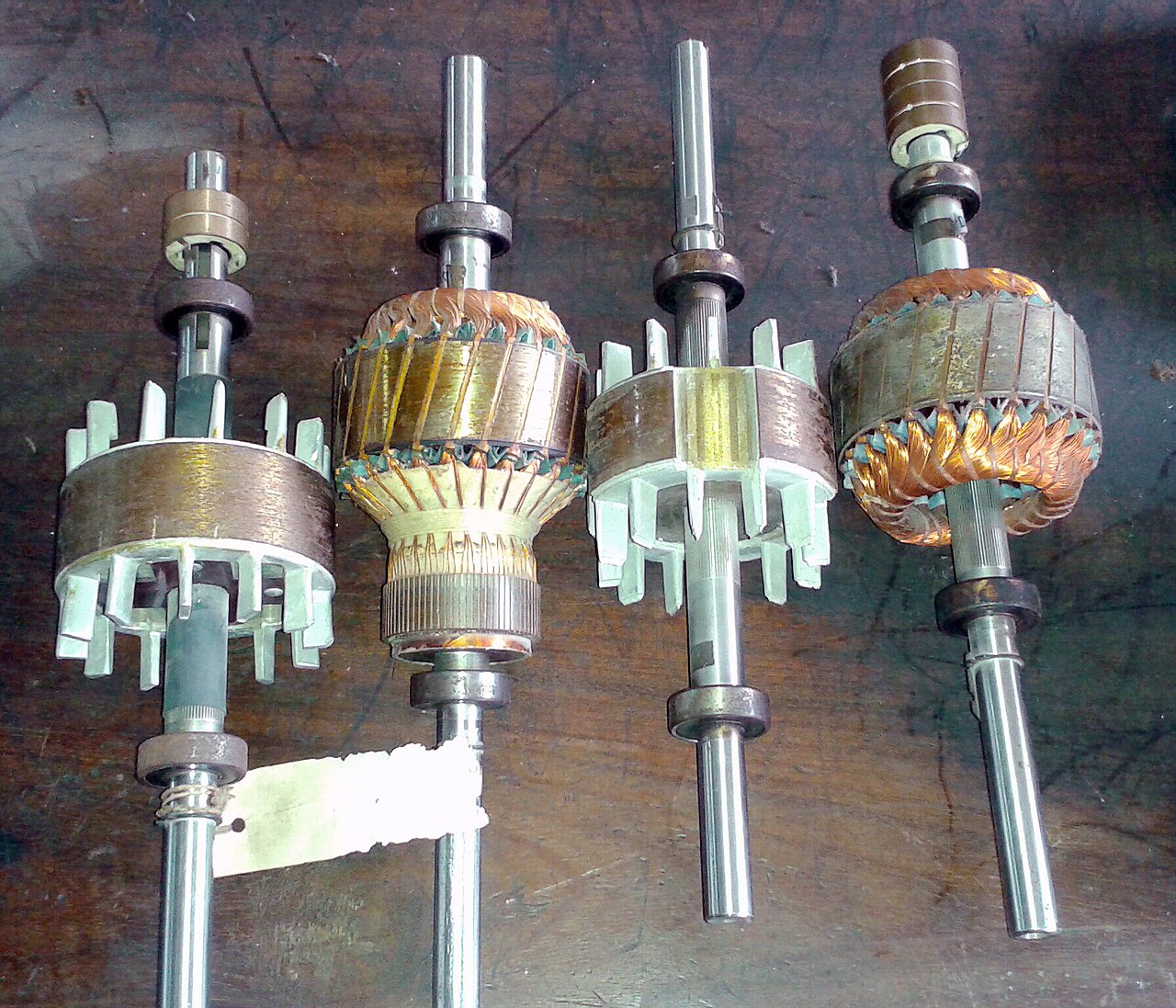

Overview
In a motor, the rotor receives torque from electromagnetic forces and delivers useful mechanical power to a shaft, fan, pump, wheel, or other load. In a generator, the same basic principle works in reverse: the rotor is driven by an external source such as a turbine or engine, and its motion helps induce voltage in the windings.
The rotor does not work alone. It depends on the magnetic field produced by the stator or by field windings on the rotor itself, and on the current in the wires or conductors that make up the machine. This interaction produces torque, the turning force that makes the shaft rotate.
Common forms
- Squirrel-cage rotors are widely used in induction motors because they are rugged, simple, and relatively inexpensive.
- Wound rotors carry windings connected to slip rings, allowing external resistance or control in some applications.
- Permanent-magnet rotors use magnets rather than energized coils and are common in many efficient modern motors.
- Generator rotors may be built with field windings or magnets, depending on the machine’s design and power rating.
How the rotor differs from the stator
The rotor is the moving part, while the stator is the stationary part surrounding it. This distinction matters in design and maintenance: the rotor must be balanced carefully to reduce vibration, and it usually runs with a small air gap between itself and the stator. That gap is critical, because it allows motion while still letting magnetic forces act strongly across the machine.
Different rotor designs suit different jobs. High-speed turbines often use rotors optimized for strength and balance, while small household appliances may use lightweight assemblies that favor compact size and low cost. The choice affects efficiency, starting behavior, speed control, noise, and durability.
Development and importance
Rotors became central to electric machinery as electromagnetism was developed in the nineteenth century and practical motors and generators were refined. Since then, improvements in materials, insulation, laminations, and control systems have made rotor designs more efficient and more adaptable. Today they are essential in industrial drives, vehicles, power generation, and consumer devices.
Related articles
Author
AlegsaOnline.com Rotor (electric machine) Leandro Alegsa
URL: https://en.alegsaonline.com/art/84282