
Adagio for Strings
A concise overview of Samuel Barber’s Adagio for Strings: its origin, musical character, history of performance, arrangements, cultural uses and critical reception.
Adagio for Strings is Samuel Barber’s best-known orchestral work, celebrated for its slow, sustained lines and expressive intensity. Originally derived from the second movement of Barber’s String Quartet, Op. 11, the piece was arranged for string orchestra in 1936. Its spare texture, long melodic arcs and gradual dynamic build make it instantly recognizable and widely used in commemorative and cinematic contexts. For basic biographical and catalogue references, see Samuel Barber.
Image gallery
1 Image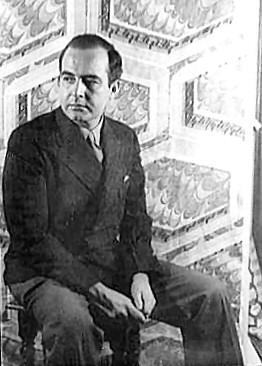
Musical character
The Adagio is marked by a very slow tempo, long phrases, and a narrow range of motifs that are repeated and transformed. The writing exploits the homogenous timbre of a string ensemble to create a single, vocal-like line supported by hushed harmonies. Typical features include quietly rising lines that culminate in a central climax before subsiding, careful pacing of crescendos and diminuendos, and a general atmosphere of mourning, reflection, or elegy.
Origins and early performances
Barber completed the orchestration of the movement for string orchestra in 1936, the same year he wrote the quartet. The orchestral version brought the music to a wider public through radio broadcasts and concert performances. It received enthusiastic attention when Arturo Toscanini introduced it to listeners in New York; the premiere was broadcast from a New York studio and later reached international audiences as Toscanini championed the work on tour. Prominent conductors such as Toscanini and Leonard Bernstein have conducted the score; the piece was first heard publicly in a 1938 radio broadcast from a New York City studio, conducted by Toscanini. Toscanini helped bring the work to listeners in Europe and South America during his travels.
Arrangements and adaptations
Barber himself adapted the piece as a choral work titled Agnus Dei in 1967, setting the same music to the liturgical text. The simple, song-like quality of the melody has invited numerous transcriptions and performances by string ensembles of varying sizes. The work’s ability to convey solemnity and consolation has made the choral arrangement a natural companion in sacred and memorial settings.
Uses in culture and media
The Adagio’s evocative mood has led to frequent use in film, television and public ceremonies. It appears in notable films and soundtracks and is often chosen for funerals, memorial services and state occasions because of its emotional directness. Listeners have encountered the work in contexts ranging from concert programming to film scores; its use in motion pictures has introduced Barber’s music to audiences far beyond the concert hall, including widely seen films such as The Elephant Man and Platoon.
Reception and notable commentary
Critics and commentators have long remarked on the piece’s capacity to move listeners. Some writers describe it as intensely mournful and cathartic: for example, Alexander J. Morin has characterized it as “full of pathos and cathartic passion,” a view that reflects the common critical response to the work. In a public poll, listeners to the BBC Today programme voted the Adagio among the most emotionally affecting classical works. The concise economy of thematic material and the work’s transparent scoring contribute to its reputation as one of the most immediately affecting pieces of 20th-century orchestral music.
Key points and distinctions
- Derived from the second movement of Barber’s String Quartet, Op. 11 and orchestrated by Barber in 1936.
- First widely heard in a 1938 radio broadcast from New York conducted by Arturo Toscanini; further championed on international tours (New York City studio broadcast reference).
- Later arranged by Barber for choir as Agnus Dei (1967), extending its liturgical and vocal use.
- Frequently used in films and ceremonies, notable for its spare scoring and emotional directness.
For more on performers and historical recordings, see materials associated with major conductors and orchestras; performers who have taken special interest in the work include those led by figures such as Arturo Toscanini and Leonard Bernstein. Further reading and resources are available through general music encyclopedias and recordings catalogues linked from trusted reference sites and archives (critical commentary, composer biography).
Related articles
Author
AlegsaOnline.com Adagio for Strings Leandro Alegsa
URL: https://en.alegsaonline.com/art/840
Sources
- festivalchamberorchestra.co.uk : "John Harle and FCO Movie Classics 22 Oct 2011"