
River Tay (Scotland)
The River Tay is Scotland's longest river, flowing east from the Highlands to the Firth of Tay. Noted for high flow, salmon fishing, and the historic Tay Bridge disaster, it is important for ecology, transport and recreation.
Overview
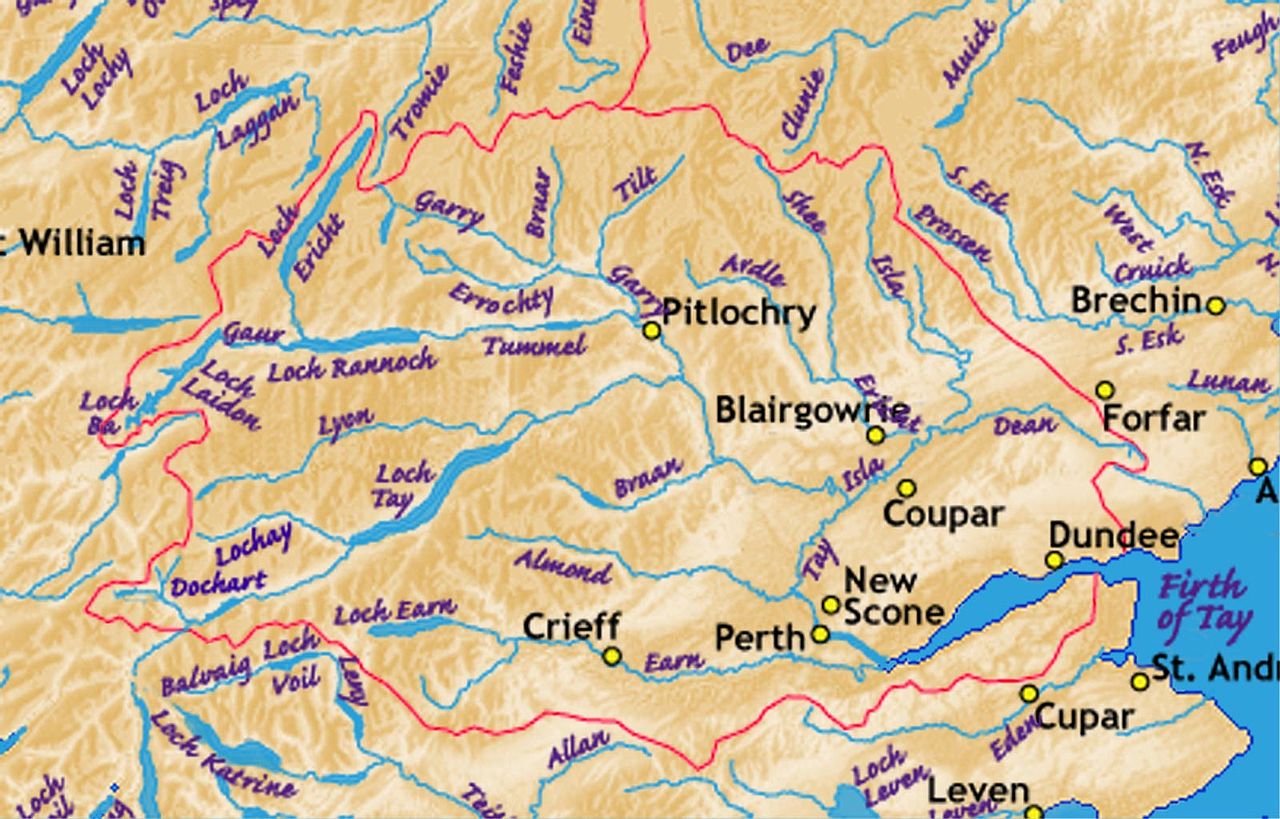
The River Tay is the longest river in Scotland and one of the major rivers of the United Kingdom. Rising in the central Scottish Highlands, it travels generally eastward before widening into the Firth of Tay and emptying into the North Sea. The Tay carries a greater average volume of water than the Thames and the Severn combined, making it the largest by discharge in Britain.
Image gallery
10 Images





Geography and characteristics
The river's course connects upland lochs and glens to a broad estuary. It flows through varied landscapes—mountainous catchments, agricultural lowlands and urban areas—and supports a large drainage basin. Along its route the Tay passes the city of Perth and reaches the coast opposite the city of Dundee, whose north bank faces the Firth of Tay.
Historical notes
The Tay has long been significant for settlement, transport and industry in eastern Scotland. It is perhaps best known internationally for the Tay Bridge disaster of 1879, when a railway bridge collapsed during a storm with tragic loss of life. That event led to changes in engineering standards and the eventual construction of replacement bridges, including the later rail crossing and the Tay Road Bridge opened in the 1960s.
Uses and cultural importance
The river and its estuary support a range of activities. The Tay is famous for salmon fishing, a longstanding recreational and commercial pursuit that has shaped local culture and economy. Its tidal waterways accommodate small-scale navigation and provide scenic corridors for boating and tourism. The surrounding landscape is used for farming, forestry and hydropower schemes in parts of the catchment.
Ecology and environmental concerns
The Tay supports diverse habitats: upland streams and lochs, riparian woodlands, freshwater fisheries and an estuarine zone rich in birdlife. Conservation efforts focus on water quality, sustainable fish stocks and protecting intertidal habitats that attract migratory waders. Like many large rivers, the Tay faces pressures from urban development, agriculture and occasionally severe weather that can lead to flooding.
Key facts and distinctions
- Longest river in Scotland and among the longest in the United Kingdom.
- Outflows to the North Sea via the Firth of Tay, with the city of Dundee on its northern shore.
- Notable for very high average discharge—greater than the Thames and the Severn combined.
- Associated with the historic Tay Bridge disaster and later transport links serving Perth and surrounding communities.
The River Tay remains a central natural feature of eastern Scotland: a working river with cultural resonance, ecological value and a role in transport, sport and landscape identity.
Related articles
Author
AlegsaOnline.com River Tay (Scotland) Leandro Alegsa
URL: https://en.alegsaonline.com/art/83130