
Tay Bridge disaster: collapse of the first Tay Rail Bridge, 28 December 1879
The Tay Bridge disaster occurred on 28 December 1879 when the first Tay Rail Bridge collapsed in a storm while a train crossed, prompting an inquiry, changes in engineering practice and wide public reaction.
Overview
The Tay Bridge disaster took place on 28 December 1879, when the first Tay Rail Bridge collapsed during a violent winter storm while a train was crossing from Wormit to Dundee. The structure failed and the train fell into the Firth of Tay, killing all aboard. The catastrophe became one of the most significant engineering failures of the 19th century and triggered intense public scrutiny of bridge design and construction.
Image gallery
10 Images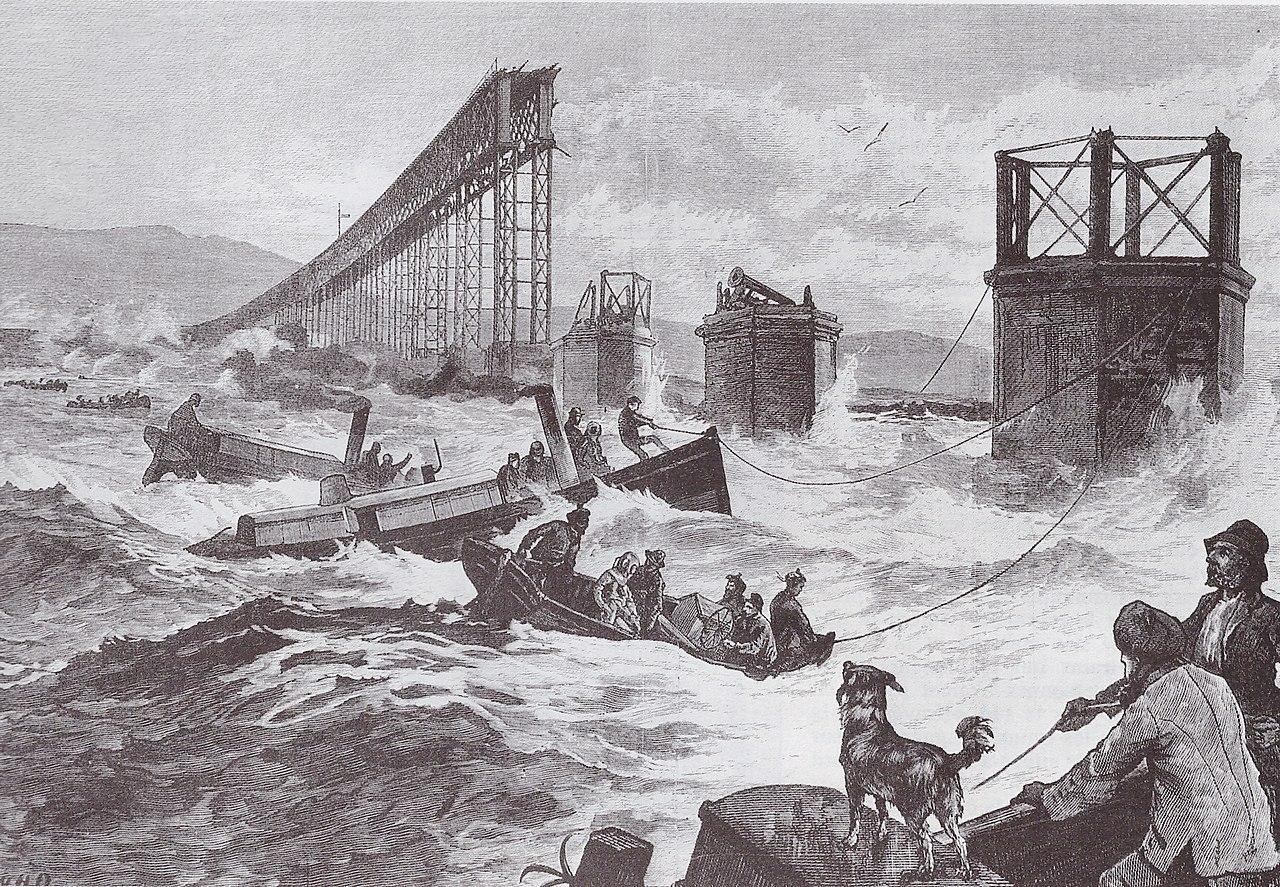


Design and construction
The original bridge, completed in 1878, was a long wrought- and cast-iron structure spanning the Firth of Tay. It relied on a sequence of wrought-iron lattice girders supported on cast-iron piers with braced columns. Its designer, Thomas Bouch, was a prominent railway engineer of the era. Critics later highlighted that some design elements and the choice of cast iron for critical connections made the structure vulnerable under extreme wind loads.
Failure and immediate causes
The collapse occurred during a severe gale and was sudden. Investigations pointed to a combination of factors: inadequate wind-resisting bracing, weak or improperly fitted connections, and the susceptibility of cast-iron components to brittle failure. Contemporary reports emphasized that the bridge had been subjected to heavy winds and that some elements were already strained when the disaster happened. The storm itself has frequently been cited as the immediate environmental trigger; more cautious analyses stress the interaction of weather with structural weaknesses.
Inquiry, consequences and engineering legacy
A formal public inquiry examined the disaster and concluded that defects in design and construction were chiefly responsible. The inquiry damaged Thomas Bouch's reputation and led to changes in the specification and testing of materials, greater attention to lateral wind forces, and stricter oversight of major structures. The event influenced engineering practice and regulation for bridges and railways in Britain and beyond.
Aftermath and cultural impact
A new Tay bridge was built to replace the collapsed structure and a different crossing now carries rail traffic across the estuary. The disaster also entered popular culture: it inspired poems and articles, including the famous piece by William McGonagall, and it remains a touchstone in discussions about professional responsibility, risk assessment and the limits of industrial-era engineering. For more on 19th‑century bridge engineering see engineering references, for contemporary weather descriptions see accounts of the storm, and for the route involved see descriptions of travel between Wormit and Dundee.
Key factors often cited
- Poorly dimensioned bracing and connections.
- Use of cast-iron components prone to brittle fracture.
- Insufficient consideration of extreme wind loading in design.
- Construction and inspection shortcomings.
The Tay Bridge disaster is studied today as a watershed event in civil engineering: it illustrates how structural design, material behavior and environmental loading must be treated together, and how high-profile failures can accelerate improvements in standards, testing and professional accountability.
Questions and answers
Q: What was the Tay Bridge disaster?
A: The Tay Bridge disaster was a engineering disaster that took place on 28th December 1879.
Q: When did the Tay Bridge disaster occur?
A: The Tay Bridge disaster occurred on 28th December 1879.
Q: What happened during the Tay Bridge disaster?
A: The first Tay Rail Bridge collapsed during a violent storm while a train was passing over it from Wormit to Dundee, killing all aboard.
Q: Did anyone survive the Tay Bridge disaster?
A: No, all aboard the train passing over the Tay Bridge at the time of the collapse were killed.
Q: Was the Tay Bridge disaster preventable?
A: There were design flaws in the bridge that could have been prevented, making the disaster potentially avoidable.
Q: How did the Tay Bridge disaster become known as one of the great engineering disasters of the 19th century?
A: The Tay Bridge disaster was one of the great engineering disasters of the 19th century due to the significant loss of life and the impact on public trust in engineering projects.
Q: Where did the train involved in the Tay Bridge disaster travel from and to?
A: The train involved in the Tay Bridge disaster travelled from Wormit to Dundee.
Related articles
Author
AlegsaOnline.com Tay Bridge disaster: collapse of the first Tay Rail Bridge, 28 December 1879 Leandro Alegsa
URL: https://en.alegsaonline.com/art/96588
Sources
- en.structurae.de : Firth of Tay Bridge (1877)
- todayinsci.com : The Tay Bridge by A. Grothe C.E. Manager of the Tay Bridge contract. Good Words (1878)