
Rhododendron ponticum — pontic or common rhododendron
An evergreen shrub native to southern Europe and western Asia. Noted for glossy leaves and clusters of purple flowers, it is grown ornamentally but can form invasive thickets outside its native range.
Overview
Rhododendron ponticum is an evergreen species in the heath family (Ericaceae) commonly called the pontic or common rhododendron. It produces masses of bell-shaped flowers and glossy, leathery leaves. The plant is valued in gardens for its blooms and dense foliage but has also become problematic where it escapes cultivation. For a species reference see species information.
Image gallery
7 Images


Description and growth
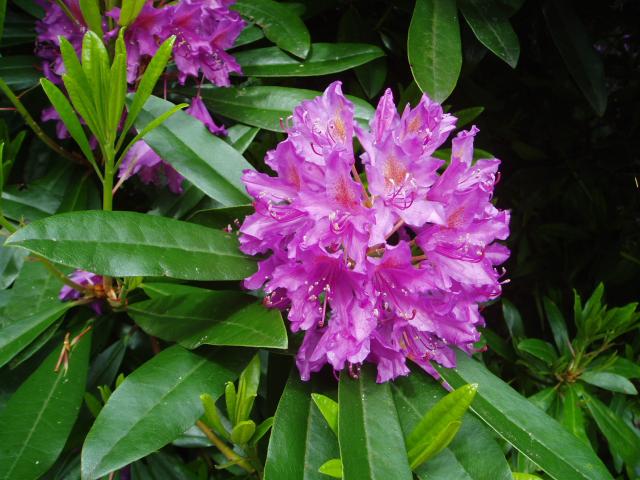
Typically forming a dense, suckering shrub or, less often, a small tree, R. ponticum commonly reaches around 3–5 m in cultivation, occasionally taller in favorable sites. Leaves are evergreen, oblong and dark green; flowers appear in clusters and range from pale pink to deep purple. The plant spreads vegetatively by suckers and can create large clonal stands.
Native range and history
R. ponticum is native to parts of southern Europe and western Asia, including regions of the Iberian Peninsula and the Caucasus. It is associated with woodlands and moist, acidic soils in its native range; see regional notes for southern Europe and Asia. The species is culturally significant in some areas — for example it is recognized as the state flower of Kashmir (Kashmir reference).
Uses, impacts and management
Widely planted as an ornamental hedge or specimen plant, R. ponticum has been introduced beyond its native range. In some regions it is considered an invasive species, notably where it forms impenetrable thickets that suppress native ground flora and tree regeneration. It has naturalized in parts of North America as well as in parts of Europe.
- Ornamental use: mass plantings and shelterbelts.
- Environmental concern: dense canopy, allelopathic effects and difficult removal.
- Management approaches: mechanical removal, targeted herbicide treatment and restoration planting.
Like many rhododendrons, R. ponticum contains toxic compounds that can affect humans and animals if ingested; caution is advised when handling or disposing of large stands. For further horticultural or ecological guidance consult regional resources and conservation agencies (species page, invasive species guidance).
Related articles
Author
AlegsaOnline.com Rhododendron ponticum — pontic or common rhododendron Leandro Alegsa
URL: https://en.alegsaonline.com/art/82534