
Rhubarb
Perennial plant of the genus Rheum cultivated for its tart edible stalks and for medicinal roots; notable for poisonous leaves and use in desserts, preserves and traditional medicine.
Rhubarb is a group of perennial plants in the genus Rheum within the knotweed family, Polygonaceae. Several species and hybrids are grown both as garden ornamentals and as food crops. In horticulture and commerce the term "rhubarb" usually refers to the stalks of edible forms (often Rheum rhabarbarum or hybrids such as R. × hybridum) rather than to a single wild species.
Image gallery
7 Images



Characteristics
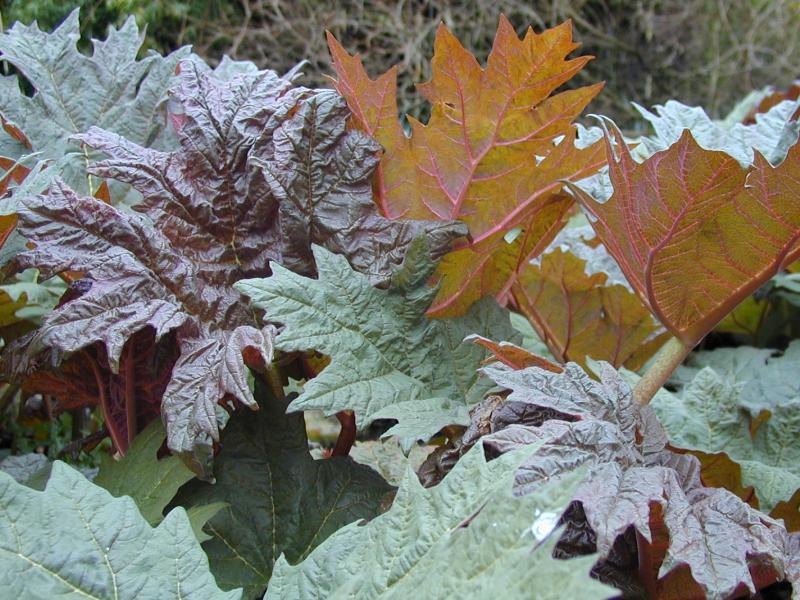
Rhubarb plants form clumps of large, triangular or heart-shaped leaves borne above thick, fleshy stalks (petioles). The stalks can range from green to deep red depending on variety and ripeness. The leaves contain appreciable amounts of oxalic acid and other compounds that make them toxic to humans and livestock, so only the stalks are used in food. The rootstock is a coarse rhizome, which in some species has been harvested and dried for medicinal use.
History and development
Rhubarb has a long history of use in Asia, where certain species were valued for their medicinal roots. Trade in medicinal rhubarb reached the Middle East and Europe by historical trade routes, and over time gardeners in temperate regions selected forms with thicker, less bitter stalks for culinary use. The common English name derives from historical Latin and Greek terms applied to roots of eastern origin.
Cultivation and varieties
Rhubarb prefers cool climates and is hardy in many temperate gardens. It is propagated by crown division or from seed and typically yields harvestable stalks from early spring into summer. Breeders and growers select cultivars for characteristics such as early production, color, tenderness and flavor—some types produce very red stalks while others remain greenish.
Uses and notable facts
- Culinary: The crisp, tart stalks are commonly cooked with sugar to make pies, compotes, jams and sauces. Rhubarb is frequently paired with fruits such as strawberries. In recipes the plant is treated as a fruit despite being a vegetable botanically; the stalks are often baked or stewed to soften and sweeten them (baking and preserves).
- Medicinal: Certain species (notably those called medicinal rhubarb) have been used for their dried rhizomes and roots as traditional herbal remedies with laxative properties. These uses are distinct from the culinary plant and involve different plant parts and processing.
- Ornamental and ecological: Large-leaved plants can also be grown for their dramatic foliage and spring flowers in mixed borders.
Safety and distinctions
Leaves should never be eaten because of their oxalate content and potential toxicity. People with kidney disorders or those prone to kidney stones should moderate intake of rhubarb stalks because of oxalates. The culinary forms used for eating are distinct from the species grown primarily for medicinal root preparations, and the same name "rhubarb" can therefore refer to different plant parts and uses, so attention to species and intended use is important.
Related articles
Author
AlegsaOnline.com Rhubarb Leandro Alegsa
URL: https://en.alegsaonline.com/art/82546