
Resplendent Quetzal (Pharomachrus mocinno)
A large, vividly colored bird of Central American cloud forests, the resplendent quetzal is famed for its iridescent plumage and deep cultural importance in Mesoamerica and Guatemala.
Overview
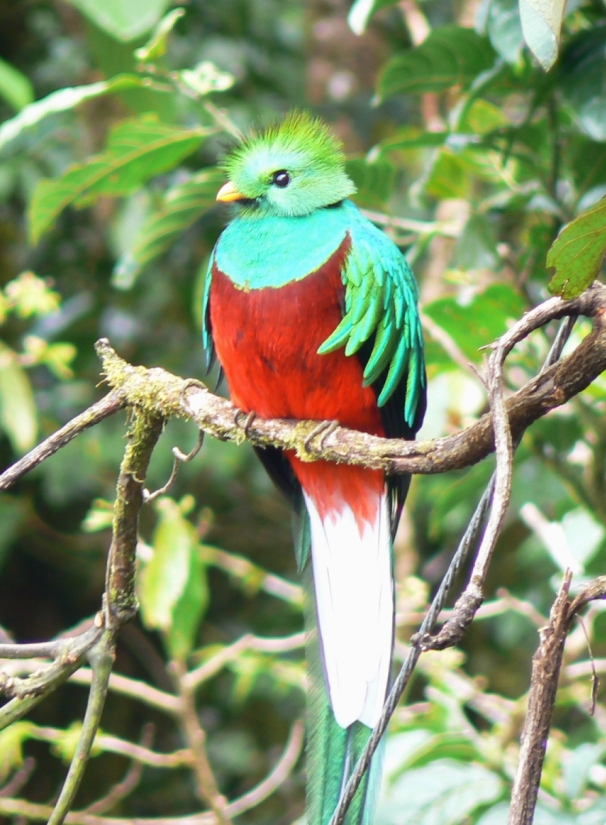
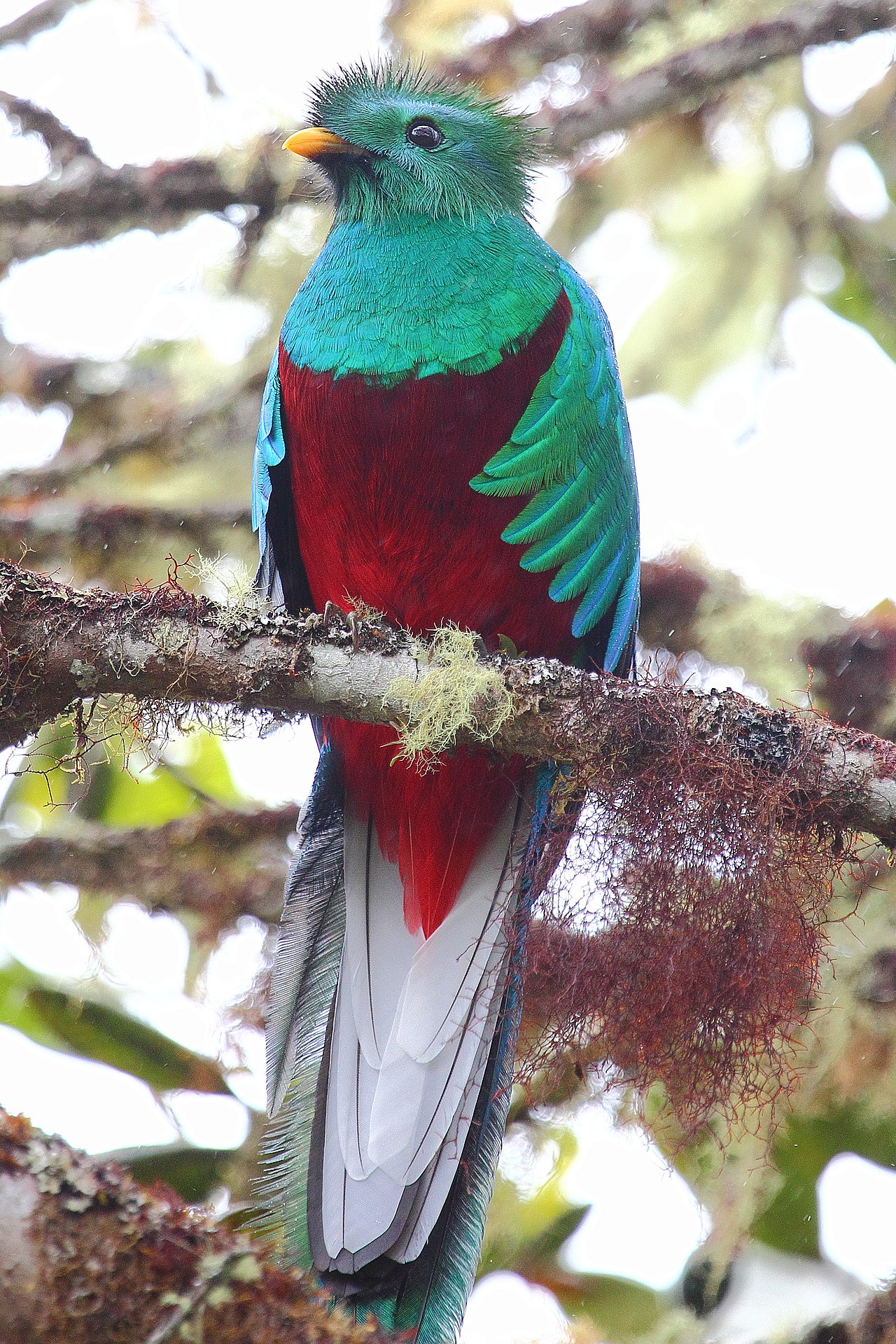
The resplendent quetzal (Pharomachrus mocinno) is a striking forest bird native to montane cloud forests of Central America. It is widely celebrated for bright, iridescent green body feathers, a red or reddish belly, and in males extremely long tail streamers that contributed to its iconic status. The species is sexually dimorphic: males typically show longer tail feathers and more vivid metallic greens while females are plainer and lack the elongated streamers.
Image gallery
10 Images




Physical characteristics and behavior
The quetzal's glossy plumage comes from microscopic feather structure that scatters light, producing an iridescent sheen rather than pigment alone. Its bill is relatively short and yellowish, and it has a soft, flute-like call used to communicate in dense forest. Quetzals are largely arboreal; they feed mainly on fruits—especially wild avocados and other laurel family fruits—supplementing their diet with insects, small frogs, and lizards when available.
- Notable traits: iridescent green body, red underparts, pronounced sexual dimorphism, and elongated male tail feathers.
- Reproduction: nests in tree cavities, often reusing holes excavated by woodpeckers or natural cavities.
- Range: from southern Mexico through Central America to western Panama, favoring humid, high-elevation forests.
Because quetzals require large, intact tracts of mature forest, their movements are closely tied to fruiting patterns and seasonal changes. Observers often spot them near fruiting trees or at nesting sites during the breeding season.
Cultural significance
The resplendent quetzal holds profound symbolic value in Mesoamerican cultures. It appears in ancient myth and iconography as a symbol of liberty, divinity, and rulership; see sources on Mesoamerican culture and traditional mythology for context. In modern times the species is the national bird of Guatemala, where it features on national symbols such as the flag and coat of arms (national bird, coat of arms) and lends its name to the country's currency (currency).
Conservation
Populations have been affected by deforestation, habitat fragmentation, and the loss of old-growth nesting trees. Conservation efforts emphasize protection of cloud forest habitat, establishment of reserves, and community-based ecotourism that provides incentives to preserve forested landscapes. Threats and responses are often documented by regional conservation organizations and researchers.
- Threats: habitat loss, fragmentation, and local hunting or capture for the pet trade in some areas.
- Actions: habitat protection, legal safeguards, nest box programs, and sustainable tourism to support local economies.
Because the resplendent quetzal is both ecologically specialized and culturally emblematic, efforts to conserve it tend to combine scientific habitat management with outreach that highlights its role in regional identity. For additional regional information see range and habitat resources and cultural references at Mesoamerican studies.
Related articles
Author
AlegsaOnline.com Resplendent Quetzal (Pharomachrus mocinno) Leandro Alegsa
URL: https://en.alegsaonline.com/art/82314
Sources
- iucnredlist.org : "Pharomachrus mocinno"