
Guatemala: geography, culture, history, and economy
Overview of Guatemala: its geography, peoples and languages, cultural heritage, economy (including cardamom), tourism highlights, and historical background.
Guatemala is a Central American nation located between Mexico and the narrow isthmus that joins North and South America. Its territory includes highland mountain ranges, active volcanoes, tropical lowlands and coasts on both the Pacific Ocean and the Caribbean Sea. The capital and largest city is Guatemala City, a political and economic center. Neighbouring countries are listed below.
Image gallery
10 Images



Location and neighbours
Geography and climate
The country's landscape is dominated by the Sierra Madre and other highland chains, which contain many volcanoes and create strong regional variation in climate. Highland areas are cooler and often temperate, while coastal plains are tropical and humid. Lake Atitlán and the Petén lowlands are distinctive natural regions: Lake Atitlán is a volcanic lake prized for its scenery; the Petén is a sparsely populated tropical forest that contains several major archaeological sites. Geography and elevation strongly influence local weather and agricultural patterns.
People, languages and culture
Guatemalan culture is marked by a blending of indigenous Maya traditions and Spanish colonial influences. Traditional textiles, music, cuisine and festivals reflect this fusion. Spanish is widely spoken, and a large portion of the population speaks one of the many indigenous languages descended from the Maya. The country recognizes multiple indigenous languages alongside Spanish; many communities maintain ancestral customs, dress and social practices.
History and development
Guatemala was the heartland of ancient Maya civilizations whose monumental cities and calendars are celebrated worldwide. Following Spanish conquest in the 16th century, the region became part of the Spanish Empire and later achieved formal independence in the early 19th century. The 20th century brought political upheavals, reforms and a protracted internal armed conflict; peace agreements in the late 20th century opened a new era of reconstruction and democratic institutions.
Economy and agriculture
Agriculture remains important for domestic livelihoods and exports. Guatemala is internationally known as the world's leading producer and exporter of cardamom, and it also ships coffee, bananas and sugar. Urban centers support manufacturing, services and commerce, while remittances and small-scale trade contribute to household incomes. Environmental conservation, land use and social development are ongoing national challenges.
Tourism and notable sites
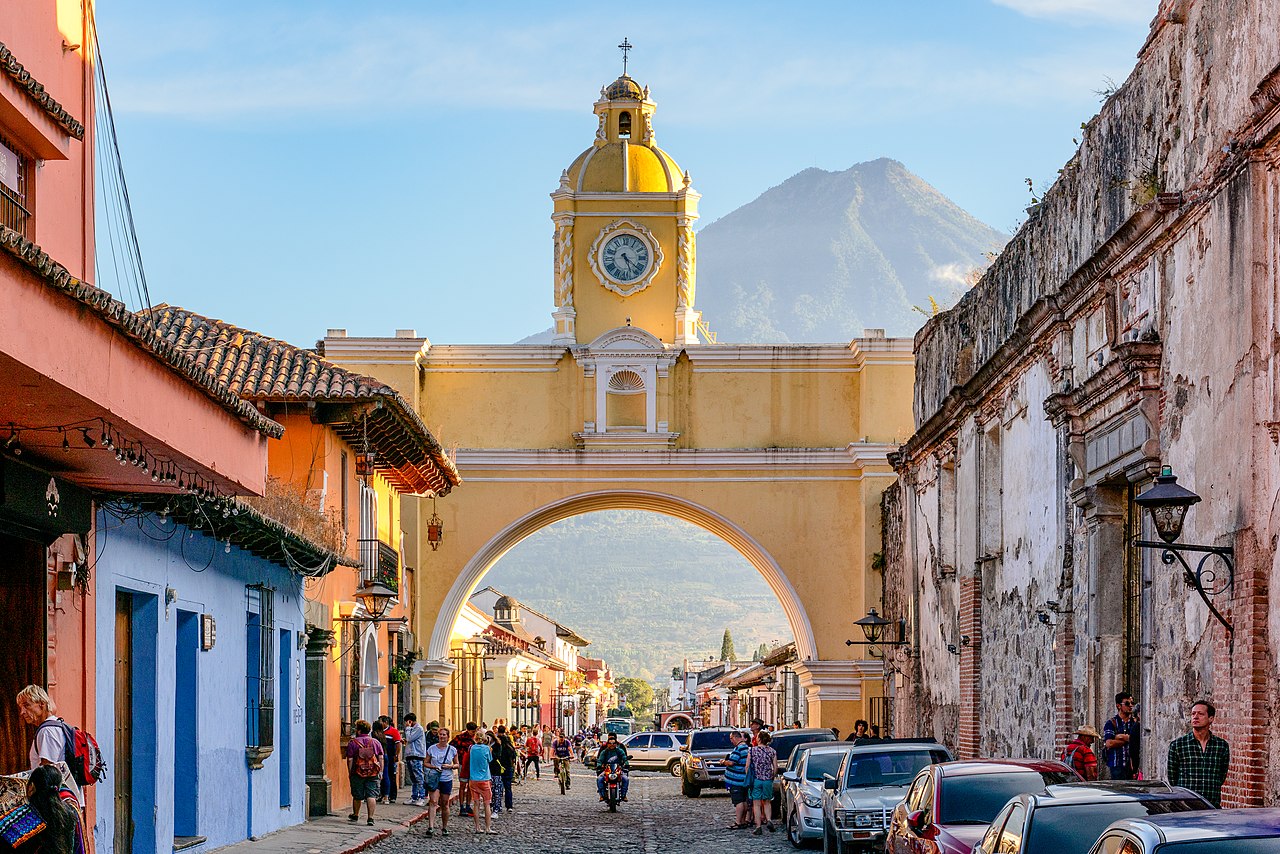
Visitors are drawn to colonial towns such as Antigua, the archaeological ruins of Tikal in the Petén, the volcanic scenery around Lake Atitlán, and coastal beaches. Guatemala City functions as the main gateway for business and international travel. The country’s cultural festivals, markets and handicrafts are among its most enduring attractions.
For maps and introductory resources see general maps and regional overviews at Central America portals. Additional country profiles and trade information are available through official and international sources: agricultural export data and regional links at Belize and Mexico.
Questions and answers
Q: Where is Guatemala located?
A: Guatemala is located in Central America.
Q: What is Guatemalan culture like?
A: Guatemalan culture is a mix of Mayan and Spanish cultures from the colonial period.
Q: How many languages are spoken in Guatemala?
A: There are a total of 23 languages spoken in Guatemala.
Q: Why is Guatemala a popular tourist destination?
A: Guatemala is a popular tourist destination because of its natural beauty.
Q: What causes the weather to change often in Guatemala?
A: The weather in Guatemala changes often because of the mountain range which crosses the center of the country.
Q: What is the capital of Guatemala?
A: The capital of Guatemala is Guatemala City.
Q: What countries border Guatemala?
A: Guatemala's neighbors are Belize, Mexico, El Salvador and Honduras.
Related articles
Author
AlegsaOnline.com Guatemala: geography, culture, history, and economy Leandro Alegsa
URL: https://en.alegsaonline.com/art/41196
Sources
- books.google.com : The land of eternal spring: Guatemala, my beautiful country
- imf.org : "Guatemala"
- hdr.undp.org : "Human Development Report 2011"
- gain.fas.usda.gov : Cardamom and Guatemala
- commons.wikimedia.org : Guatemala
- wikidata.org : wikidata.org/wiki/Q774
- catalogue.bnf.fr : cb11880756w
- data.bnf.fr : (data)
- d-nb.info : 4022428-4
- hls-dhs-dss.ch : 003384
- isni.org : 0000 0001 2270 9190
- id.loc.gov : n79054016
- musicbrainz.org : 01448ddc-6ee3-3fa4-b136-507d984e31ee
- catalog.archives.gov : 10044770
- id.ndl.go.jp : 00562280