
Rhinatrematidae: the tailed or beaked caecilians of northern South America
Rhinatrematidae are a small family of neotropical caecilians with tails and aquatic larvae. Found in equatorial South America, they retain primitive features and occupy moist forest soils and seepages.
Overview
Rhinatrematidae, commonly called tailed caecilians or beaked caecilians, are a lineage of limbless amphibians found in the equatorial regions of South America. Members of this family are notable among caecilians for retaining a distinct tail and for having a life cycle that includes free‑swimming larvae with external gills. For general background on caecilians see this resource.
Image gallery
5 Images
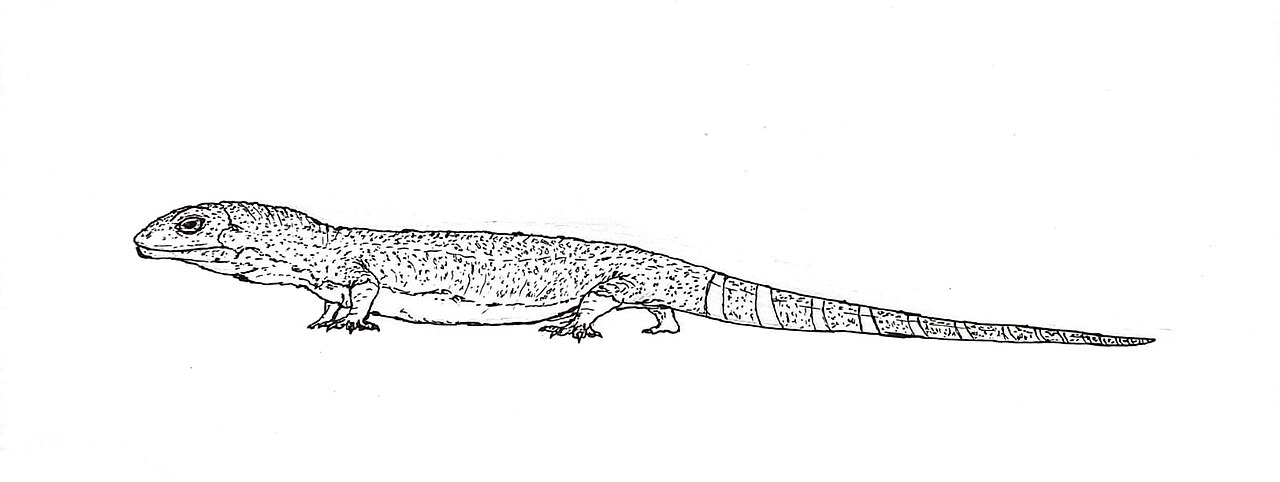


Distinctive characteristics
Rhinatrematidae are often described as the most basal or "primitive" caecilians because they preserve several ancestral traits absent from many other families. Typical features include:
- a visible tail at the posterior end;
- a mouth positioned at the tip of the head rather than set back beneath it;
- external gills on larvae and a prolonged aquatic or semi‑aquatic larval stage;
- adults that spend much time in moist soil, leaf litter and near seepages.
Life history and ecology
These amphibians are oviparous: females lay eggs in small burrows or sheltered spots in damp ground. The eggs hatch as larvae equipped with external gills that inhabit slow streams, seeps or wet soil until metamorphosis. Adults are burrowers and surface foragers, feeding on invertebrates and playing a role in soil aeration and nutrient cycling within forest ecosystems.
Distribution, evolution and taxonomy
Rhinatrematidae occur in humid, equatorial parts of northern and central South America. Because they retain ancestral anatomical features, they are regarded as an early‑branching group within the order Gymnophiona; their distribution and morphology provide clues to the early evolution of caecilians. For regional occurrence details consult a dedicated database or field guide via this link.
Conservation and notable facts
Like many amphibians, members of this family are sensitive to habitat disturbance, deforestation and water pollution. They are not widely known to the public, but their presence indicates healthy moist forest and stream habitats. Taxonomic revisions and limited field data mean that the status and number of species are updated periodically by specialists.
Questions and answers
Q: What is Rhinatrematidae?
A: Rhinatrematidae is a family of neotropical tailed caecilians or beaked caecilians found in the equatorial countries of South America.
Q: What is unique about Rhinatrematidae compared to other caecilian families?
A: Rhinatrematidae is said to be the most primitive of the caecilian families and has many features other groups do not, such as having a tail and the mouth not being on the back of the underside of the head.
Q: How do Rhinatrematidae reproduce?
A: Rhinatrematidae lay their eggs in small holes in the soil, and the larvae have external gills. They live in seepages until they change into adults.
Q: Where do adult Rhinatrematidae live?
A: Adult Rhinatrematidae live in moist soil and leaf litter.
Q: Where are Rhinatrematidae found?
A: Rhinatrematidae are found in the equatorial countries of South America.
Q: Do Rhinatrematidae have internal or external gills?
A: Rhinatrematidae have external gills in their larval stage.
Q: What is the habitat of Rhinatrematidae?
A: Rhinatrematidae live in seepages as larvae and in moist soil and leaf litter as adults.
Related articles
Author
AlegsaOnline.com Rhinatrematidae: the tailed or beaked caecilians of northern South America Leandro Alegsa
URL: https://en.alegsaonline.com/art/82501
Sources
- mapress.com : Gower et al. (2010) "A new species of Rhinatrema Duméril & Bibron (Amphibia: Gymnophiona:Rhinatrematidae) from Guyana"
- doi.org : 10.1016/j.ympev.2004.05.014
- pubmed.ncbi.nlm.nih.gov : 15336675
- jstor.org : "Initial diversification of living amphibians predated the breakup of Pangaea"
- doi.org : 10.1086/429523
- pubmed.ncbi.nlm.nih.gov : 15795855
- sysbio.oxfordjournals.org : "Experimental design in caecilian systematics: phylogenetic information of mitochondrial genomes and nuclear rag1"
- doi.org : 10.1093/sysbio/syp043
- pubmed.ncbi.nlm.nih.gov : 20525595
- research.amnh.org : research.amnh.org/herpetology/amphibia/index.php
- amphibiaweb.org : amphibiaweb.org/