
Reichstag (building) — Berlin's parliamentary seat, history and architecture
Historic Berlin building completed in 1894 that houses Germany's parliament. Notable for its 19th-century façade, wartime damage, the 1933 fire, and a modern glass dome from its 1990s restoration.
Overview
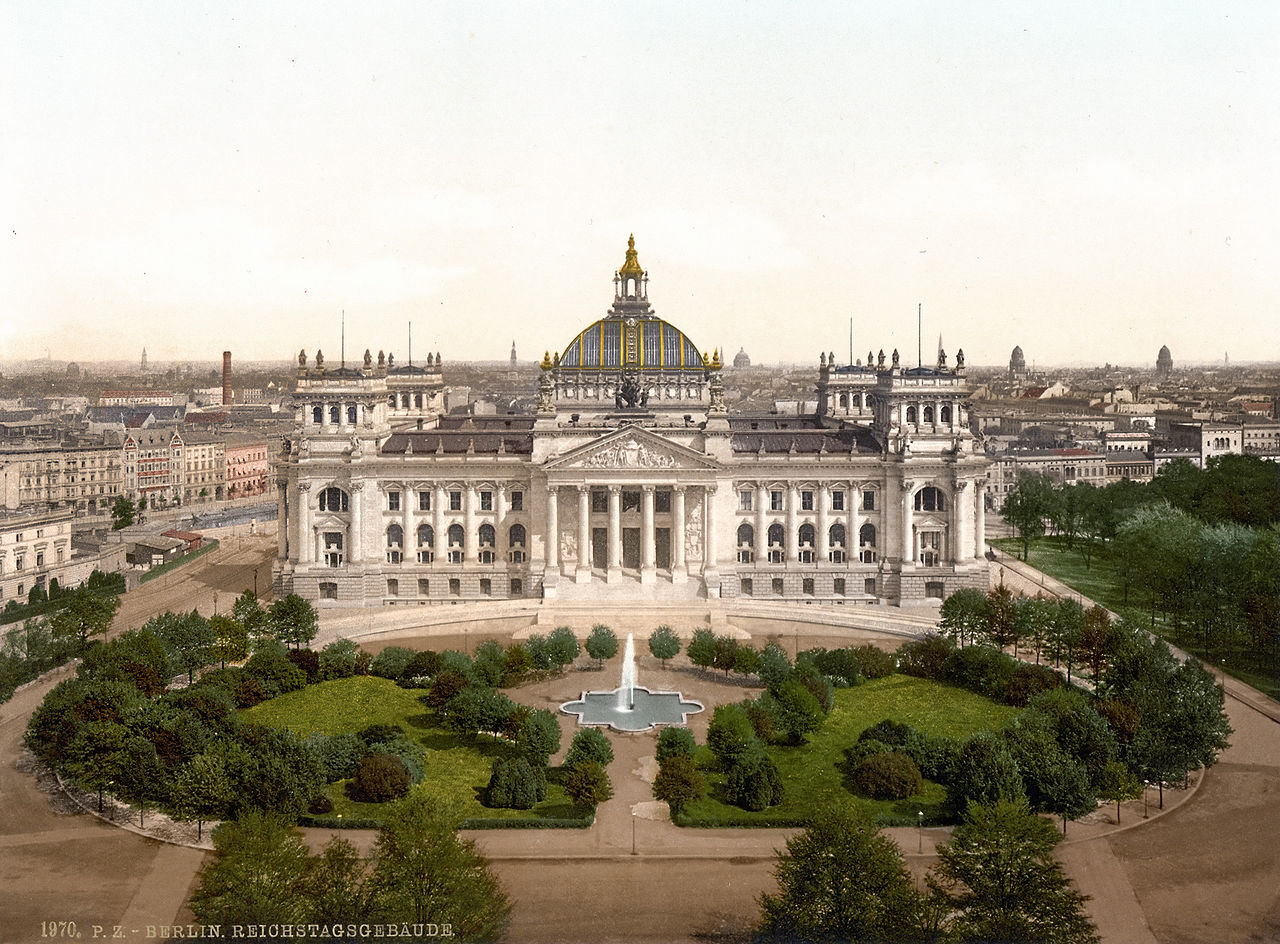
The Reichstag is a landmark building in central Berlin originally constructed to house the parliament of the German Empire. Designed in the late 19th century by the architect Paul Wallot, it was formally opened in 1894 and stood near the historic center of the city. Its heavy masonry façade, grand staircase and assembly chamber reflected the ambitions of a newly unified state while also becoming a symbol of modern German politics.
Image gallery
10 Images



Architecture and notable features
The building combines historicist styling with large interior spaces intended for parliamentary debate. A signature element today is the glass dome added during the late-20th-century reconstruction: a public-access cupola that crowns the chamber and provides natural light and views of the city. The restored Reichstag also retains the famous inscription above its main entrance and other original decorative motifs. The modern interventions were designed to make the parliament's work more transparent and accessible to the public.
- Original architect: Paul Wallot (late 19th century).
- Post-reunification renovation led to a new glazed dome and energy-conscious systems.
- Location: central Berlin, on a historical site close to former royal palaces.
History and political role
The Reichstag served as the meeting place for different German parliamentary bodies across political eras. It housed the legislature of the German Empire and later the assembly of the Weimar Republic. In 1933 the building was the scene of the Reichstag fire, an event that had major political consequences and after which the national legislature's role was marginalised during Nazi Germany. The fire is commonly dated to 1933, and the parliamentary institution effectively ceased functioning in the years that followed, through the end of the war in 1945.
After heavy damage in the Second World War the building stood partially ruined for decades. Following German reunification it was chosen again as the seat of the national assembly. A major reconstruction and redesign prepared the structure to host the modern legislature; in 1999 the chamber became the home of the contemporary Bundestag, Germany's federal parliament.
Uses, significance and distinctions
The name "Reichstag" has two related senses: historically it referred to the institution of parliament (for example in the era of the Holy Roman Empire) and in modern German usage it often denotes the building itself, while the elected federal assembly is called the Bundestag. The restored Reichstag in Berlin remains a civic landmark and a focal point for visitors wishing to learn about German history and democratic practice in Germany. Its transition from imperial assembly hall to a war-damaged ruin and finally to a transparent, modern parliamentary seat encapsulates major themes of German political development.
Timeline (select events)
- Opening as parliamentary building (late 19th century) — 1894.
- Weimar legislative use — Weimar Republic.
- Fire and decline — Reichstag fire (1933), followed by reduced parliamentary function during Nazi Germany.
- Postwar damage and long disuse until reunification — 1945 aftermath; German reunification.
- Renovation and reopening as seat of the Bundestag in 1999; the building continues to be called the Reichstag in everyday speech.
Related articles
Author
AlegsaOnline.com Reichstag (building) — Berlin's parliamentary seat, history and architecture Leandro Alegsa
URL: https://en.alegsaonline.com/art/81947