
German reunification (Deutsche Wiedervereinigung)
The 1990 political and legal process that ended Germany's post‑war division, integrating the German Democratic Republic into the Federal Republic and restoring a single German state.
Overview
German reunification, known in German as Deutsche Wiedervereinigung, describes the process by which the two German states that existed after World War II became a single country again. After four decades of separation into a western Federal Republic and an eastern German Democratic Republic, a series of political changes in 1989–1990 culminated in the formal accession of the eastern states to the Federal Republic on 3 October 1990, now celebrated as German Unity Day.
Image gallery
10 Images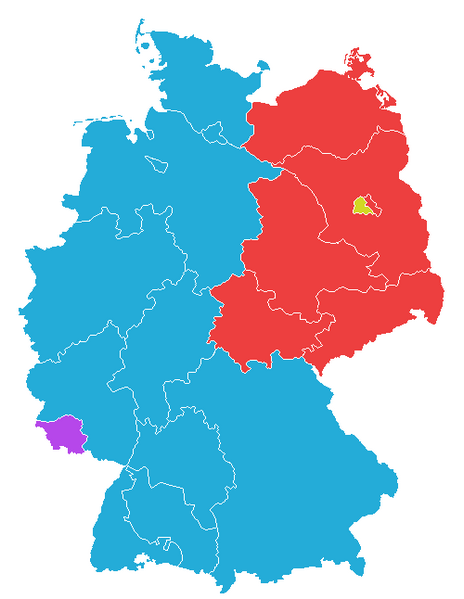




Background and division
Following the surrender of Nazi Germany in 1945, the country was occupied and administered by the victorious Allies. The subsequent Cold War rivalry led to the establishment of two distinct states, a division often summarized as the broader postwar division of Europe. The western zone became the Federal Republic of Germany (FRG), while the Soviet zone evolved into the German Democratic Republic (GDR). Over the decades the two states developed different political systems, economies and international alignments.
Path to reunification
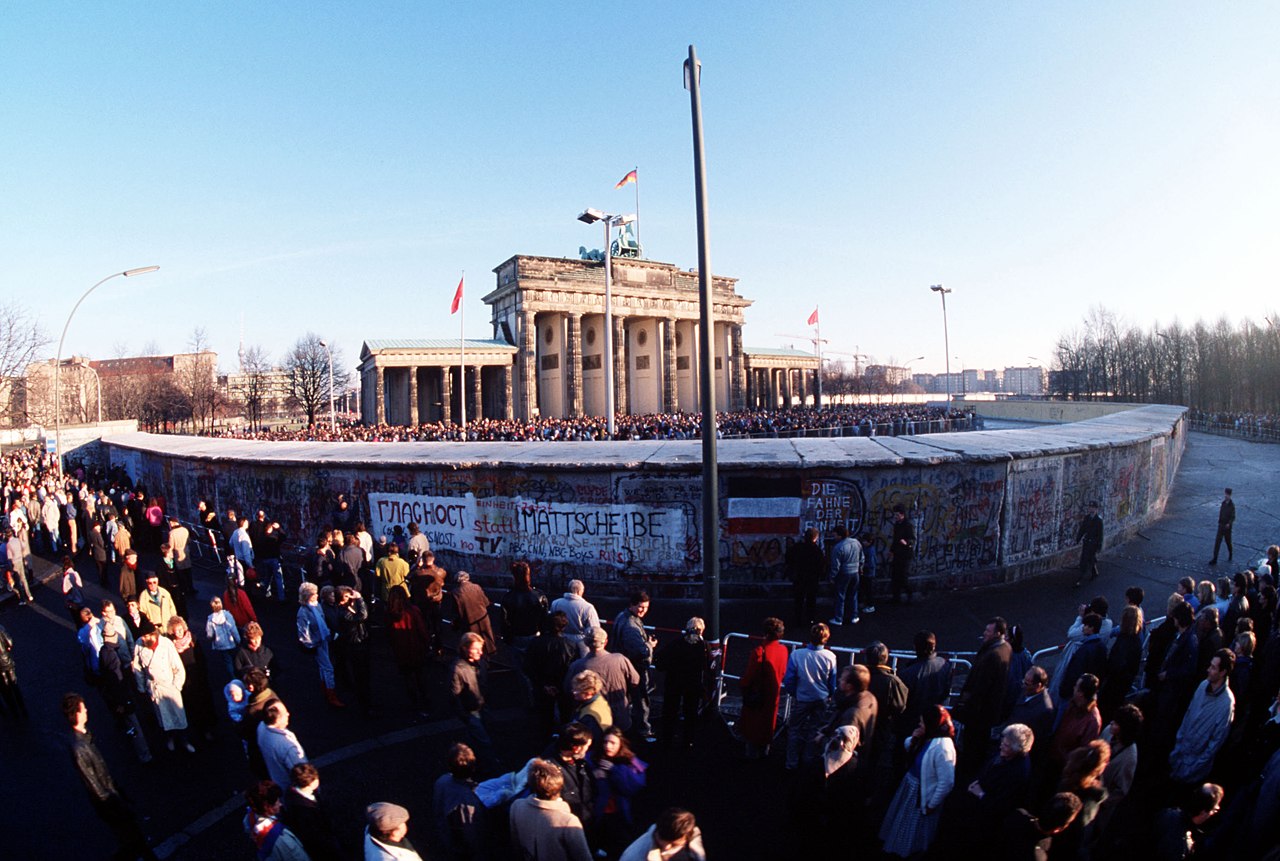
The immediate move toward reunification followed widespread peaceful protests in the GDR, the loosening of Soviet influence, and the fall of the Berlin Wall in November 1989. Domestic negotiations, popular pressure, and talks with the Four Powers and neighboring states shaped the course. The practical steps included a currency and monetary union and legal agreements by which the eastern Länder (states) acceded to the Federal Republic rather than creating a single new constitution.
Legal and international framework
Formal unification required both internal legislation and international treaties. The Two Plus Four negotiations (between East and West Germany and the four Allied powers) resolved external aspects of sovereignty, borders and military status, while national agreements arranged economic integration and the re-establishment of state governments in the east. The process reunited Berlin as the capital and restored a single German seat in international organizations.
Consequences and significance
Reunification reshaped Europe's political map and Germany's role within it. Immediate challenges included integrating divergent legal and economic systems, renovating infrastructure, and addressing social disparities that persisted for years. Economic transfers, privatization of state enterprises and migration from east to west were important features of the transition. Politically, reunification consolidated Germany as the continent's most populous nation and a central actor in European affairs.
Notable facts and legacy
- The five reconstituted eastern Länder that joined the FRG were Mecklenburg‑Vorpommern, Brandenburg, Saxony, Saxony‑Anhalt and Thuringia, together with Berlin as a reunited city.
- Unification was achieved largely through accession under existing West German law rather than through creating a wholly new constitution.
- Reunification is commemorated annually on 3 October, a public holiday known as German Unity Day.
- Its long-term effects include demographic shifts, economic convergence efforts and ongoing debates about identity and regional balance within Germany.
For further reading on the historical context and legal instruments involved, see sources on the Cold War division and the political events of 1989–1990, including material that differentiates the internal German process from the international treaty framework that made a unified Germany fully sovereign and internationally recognized. Related topics include the histories of East and West Germany and the broader changes across Europe at the end of the Cold War.
Additional resources and archival documents can provide deeper detail for those researching the political negotiations, economic policies of integration, and personal histories from the period. See specialised studies and primary documents for precise timelines and legislative texts.
Questions and answers
Q: What does the term "German reunification" mean?
A: German reunification is a term of history which refers to the unification of the two parts of Germany.
Q: When did German reunification occur?
A: German reunification occurred on 3 October 1990, when the East German states became part of the Federal Republic of Germany.
Q: What were the two parts of Germany after World War II?
A: After World War II, Germany was divided into two countries - The Federal Republic of Germany (FRG), also known as "West Germany", and The German Democratic Republic (GDR), also called "East Germany".
Q: How did West and East Germany become unified?
A: West and East Germany became unified when the East German states joined with the Federal Republic of Germany on 3 October 1990.
Q: What other names are used for West and East Germany?
A: West Germany is sometimes referred to as "The Federal Republic of Germany" or "FRG", while EastGermany is sometimes referred to as "The German Democratic Republic" or "GDR".
Q: Why was there a need for reunification in 1990?
A: In 1990, there was a need for reunification because both sides had come to an agreement that it would be beneficial for both countries if they were united under one government.
Related articles
Author
AlegsaOnline.com German reunification (Deutsche Wiedervereinigung) Leandro Alegsa
URL: https://en.alegsaonline.com/art/38467