
Domestic Architecture in Ancient Rome: Domus, Insulae, and Villas
Explore domestic architecture in Ancient Rome: domus, insulae, and villas—their layouts, materials, social roles, construction methods and archaeological legacy.
In Ancient Rome, residential buildings ranged widely in size, form and quality. Roman dwellings reflected their occupants' wealth, location (city or countryside) and period, from modest multi-storey tenements to elaborate private houses and country estates.
Image gallery
7 Images
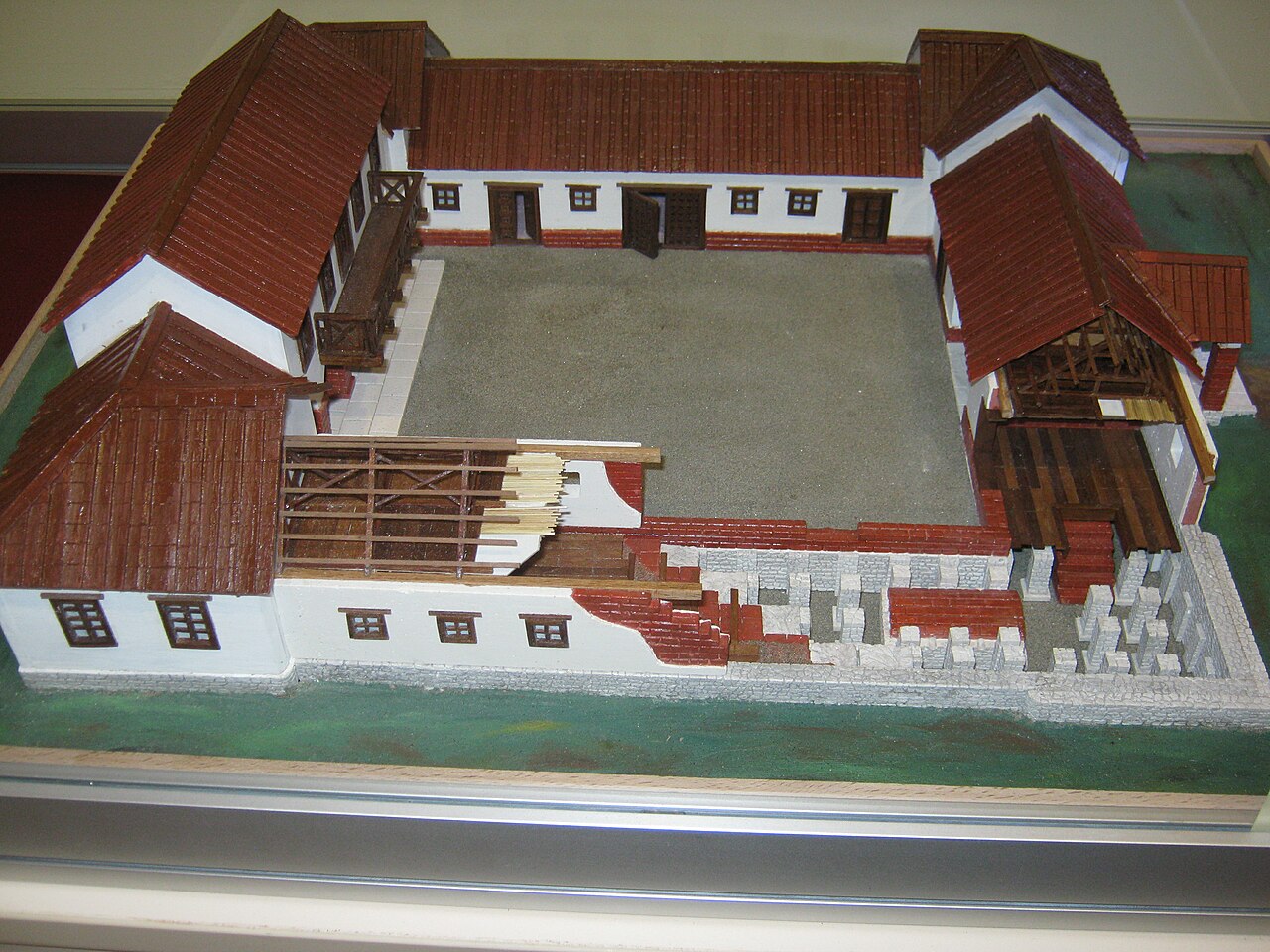


Main types of houses
- Domus – A single-family urban house typical for the wealthy. These were usually one-story or two-story buildings organized around internal open spaces and decorated with mosaics and wall paintings.
- Insulae – Multi-level apartment blocks that housed the majority of city residents. Units varied from simple rooms to larger flats; insulae were often built quickly and could be prone to fire and structural failure.
- Villa – A country residence or farmstead, which could be a luxurious retreat (villa urbana) or a working agricultural complex (villa rustica).
Typical layout and features
Wealthy urban houses commonly centered on one or two open courts. The atrium was a formal reception area, often with a shallow pool (impluvium) to collect rainwater. Behind the atrium a tablinum served as an office or family room, while a peristyle garden provided light and ventilation to surrounding rooms such as bedrooms (cubicula), dining rooms (triclinia) and the kitchen (culina).
Smaller homes and many insula apartments had simpler plans: a single room or a suite opening onto a corridor or street. Some wealthier houses included private baths, heating by a suspended-floor hypocaust, and extensive decorative programs of fresco and mosaic.
Construction, materials and urban issues
Romans used a variety of materials, including stone, brick-faced concrete (opus caementicium), timber and tiles. Building techniques evolved over time, allowing larger spans and taller structures. In dense urban areas such as Rome, the pressure of population created narrow streets and tall insulae; authorities at different times attempted to control building heights and to reduce fire risk by specifying materials and construction practices.
Social and economic aspects
Housing signaled social status. The domus displayed wealth through its scale, decoration and reception rooms for clients and visitors. Insulae housed artisans, traders and lower-income families close to workplaces; ground-floor shops (tabernae) and workshops were common. Villas combined residential comfort with agricultural production and were often both productive estates and symbols of elite identity.
Archaeological evidence and legacy
Surviving examples from sites across the Mediterranean — including preserved houses in Pompeii, Ostia and the city of Rome itself — provide most of what we know about Roman domestic architecture. Excavations reveal floor plans, plumbing, decorative schemes and everyday objects, allowing scholars to reconstruct how Romans lived in different kinds of homes.
Related articles
Author
AlegsaOnline.com Domestic Architecture in Ancient Rome: Domus, Insulae, and Villas Leandro Alegsa
URL: https://en.alegsaonline.com/art/83854