
Regnenses (Regni): ancient tribe of southern Britain
The Regnenses (or Regni) were a Celtic people based around modern Chichester in southern England; they became a civitas under Roman rule and are known chiefly from archaeology and a few Roman accounts.
The Regnenses, also called the Regni or Regninses in some sources, were an Iron Age and early Roman-period people located on the south coast of Britain. Their principal settlement became the Roman town of Noviomagus Reginorum, now Chichester, and their territory lay in what is today largely West Sussex and neighbouring areas. The group is best known through a mix of archaeological remains, numismatic evidence and brief references in surviving Roman literature.
Image gallery
9 Images


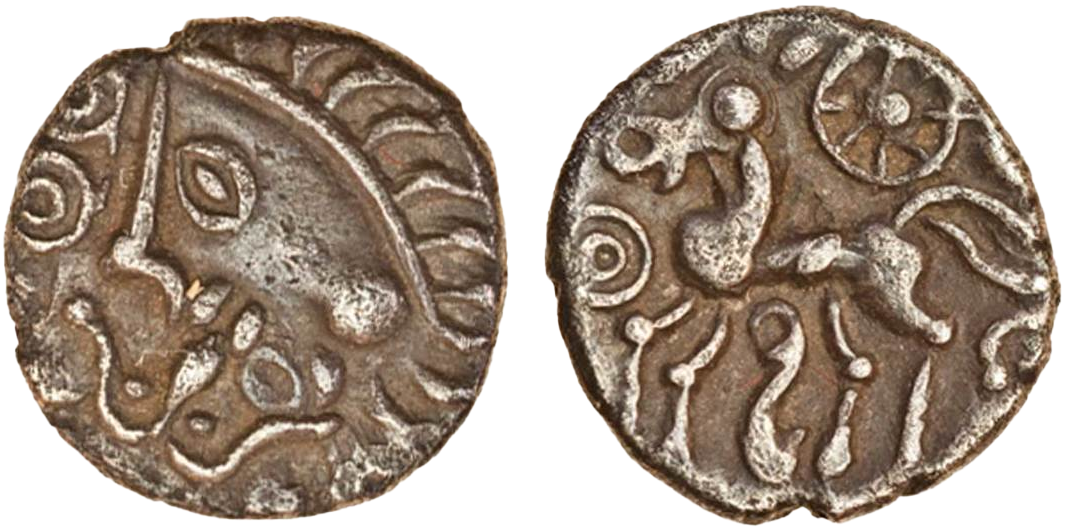


Identity and territory
Scholars generally describe the Regnenses as a Celtic community occupying a coastal territory that functioned as a distinct administrative unit in Roman times. Before the Roman presence their lands appear to have been associated with the Atrebates and other local polities; whether they formed a long-standing independent tribe, a subgroup, or a later political configuration is debated. The name is rendered in Roman sources as Regni or Regnenses, sometimes translated loosely as "people of the kingdom"; the precise origin or meaning of the ethnonym is uncertain.
Political organization and rulers
By the early Roman period the Regnenses were ruled by a client king who cooperated with Roman authorities. The most prominent recorded ruler is Tiberius Claudius Cogidubnus (also spelled Togidubnus in some inscriptions and accounts). Ancient historian Tacitus mentions a loyal British king who enjoyed Roman favour; later local inscriptions and the layout of the civitas suggest a polity that had been incorporated into the provincial administrative system. Some interpretations of a damaged local inscription have proposed unusually high Roman titles for Cogidubnus, a point that has attracted much scholarly discussion, especially because a rank such as senators or legates would have had specific Roman prerequisites.
Archaeology and the Roman period
Under Roman rule the Regnenses' core territory became a civitas within Roman Britain, centred on Noviomagus Reginorum. Archaeological work in and around Chichester has revealed urban layouts, roads, pottery, and imported goods that indicate active trade across the Channel and integration into Roman economic networks. Hill forts and other pre-Roman defensive sites in the region show continuity of settlement, while the Roman town demonstrates a shift toward planned public spaces, new building techniques and administrative functions.
Origins, contacts and culture
Before the arrival of the Romans the people in this area participated in the broader cultural and commercial world of southern southern England. Coastal location encouraged maritime contacts with continental communities, and imported goods and ideas influenced local elites. The Regnenses region shows the common pattern of native political structures adapting to Roman institutions: local kings and councils retained status while adopting Roman titles, coinage, and architecture.
Notable sites and facts
- Principal town: Noviomagus Reginorum (modern Chichester), which served as the civitas centre under Roman administration.
- Ruling figure: Tiberius Claudius Cogidubnus is the best-documented local ruler, known from literary mentions and inscriptions.
- Pre-Roman ties: territory likely had links with the Atrebates and other nearby groups, reflecting a patchwork of tribal affiliations rather than one homogeneous polity.
- Archaeology: finds show hill-forts, settlement continuity, imported pottery and urban planning associated with Roman municipalities.
- Interpretative caution: damaged inscriptions and sparse contemporary records mean many details—titles, exact borders and internal structures—remain matters for cautious reconstruction and debate among historians.
For further reading on Celtic Britain, provincial administration and the Chichester inscriptions see specialist summaries and excavation reports that synthesize the archaeological record with the literary references preserved from Roman authors. Many modern treatments emphasize the transitional nature of the Regnenses polity as an example of local communities negotiating power and identity during the Roman conquest and occupation of Britain.
Questions and answers
Q: Who were the Regnenses?
A: The Regnenses, also known as the Regni or Regini, were a British Celtic people.
Q: What was their territory?
A: Their territory or kingdom was later a civitas of Roman Britain. Their capital was Noviomagus Reginorum, which is now known as Chichester in modern West Sussex.
Q: Were they part of a confederation of tribes?
A: Possibly they were part of a confederation of tribes.
Q: How did they use hill forts?
A: The tribe made use of hill forts more than other tribes around them.
Q: What would have made them a more civilized people?
A: Their location in southern England would have made them a more civilized people. They would have had contact with Europe through trading exposing them to new ideas.
Q: What does 'Regninses' mean?
A:'Regninses' means "people of the kingdom". It is not known how they came by that name; it was recorded by the Romans but it could be a translation or a name the Romans gave them.
Q: Who was their ruler?
A: Their ruler was Tiberius Claudius Cogidubnus.
Related articles
Author
AlegsaOnline.com Regnenses (Regni): ancient tribe of southern Britain Leandro Alegsa
URL: https://en.alegsaonline.com/art/81912
Sources
- historyfiles.co.uk : "Regninses / Regni"