
Rare-earth magnets: composition, properties, history, and uses
Comprehensive overview of rare-earth permanent magnets: what they are, how they are made, their history, key properties, applications, and handling considerations.
Overview
Rare-earth magnets are a family of exceptionally strong permanent magnets manufactured from alloys that include elements known as rare earths. Unlike temporary electromagnets, these materials retain a large portion of their magnetization without a continuous power source. They are the most powerful commercially available permanent magnets and have enabled miniaturization and performance improvements across many technologies.
Image gallery
7 Images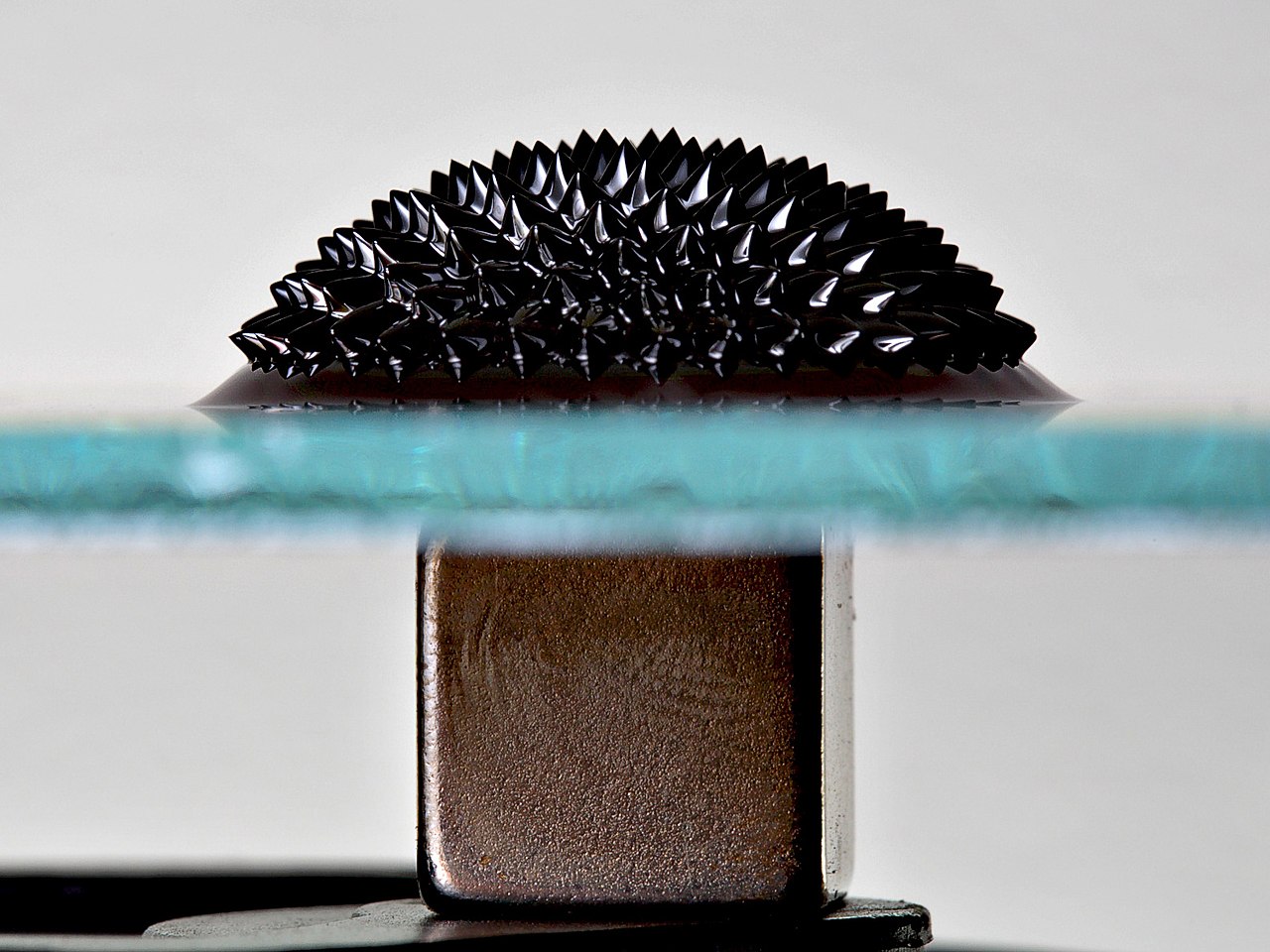


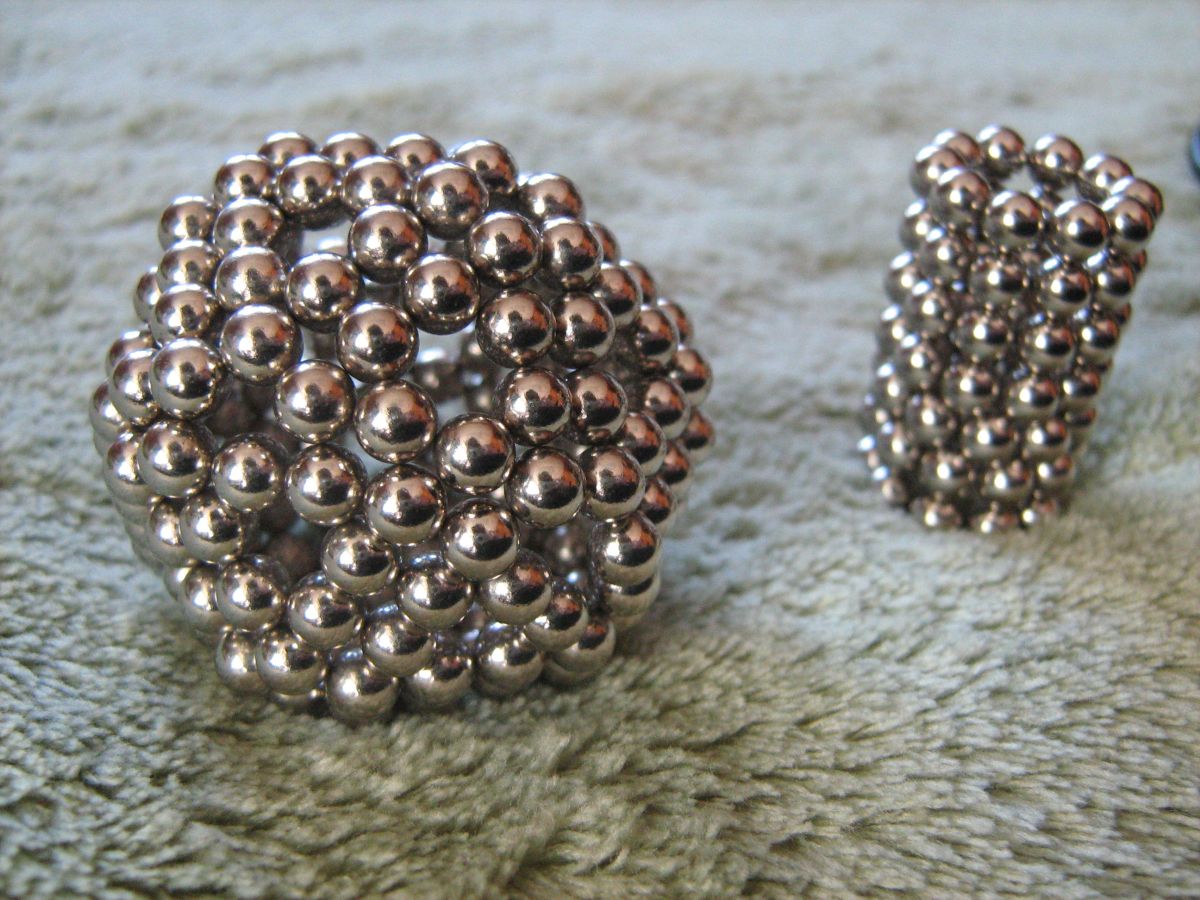


Composition and key properties
Two principal compositions dominate the market: neodymium–iron–boron and samarium–cobalt. Neodymium magnets are typically formed from sintered NdFeB alloys, while samarium-cobalt magnets use SmCo-based alloys. Together these are commonly referred to as 'rare-earth magnets' because they rely on the magnetic characteristics of the lanthanide series. For general information on alloy formulations see alloy compositions and for elemental context see rare-earth elements.
Characteristic properties include very high magnetic energy density, strong coercivity (resistance to demagnetization), and a steep temperature dependence that differs between types. Compared with older magnet types such as ferrite or alnico, rare-earth magnets generate far stronger magnetic fields and allow smaller, lighter designs. For more on field strength comparisons see magnetic field characteristics.
History and development
Rare-earth magnets were developed in the 1970s and 1980s after research into new alloy systems and sintering techniques. Samarium–cobalt magnets appeared first and were valued for higher temperature stability. Neodymium magnets, introduced later, offered even greater magnetic strength at lower cost but required protective finishes because they are more susceptible to environmental attack. Advances in powder metallurgy and protective coatings broadened their commercial adoption.
Applications and examples
Because of their compact size and strong fields, rare-earth magnets are used widely: electric motors in automotive and industrial applications, hard disk drives, wind turbine generators, magnetic resonance imaging (MRI) components, and consumer products such as headphones and speakers. They are also used in precision sensors, magnetic couplings, and increasingly in electrified vehicle drivetrains. Some related alloys exhibit magnetostrictive behavior useful in sensors and actuators (for example, Terfenol-D).
Handling, protection, and practical considerations
Rare-earth magnets are mechanically brittle and can fracture or chip if allowed to collide; they are also prone to corrosion when exposed to moisture and oxygen. To mitigate these issues they are commonly plated or coated with protective layers; typical surface treatments are described in resources about plating and coatings. Mechanical mounting must account for strong attractive forces and the potential for pinching hazards.
Variants, distinctions and notable facts
Neodymium magnets (see neodymium) offer the highest maximum energy product but are temperature sensitive; samarium–cobalt magnets (see samarium and cobalt) cost more but withstand higher temperatures and corrode less. Designers choose between them based on operating temperature, mechanical stress, cost, and required field strength. For general safety, mounting and demagnetization guidelines should be consulted before use.
- Advantages: very high field strength, compact size, improved energy efficiency in motors.
- Limitations: brittleness, corrosion risk, sensitivity to heat (especially neodymium types).
- Common mitigations: encapsulation, mechanical isolation, and specification of temperature grades.
For further technical data, material standards, and supplier guidance consult specialized engineering references and manufacturer datasheets. Useful starting points include articles and summaries on material chemistry, magnetic properties, and practical applications available via technical libraries and supplier portals.
Questions and answers
Q: What are rare earth magnets?
A: Rare earth magnets are strong permanent magnets made from alloys of rare earth elements.
Q: When were rare earth magnets developed?
A: Rare earth magnets were developed in the 1970s and '80s.
Q: How strong are rare earth magnets compared to other types of permanent magnets?
A: Rare earth magnets have much stronger magnetic fields than other types such as ferrite or alnico magnets.
Q: What are the two types of rare earth magnets?
A: The two types of rare earth magnets are neodymium magnets and samarium-cobalt magnets.
Q: What are some uses for rare earth magnets?
A: Rare earth magnets have uses in speakers and other applications that require strong magnetic fields.
Q: Why are rare earth magnets usually plated or coated?
A: Rare earth magnets are extremely brittle and vulnerable to corrosion, so they are usually plated or coated to protect them from breaking, chipping, or crumbling into powder.
Q: Are all rare earth magnets magnetostrictive?
A: No, not all rare earth magnets are magnetostrictive. Some, such as Terfenol-D, are magnetostrictive.
Related articles
Author
AlegsaOnline.com Rare-earth magnets: composition, properties, history, and uses Leandro Alegsa
URL: https://en.alegsaonline.com/art/81219