
Plating: metal surface coatings — methods, history, and applications
Plating is the application of a metal layer onto a substrate for decoration, protection or performance. This article explains common methods, history, properties, uses and important distinctions.
Plating is the process of depositing a thin layer of metal onto the surface of another material to modify appearance, protect against corrosion, improve wear or change surface properties. The material that receives the coating is called the substrate; the deposited layer may be measured in atomic layers, micrometers, or thicker cladding depending on the technique and purpose. Plating techniques are used in jewelry, electronics, automotive trim, industrial tooling and many other fields where surface performance is critical.
Image gallery
3 Images

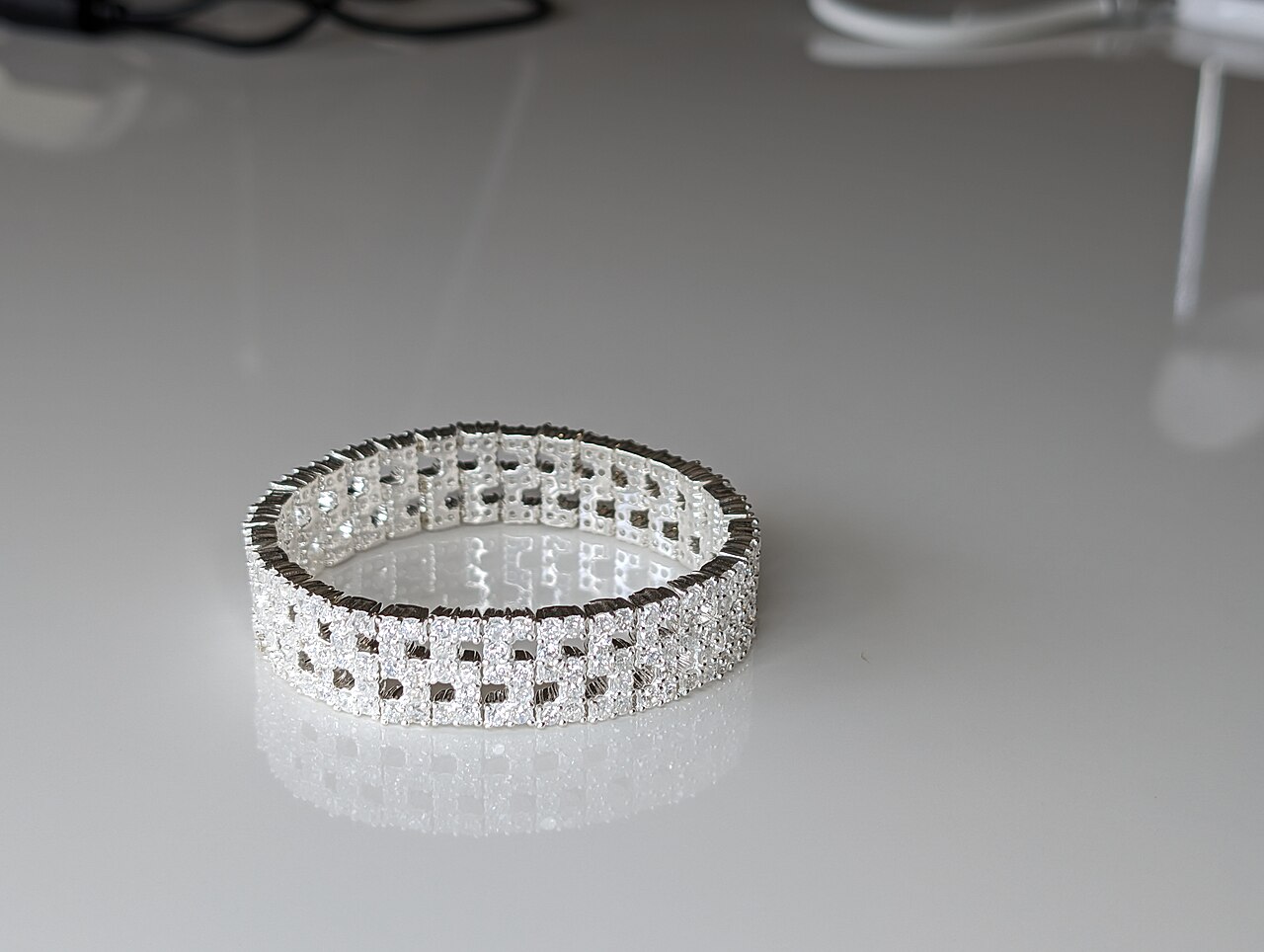
Common methods
Several broadly used methods place metal onto a surface. Each method has particular advantages and typical applications:
- Electroplating: uses an electric current to reduce dissolved metal cations and form a coherent metal coating on a conductive substrate. See general resources on electroplating.
- Electroless (chemical) plating: deposits metal by a controlled chemical reduction without an external current, valuable for uniform coatings on complex shapes and nonconductive parts pretreated to accept the deposit.
- Physical and chemical vapor deposition (PVD/CVD): create thin films in vacuum or gas phases and are common in electronics and optical coatings.
- Mechanical cladding and roll bonding: join a metal sheet to a substrate by pressure and heat; historical variants include decorative Sheffield plate.
- Immersion and displacement plating: rely on a chemical displacement reaction where a more noble metal coats a less noble substrate.
Characteristics and quality factors
Key attributes of a plated surface include thickness, adhesion, uniformity, porosity and microstructure. Thickness controls wear life and electrical performance; adhesion prevents flaking; uniformity matters for decorative finishes and tight-tolerance parts. Testing and measurement—often non-destructive techniques and standardized adhesion tests—are used to verify performance for safety-critical and commercial applications.
History and development
Decorative metal coatings have a long history: ancient civilizations used fire-gilding and leafing to apply gold and silver to objects. Mechanical and chemical innovations in the 18th and 19th centuries expanded industrial possibilities; electrochemical deposition became a widespread industrial method in the 19th century and has since evolved with modern bath chemistries and environmental controls. Advances in vacuum deposition and plating for microelectronics have extended plating into nanometer-scale engineering and precision manufacturing. For historical context on metals and gilding see resources about metalworking and the development of plating processes.
Uses, examples and importance
Plating serves many functions beyond decoration. Protective coatings such as zinc galvanizing or nickel plating inhibit corrosion and extend service life. Gold and silver plating are prized in silverware and gold jewelry for appearance and tarnish resistance. In electronics, plating provides conductive paths, solderable surfaces and wear-resistant contacts. Plated films are also important in catalysts, mirrors and sensors; at very small scales plating techniques contribute to nanotechnology and semiconductor packaging.
Distinctions and notable facts
Plating differs from painting or coating in that it deposits a metal layer, often metallurgical in nature, which can bond chemically or mechanically to the substrate. Electroplating requires the substrate to be conductive or to be made so through pretreatment; electroless methods overcome that limitation. Environmental and health considerations shape modern practice: plating baths and wastes must be controlled and treated, and industry standards guide safe operation and acceptable materials for consumer products. Innovations continue in low-temperature, low-waste processes and in specialized coatings tailored for electrical, optical or tribological performance.
For practical guidance, standards, safety data and detailed process parameters consult technical handbooks and governing standards bodies; introductory and overview material is also available through general references on electroplating, metals and surface engineering.
Questions and answers
Q: What is plating?
A: Plating is a process where a metal is coated on another metal surface. It has been done for hundreds of years and is used for various purposes in modern technology.
Q: What are some uses of plating?
A: Plating is used for decorating objects, preventing corrosion, hardening, improving wearability, reducing friction, allowing painting, altering conductivity, and for other purposes.
Q: What is the purpose of using plating in jewelry making?
A: Plating is commonly used in jewelry making to give a silver or gold finish.
Q: What is nanotechnology, and how is plating used in it?
A: Nanotechnology is the study of extremely small particles and materials. Plating can be used in nanotechnology because it can create films as thin as a single atom.
Q: What are some different methods of plating?
A: There are several plating methods, but electroplating is a very common method. Other methods include covering a solid surface with a metal sheet and then fusing them together using heat and pressure, and Sheffield plate.
Q: What is Sheffield plate?
A: Sheffield plate is a plating method where a solid surface is covered with a metal sheet, and then heat and pressure are applied to fuse them. It is a version of covering a solid surface with a metal sheet.
Q: Why is plating important for modern technology?
A: Plating is important for modern technology because it has a variety of uses in many different fields, from jewelry making to nanotechnology. It helps improve the functionality and aesthetics of objects and prevent against corrosion, wear and tear, and other issues.
Related articles
Author
AlegsaOnline.com Plating: metal surface coatings — methods, history, and applications Leandro Alegsa
URL: https://en.alegsaonline.com/art/77350
Sources
- doi.org : 10.1143/JJAP.45.8972