
Rare earth element (REE): overview, properties, uses and supply
Comprehensive overview of rare earth elements: classification, chemical properties, history, uses in technology and clean energy, geological distribution, supply chains, and environmental and geopolitical issues.
Overview
Rare earth elements (REEs) are a group of seventeen metallic chemical elements that share similar chemical behavior and are important in modern technology. The group is commonly described as the fifteen lanthanides together with scandium and yttrium. A concise list of the elements is often given in technical references. They are called "rare" not because they are uniformly scarce in the Earth's crust, but because economically concentrated, mineable deposits are uncommon and the elements occur together in mixed ores (ore deposits).
Image gallery
5 Images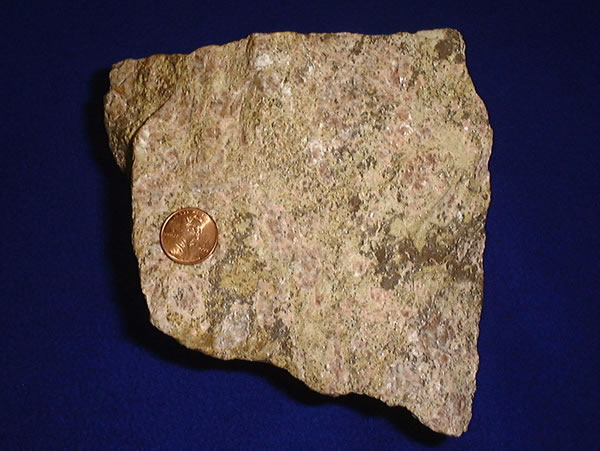

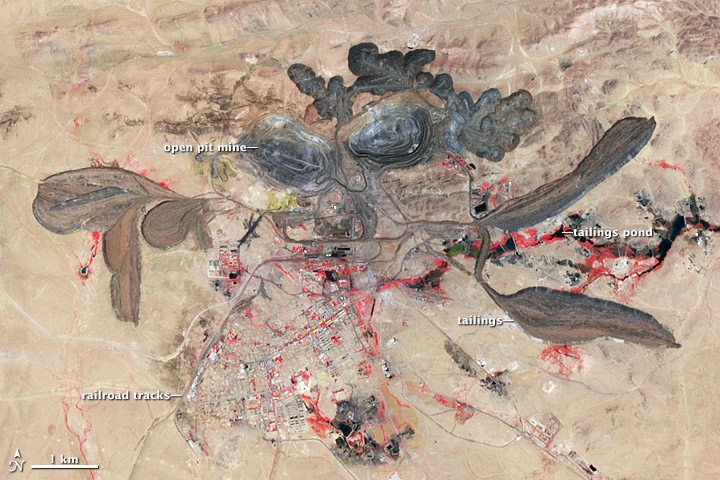


Characteristics and classification
Most rare earths are silvery-white metals with similar sizes and a dominant +3 oxidation state. These shared characteristics make them chemically alike and difficult to separate from one another. Physically, REEs exhibit notable magnetic, catalytic, and optical properties: some are strongly magnetic, some are used as catalysts, and several produce bright colors as phosphors. One exception is promethium, which is radioactive and does not occur in appreciable amounts in nature; another is cerium, which is relatively abundant compared with the others.
History and development
The first discoveries of rare earth–bearing minerals date from the late 18th and early 19th centuries, with many named after the Swedish quarry of Ytterby where several were found. Progress in analytical chemistry and separation methods through the 19th and 20th centuries made it possible to identify and isolate individual elements of the lanthanide series. Separation remains industrially challenging, typically relying on solvent extraction and ion-exchange techniques adapted for bulk processing.
Uses and importance
REEs are critical to many modern devices and systems. Their unique electronic and magnetic properties make them essential for compact, high-performance technologies:
- Permanent magnets: neodymium and samarium enable strong, lightweight magnets used in electric motors, wind turbines, and hard drives.
- Phosphors and lighting: europium and terbium create vivid red and green colors in LEDs, displays, and fluorescent lamps.
- Catalysis and polishing: cerium is used in catalytic converters and glass polishing.
- Battery and alloy applications: lanthanum and related elements appear in nickel–metal hydride batteries, specialty alloys, and rechargeable energy storage components.
- Medical and research: gadolinium compounds are used as MRI contrast agents and several REEs are important in scientific instrumentation.
Geology, supply and environmental issues
Although REE atoms are relatively abundant on Earth, they typically do not concentrate into high-grade, easily mined ores. Large, economically viable deposits are geographically limited, and mining plus chemical processing can produce significant environmental waste and require large amounts of water and chemicals. Global production and processing have been concentrated in a few regions, which has led to strategic attention on supply security, recycling, and the development of alternative materials and processing routes.
Notable distinctions and facts
Key distinctions among the rare earths include differences in abundance (cerium is among the most common), radioactivity (promethium is essentially absent naturally), and roles in technology (some are prized for magnets, others for optical or catalytic properties). Scandium and yttrium are classed with the lanthanides because they commonly occur together in ores and exhibit comparable chemistry. For readers seeking more detailed element-by-element information, consult specialized references linked here and in technical databases (group overview, lanthanide series, scandium, yttrium, geology, promethium, cerium).
Questions and answers
Q: What are rare earth elements?
A: Rare earth elements are a set of seventeen chemical elements, including fifteen lanthanides plus scandium and yttrium.
Q: Why are scandium and yttrium considered rare earth elements?
A: Scandium and yttrium are considered rare earth elements because they are often found in the same ore deposits as the lanthanides and have similar chemical properties.
Q: Are rare earth elements extremely rare on Earth?
A: No, rare earth elements are not extremely rare on Earth. They were called this because they are spread very evenly over the Earth, so it is hard to find a lot in one place.
Q: What makes promethium rare?
A: Promethium is rare because it is radioactive, and it decays.
Q: Is cerium a rare earth element?
A: Yes, cerium is one of the lanthanides and is considered a rare earth element. However, it is the 25th most common element in the Earth's crust.
Q: Are most rare earth elements found in concentrated or pure forms?
A: No, most rare earth elements are not found in concentrated or pure forms.
Q: How many of the seventeen rare earth elements are lanthanides?
A: Fifteen of the seventeen rare earth elements are lanthanides.
Tags
Related articles
Author
AlegsaOnline.com Rare earth element (REE): overview, properties, uses and supply Leandro Alegsa
URL: https://en.alegsaonline.com/art/81218
Sources
- ars.usda.gov : "News and events"
- iupac.org : Nomenclature of inorganic chemistry: IUPAC recommendations 2005 · web.archive.org
- thinkglobalgreen.org : Energy-efficient light bulbs containing yttrium
- ui.adsabs.harvard.edu : 2007NuPhA.789...15B
- doi.org : 10.1016/j.nuclphysa.2007.03.001
- pubs.usgs.gov : "Haxel G, Hedrick J, Orris J. 2006. Rare earth elements critical resources for high technology. Reston (VA): United States Geological Survey. USGS Fact Sheet: 087‐02"
- meta.wikimedia.org : China's Rare Earth Dominance
- nytimes.com : "After China's rare earth embargo, a new calculus"
- bbc.co.uk : China warns its rare earth reserves are declining
- pubs.usgs.gov : "Sedimentary carbonate‐hosted giant Bayan Obo REE‐Fe‐Nb ore deposit of Inner Mongolia, China; a cornerstone example for giant polymetallic ore deposits of hydrothermal origin"
- usgs.gov : Rare Earth elements in U.S. not so rare: significant deposits found in 14 States
- pubs.usgs.gov : The principal rare earth elements deposits of the United States—A summary of domestic deposits and a global perspective
- theanchorhouse.com : "Cox C. 2008. Rare earth innovation. Herndon (VA): The Anchor House Inc;"
- reuters.com : "As hybrid cars gobble rare metals, shortage looms"