
Alnico: the iron–aluminum–nickel–cobalt alloy used for permanent magnets
Alnico is an iron-based alloy of aluminum, nickel and cobalt used to make permanent magnets. Known for temperature stability and its historical role before rare-earth magnets, it remains useful today.
Overview
Alnico is a family of iron-based alloys whose principal magnetic elements are aluminum, nickel and cobalt. The name is an acronym from those chemical symbols (Al–Ni–Co), and formulations frequently include small additions of copper and occasionally titanium. Alnico alloys are inherently ferromagnetic, which means they can form permanent magnets due to cooperative magnetic ordering of atomic moments. Their combination of strong magnetic remanence and good thermal stability made them the dominant commercial permanent magnet material until the arrival of rare-earth magnets in the 1970s.
Image gallery
5 Images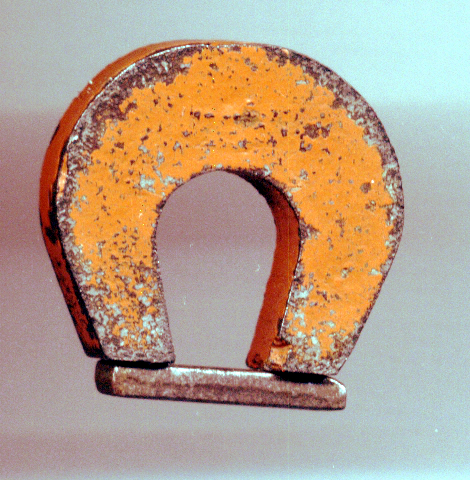


Composition and microstructure
The basic constituents of alnico are iron (Fe), aluminum (Al), nickel (Ni) and cobalt (Co). Typical commercial grades add minor amounts of copper and sometimes titanium to tailor coercivity and mechanical behavior. The magnetic properties arise from a microstructure produced by controlled cooling and heat treatment that separates the alloy into iron-rich and nickel-aluminum–rich phases; this microstructure produces strong, stable magnetic domains when the material is magnetized.
Magnetic properties and manufacture
Alnico magnets combine high magnetic flux density (remanence) with relatively high Curie temperatures, so they maintain magnetism at temperatures that would demagnetize many other magnets. Their coercivity — the resistance to becoming demagnetized — is modest compared with modern rare-earth materials, typically on the order of hundreds of oersteds rather than the many thousands achieved by some alternatives. The alloys are produced either by casting or by powder metallurgy (sintering). Some grades are manufactured to be anisotropic: they are magnetically oriented during heat treatment so that magnetic performance is maximized along a chosen direction. Final magnetization requires exposure to a strong external field to align the domains.
Uses and historical significance
Alnico magnets were developed in the early 20th century; a milestone came in 1931 when T. Mishima reported an iron–nickel–aluminum alloy with substantially improved coercivity. The material was refined through the 1930s and 1940s and found widespread use in electric motors, generators, meters, loudspeakers, microphones and early telephone and radio equipment. Their robust high-temperature performance also made them suitable for applications where thermal stability is essential. Although development of rare-earth magnets reduced alnico's dominance, alnico remains in use where its specific mix of properties is advantageous — for example in specialized sensors, magnetron cathodes, and some musical-instrument pickups.
Characteristics, advantages and limitations
- Strength: High magnetic flux density gives strong fields for many purposes.
- Temperature performance: Good stability at elevated temperatures compared with many modern magnets.
- Durability: Reasonable corrosion resistance but often plated or protected; mechanically brittle when cast.
- Limitations: Coercivity is lower than that of rare-earth magnets, making alnico more susceptible to demagnetization in some service conditions; cobalt content can make some grades relatively costly.
Comparisons and notable facts
Alnico sits between older steel and ceramic (ferrite) magnets and newer rare-earth types in terms of performance. Compared with ferrite, alnico offers higher magnetic strength and better temperature stability; compared with neodymium or samarium–cobalt magnets, it has lower coercivity and energy product but better resistance to high temperatures and thermal cycling. Magnet-making and magnetic theory explain the behavior of these materials: the ferromagnetic ordering and magnetic-domain mechanics are central concepts in how permanent magnets work (mechanism), and the practical challenge of maintaining magnetization (avoiding loss of magnetism) is often expressed in terms of coercivity and demagnetizing forces (magnetism loss).
Historical and technical references often cite T. Mishima's early work in Japan (Mishima, Japan) as the starting point for alnico development. Modern manufacturers supply a range of standard grades (commonly referred to by numbers such as "Alnico 5" or "Alnico 8") tailored to different balances of coercivity, remanence and mechanical form factor. For broader reading on alloys and magnetic materials, see introductory materials on alloy systems and ferromagnetism or overviews of rare-earth magnets to understand how alnico compares with later technologies. For more detailed manufacturing and application notes, consult industry sources and technical datasheets (acronym origin, nickel roles, aluminum effects).
Although no longer the strongest permanent magnet material by raw energy product, alnico's unique combination of properties — especially its thermal stability and long service life in appropriate conditions — ensures it still occupies an important niche in magnetics engineering and specialty applications.
Further reading and manufacturer guidance can clarify specific grade compositions, recommended operating temperatures and magnetization procedures (iron content, cobalt influence, copper additions, titanium effects).
Questions and answers
Q: What is alnico?
A: Alnico is a type of alloy made up of iron, aluminium, nickel, and cobalt.
Q: What is the name alnico derived from?
A: The name alnico is an acronym derived from the elements it contains: Al, Ni, and Co.
Q: What other elements may be present in alnico?
A: Copper and sometimes titanium may be present in alnico.
Q: What properties do alnico alloys possess?
A: Alnico alloys are ferromagnetic, have a high coercivity, and are used to make permanent magnets.
Q: What is coercivity?
A: Coercivity refers to how resistant a material is to losing its magnetism.
Q: What was the strongest type of magnet before rare-earth magnets were developed?
A: Alnico magnets were the strongest type of magnet before rare-earth magnets were developed.
Q: When was alnico developed and by whom?
A: Alnico was developed in 1931 by T. Mishima in Japan, who found that an alloy of iron, nickel, and aluminium had double the coercivity of the best magnets of that time.
Related articles
Author
AlegsaOnline.com Alnico: the iron–aluminum–nickel–cobalt alloy used for permanent magnets Leandro Alegsa
URL: https://en.alegsaonline.com/art/2916
Sources
- books.google.com : Introduction to Magnetic Materials
- arnoldmagnetics.com : Arnold-Alnico Magnets
- books.google.com : Magnetic domains: the analysis of magnetic microstructures
- magnetsales.com : Frequently Asked Questions