
Ramna Kali Mandir (Ramna Kalibari) — history, significance, and legacy
Ramna Kali Mandir (Ramna Kalibari) was a historic Kali temple in Dhaka near Ramna Park (now Suhrawardy Udyan). Believed ancient, it was destroyed on 27 March 1971 and remains an important site of memory.
Overview
The Ramna Kali Mandir, commonly called the Ramna Kalibari, was a well-known Hindu shrine in the Ramna area of Dhaka, adjacent to the grounds now called Suhrawardy Udyan. Long regarded as an important centre of worship in eastern Bengal, the temple served religious, social and cultural roles for local Hindus and attracted devotees from the region. The Bengali name Kalibari literally means "house of Kali," referring to the temple's dedication to the goddess Kali, a principal deity in Shaktism.
Image gallery
10 Images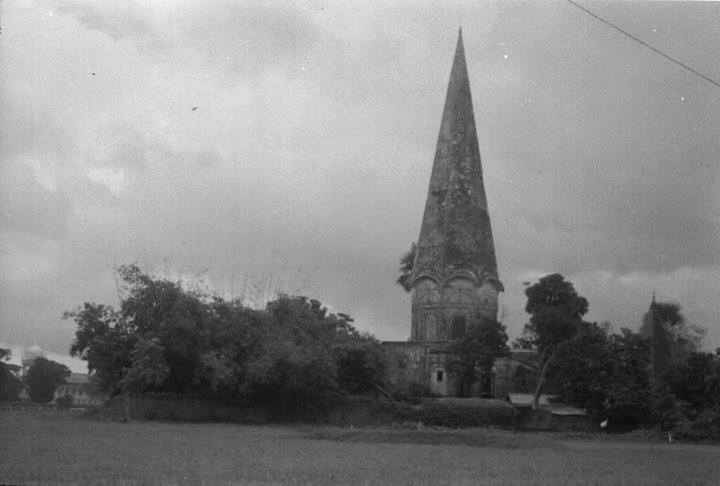


Name, location and tradition
Local traditions ascribe considerable antiquity to the site; in popular memory the temple was described as centuries old and as part of the layered urban fabric of Dhaka. It occupied a prominent site near central Ramna, a recreational and ceremonial precinct that also contained parks and government institutions. The temple's presence reflected the plural religious character of the city before 1971 and the role of temple centres as nodes of communal life.
Architecture and ritual life
Accounts emphasise a sanctum where an image of Kali was installed and a surrounding complex used for worship, offerings, and ritual observances. As with many Bengali Kali temples, it was a focal point for festivals such as Kali Puja and other seasonal rites. The temple complex also accommodated gatherings for charitable functions, community rites of passage, and cultural performances tied to the religious calendar.
Historical role and community functions
Beyond liturgical functions, the Ramna Kalibari functioned as a meeting place and a marker of identity for Hindus in the city. Temples in this tradition commonly supported social networks, maintained ritual calendars, and served as repositories of local memory through oral history and commemorative practices. The site was regularly cited in travel accounts, municipal records and local recollections as a familiar urban landmark.
Destruction in 1971 and documentation
On 27 March 1971 the temple was demolished during the opening phase of the Bangladesh Liberation War. Contemporary reports and later historical accounts describe the bulldozing of the temple as part of a wider pattern of violence that affected civilians and cultural sites in Dhaka. The destruction of the Ramna Kali Mandir became symbolically linked to the losses suffered by minority communities and the wider cultural damage of the conflict.
Aftermath, memory and attempts at preservation
In the decades since 1971 the site has been the subject of public remembrance and community commemoration. Relatives, devotees and local historians have documented oral testimonies, photographs and written recollections to keep the memory of the temple alive. At various times there have been calls to preserve the historical record, to mark the location, and to support activities that acknowledge the cultural significance of the lost shrine.
Scholarship and public significance
Scholars of South Asian history and religion cite the Ramna Kalibari when discussing religious pluralism, urban change, and cultural loss in modern South Asia. Because precise architectural and archival records are limited, many descriptions are framed cautiously, relying on eyewitness testimony and community memory. The temple's destruction continues to be mentioned in broader studies of the 1971 war and its impacts on urban heritage.
Further reading and links
- Ramna Kalibari — local name and language reference
- Kali (goddess) — general background
- Kali worship and practices in Bengal
- Hindu temples — context for South Asia
- Temple architecture and ritual spaces
- Indian subcontinent — historical overview
- Dhaka — city history and districts
- Bangladesh — modern nation and history
- Reports on the demolition of cultural sites
- Pakistan Army — 1971 military actions
- Accounts of the 1971 genocide
- Bangladesh Liberation War — overview
For those researching the Ramna Kali Mandir, it is advisable to consult a range of sources including contemporary newspaper reports, memoirs of witnesses, municipal archives where available, and scholarly studies of the 1971 conflict and of Bengali religious life. Together these materials help reconstruct the temple's role in Dhaka's past and its enduring significance in public memory.
Related articles
Author
AlegsaOnline.com Ramna Kali Mandir (Ramna Kalibari) — history, significance, and legacy Leandro Alegsa
URL: https://en.alegsaonline.com/art/81039
Sources
- asiantribune.com : "Bangladesh: The Demolition Of Ramana Kali Temple In March 1971"