
Bulldozer: heavy tracked machine for pushing, grading, and earthmoving
A bulldozer is a powerful tracked or wheeled machine with a front blade and optional rear ripper, used for earthmoving, demolition, grading, and site preparation across construction, mining, forestry and agriculture.
A bulldozer is a heavy machine equipped with a broad front blade and, frequently, a rear ripper or attachment. Designed primarily to push, spread and level large quantities of soil, rock, rubble or snow, bulldozers are a common sight on construction sites, mines and land‑clearing projects. Although often mistaken for excavators, bulldozers operate by pushing material with a mounted blade rather than digging with a hydraulic arm; this makes them especially useful where mass movement and surface grading are required. For a general introduction to their uses, see construction and demolition resources.
Image gallery
10 Images


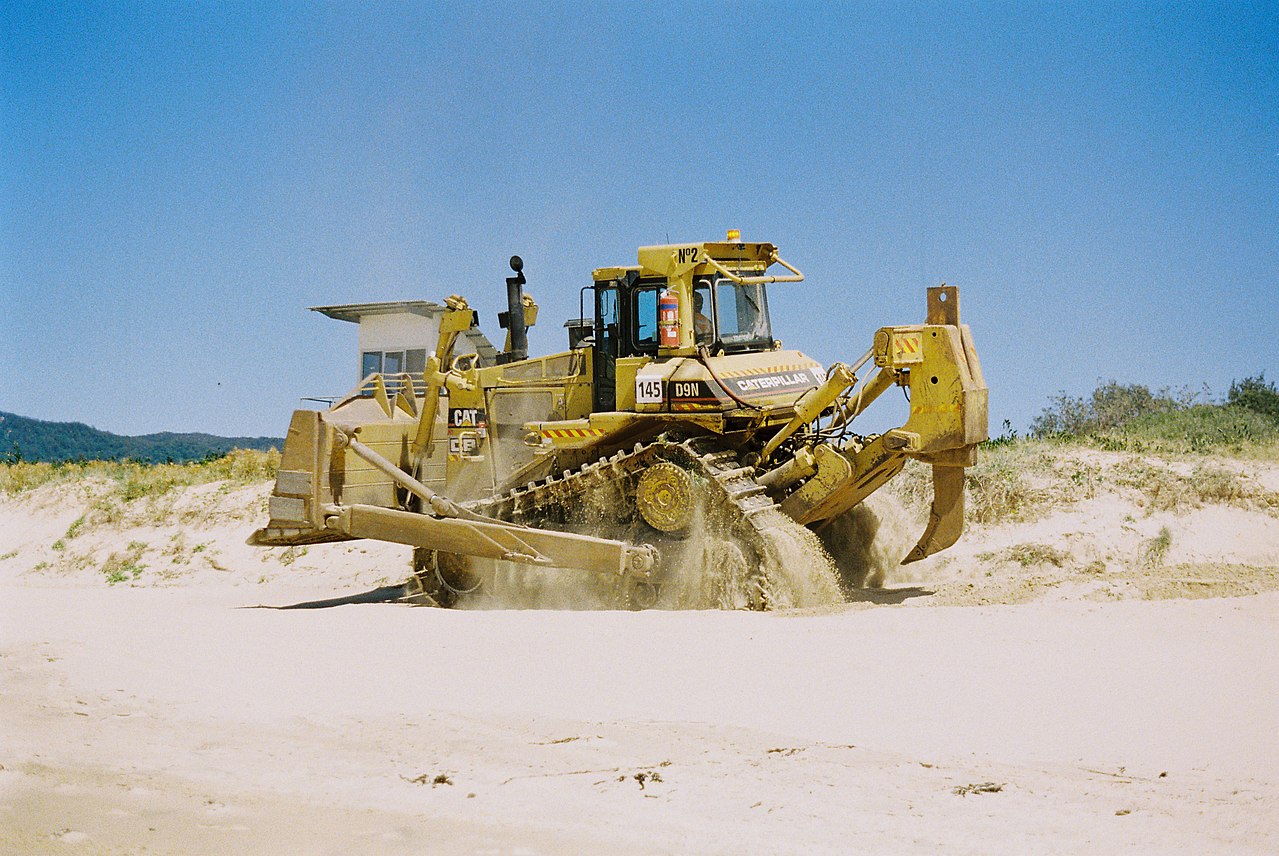

Major components and blade types
Typical bulldozer components include a diesel engine, power transmission, operator cab, undercarriage (tracks or wheels), and the working implements: the blade at the front and the ripper or other attachments at the rear. Blade varieties are chosen to match the job:
- Straight blade (S‑blade): short and flat, useful for fine grading and short‑haul pushing.
- Universal blade (U‑blade): tall and curved to carry material over longer distances.
- Semi‑universal (S‑U) blade: a compromise between carrying capacity and precision.
- Angle, V‑blade and other specialty blades: for snow removal, ditching or trenching.
Operation, mobility and variants
Bulldozers move on either continuous tracks or wheels. Tracked machines distribute weight over a larger area and provide superior traction and flotation on soft or uneven ground, which is why most heavy bulldozers are tracked. Wheeled units are faster on hard surfaces and may be used for lighter duty or municipal work. Sizes range from compact “mini” dozers used in tight urban sites to massive mining dozers that move large volumes of material.
History and development
The bulldozer evolved from early agricultural tractors fitted with blades in the late 19th and early 20th centuries. Throughout the 20th century, improvements in engines, hydraulics and undercarriage design increased power, control and reliability. Modern machines integrate operator comforts, computerized controls and emission‑controlled powerplants to meet productivity and environmental standards.
Common uses and importance
Bulldozers perform a range of tasks: clearing land of vegetation and debris, initial site grading, road building, pushing stockpiles, backfilling trenches, scarifying compacted layers with a ripper, and even snow removal. In mining and quarrying they support haul roads and benching; in forestry they assist with access and firebreaks. Their combination of brute force and maneuverability makes them indispensable where rapid, large‑scale earth movement is needed. For application examples and equipment selection guidance, consult equipment overview and operation guidelines.
Safety, maintenance and distinctions
Safe bulldozer operation depends on trained operators, clear site planning and regular maintenance of blades, undercarriage and hydraulics. Key differences from related machines: excavators are optimized for digging with a boom and bucket, while graders use a long adjustable blade for fine leveling rather than heavy pushing. Rippers and specialized attachments expand a bulldozer’s versatility, but each attachment requires appropriate operator training and inspection to avoid equipment damage or accidents.
Overall, the bulldozer remains a foundational earthmoving tool: simple in concept, adaptable in form, and central to many construction, infrastructure and resource‑management projects worldwide.
Related articles
Author
AlegsaOnline.com Bulldozer: heavy tracked machine for pushing, grading, and earthmoving Leandro Alegsa
URL: https://en.alegsaonline.com/art/15241