
Raphael (archangel)
Raphael, whose name means “God heals,” is an archangel associated with healing, guidance and protection. He appears in Jewish and Christian traditions, most prominently in the Book of Tobit, and features in liturgy and art.
Raphael is traditionally ranked among the highest angels and is most widely associated with healing and guidance. His name derives from a Hebrew phrase meaning "God heals" or "God has healed," and both his character and functions emphasize restoration of health, safe travel and the protection of the vulnerable. Raphael is one of the best-known angelic figures outside the canonical Hebrew Bible and occupies a prominent place in the devotional life and art of several religious traditions.
Image gallery
10 Images






Origins and textual sources
The clearest narrative appearance of Raphael is in the Book of Tobit, a work included in the Catholic and Eastern Orthodox biblical canons but classified as apocryphal in many Protestant traditions. In that story Raphael accompanies the young Tobias, helps cure Tobit’s blindness and guides the travelers, using a fish whose organs are used as a healing remedy. Raphael also appears in later Jewish writings and in the corpus of apocryphal and pseudepigraphal literature; his exact status varies between religious traditions and historical periods.
Roles, symbols and veneration
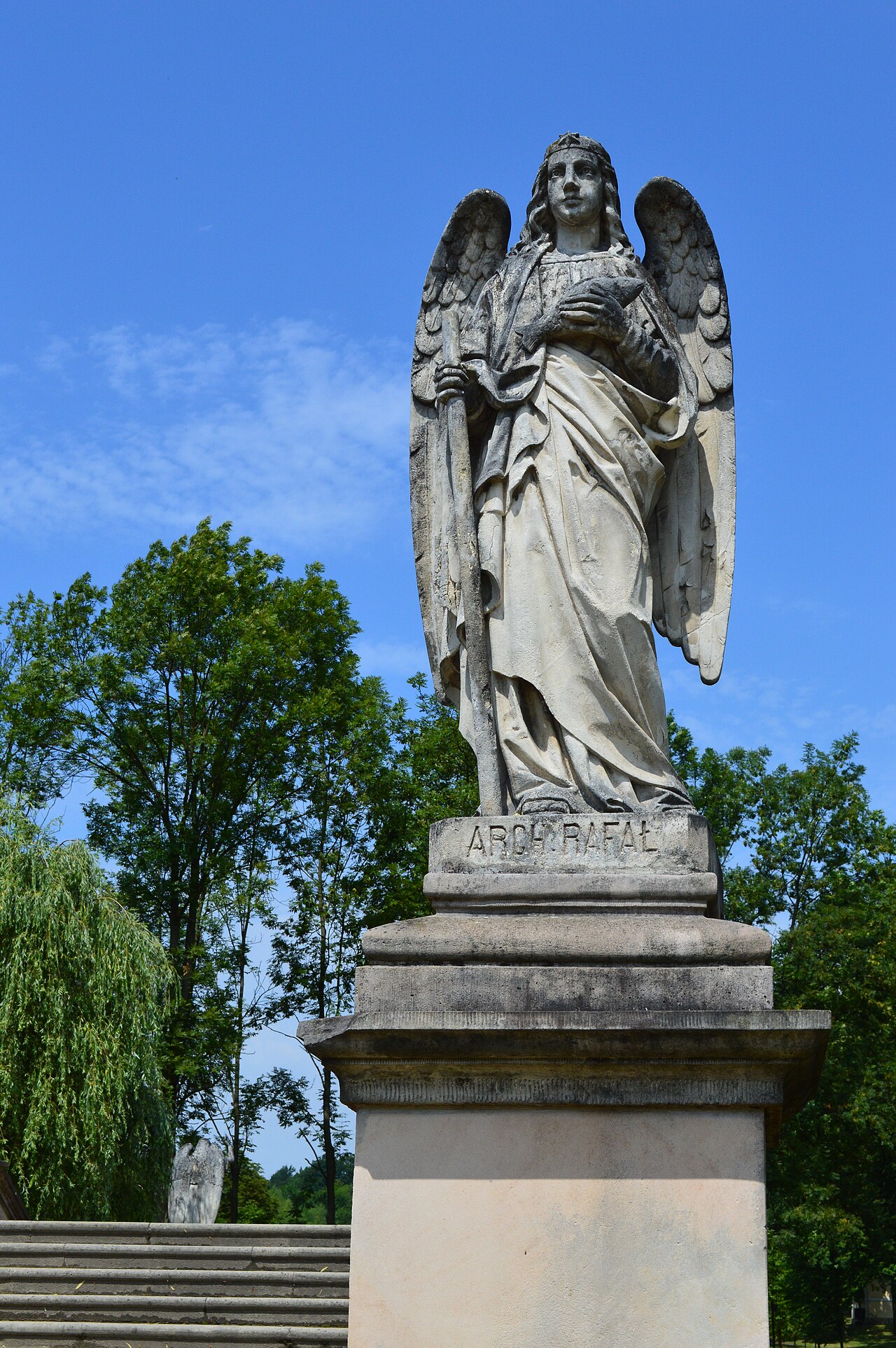
Raphael is most commonly recognized as an angel of healing and a patron of travelers. Iconography often shows him holding a staff and a fish, or leading a young man by the hand, alluding to the Tobit narrative. In Christian devotion he is invoked for health, safe journeys and as a protector of those who care for the sick. Liturgical observances include a shared feast of the archangels on September 29 in Western Christianity; other calendars and local traditions record different dates.
- Functions: healing, guidance, protection.
- Symbols: staff, fish, guiding hand.
- Patronage: travelers, the sick, medical workers, young couples (in some traditions).
Across Christian, Jewish and some Islamic-influenced traditions the identification, ranking and duties of Raphael differ. In some later sources he is listed among the Seven Archangels; in others he is named primarily through the Tobit story. Raphael continues to appear in sacred liturgies, devotional prayers and the visual arts, where his image underscores mercy, healing and the protective presence attributed to heavenly intermediaries. For further reading on liturgical calendars and historical sources, see related materials.
Related articles
Author
AlegsaOnline.com Raphael (archangel) Leandro Alegsa
URL: https://en.alegsaonline.com/art/81191
Sources
- lds.org : Doctrine and Covenants 128:21
- straphaelsparish.net : "All About St. Raphael the Archangel", St. Raphael Episcopal Church