
Quickdraw (climbing gear)
A quickdraw is a short sling with two carabiners used in rock climbing to connect the rope to protection. This article explains parts, use in lead climbing, orientation, variations, and safety checks.
Overview
A quickdraw is a common piece of climbing equipment that links the climbing rope to a protection point such as a bolt, piton or cam. It is used primarily in lead climbing where the climber clips the quickdraw to a fixed anchor and then clips the rope into the opposite carabiner. Quickdraws are placed regularly as a climber ascends a route to limit fall distance and reduce rope drag.
Image gallery
3 Images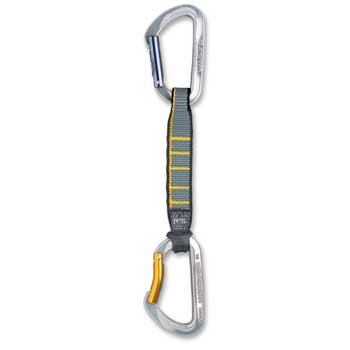

Design and components
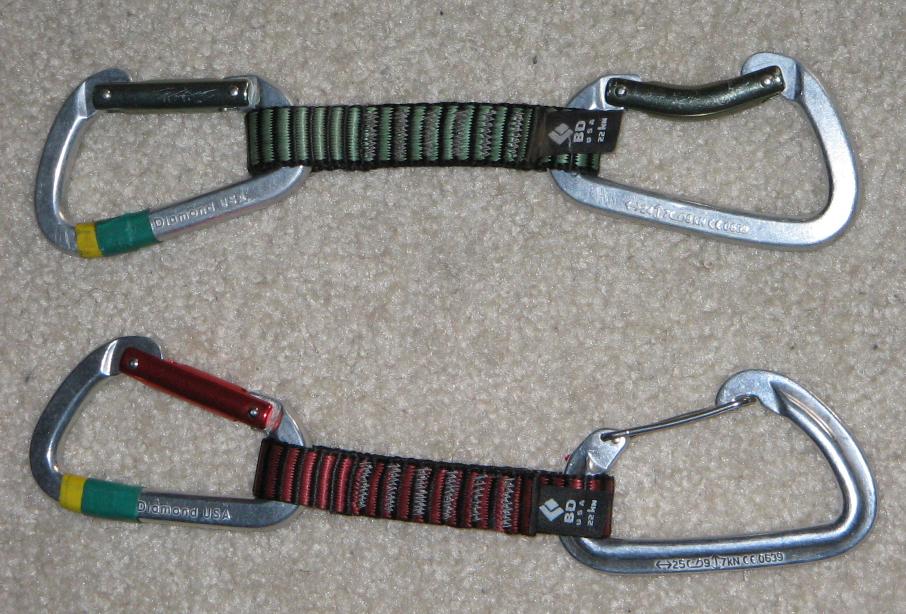
Most quickdraws consist of two carabiners joined by a sewn nylon or Dyneema sling (sometimes called a dogbone or extender). One carabiner typically has a straight gate designed to clip to the anchor; the other often has a bent gate which makes clipping the rope easier. The connecting sling can be short (10–12 cm) for sport climbing or longer to extend placements and reduce rope drag. A rubber keeper may be used to keep the rope-end carabiner oriented correctly.
How they are used
In practical use a quickdraw is clipped with the anchor bolt or other protection on the straight-gate end and the rope is clipped into the bent-gate end. Climbers generally place quickdraws every few meters on a route so that, in the event of a fall, the rope will be caught by the last clipped quickdraw rather than the climber hitting the ground. To minimize the chance of accidental unclipping or cross-loading, the rope should run along the spine (the solid side) of the carabiner rather than against the gate.
Orientation and clipping technique
- Clip the anchor with the straight-gate carabiner and the rope with the bent-gate carabiner when possible.
- Orient the rope-end carabiner so its gate faces away from the rock face and away from the direction the rope will run; this helps prevent the gate from catching on the wall and opening.
- Ensure the rope runs along the carabiner spine and that the sling is not twisted.
- Watch for situations that could cause cross-loading (when force is applied across the carabiner’s minor axis) and adjust the quickdraw or clip to avoid it.
Ratings, variations and safety
Quickdraws and carabiners are rated for strength in kilonewtons (kN); common sport quickdraws are designed to withstand forces in the range typically quoted by manufacturers (for example around 22 kN on major axes), but always check the specific gear’s markings. Variations include lightweight alpine draws, extendable draws with longer slings for wandering protection, and specialized orientations for competition or big-wall climbing.
Regular inspection of stitching, webbing, the carabiner gates and the presence of sharp edges is essential. Replace any quickdraw that shows frayed webbing, deformed carabiners, sticky or misaligned gates, or corrosion. When learning proper clipping and placement techniques, practice under the guidance of an experienced climber or instructor and consult reputable sources such as manufacturer instructions or authoritative climbing guides (gear manuals, climbing instruction).
Notable facts and common mistakes
- Using the bent-gate carabiner for the rope side is a common convention because it makes clipping quicker and easier.
- Placing the gate facing the rock or allowing the gate to be pressed against a sharp edge can cause accidental opening or weakened capacity; orient gates away from such hazards.
- Do not rely on a single quickdraw as your only protection—proper spacing and redundancy where appropriate improve safety.
For additional technique, product comparisons and up-to-date safety recommendations consult manufacturer guidance and reputable climbing instruction resources (instructional guides, equipment reviews, safety standards).
Related articles
Author
AlegsaOnline.com Quickdraw (climbing gear) Leandro Alegsa
URL: https://en.alegsaonline.com/art/80538