
Anchor (nautical device): types, parts, history and usage
A nautical anchor secures a vessel by resisting wind, tide and waves. Covers types (temporary vs permanent), parts, how anchors hold, history, selection, setting, and safety considerations.
Overview
An anchor is a device used to prevent a vessel from drifting by attaching it to the seabed. Modern anchors are typically made from steel or other metals and are designed either to embed into sediment or to use mass and contact to hold position. Anchors are essential for mooring, fishing, waiting offshore, and emergency station-keeping and can be either portable equipment carried on a boat or permanently installed mooring blocks on the seabed.
Image gallery
10 Images




Types and common designs
Anchors are commonly divided into two broad categories: temporary anchors that are carried on the boat and deployed when needed, and permanent anchors (mooring blocks) that remain fixed on the seabed and provide long-term mooring. Within the temporary category, several designs are widely used for different conditions:
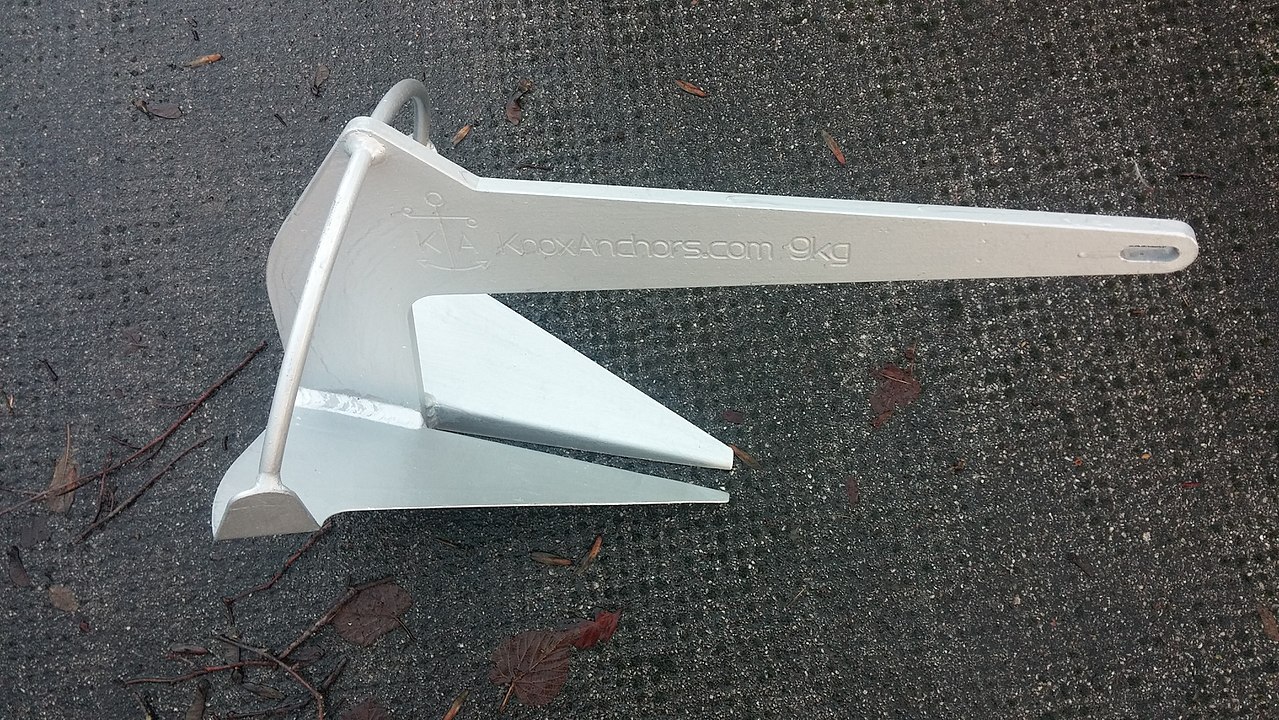
- Plow-type (e.g., modern plow or Delta anchors): shaped to dig into many types of bottom and reset well when the boat swings.
- Fluke or plate anchors (Danforth style): lightweight with broad flukes that provide high holding power in soft mud or sand.
- Mushroom anchors: heavy, cap-shaped anchors that set well in soft seabeds and are often used for small permanent moorings.
- Grapnel anchors: folding or multiple-pronged anchors suited to rocky bottoms, small boats, or temporary stops.
- Specialty anchors: including klip, Bruce, and modern high-holding designs optimized for specific bottoms or seabed conditions.
- Sea anchor/drogue: a device deployed in the water column to stabilize or slow a vessel in heavy weather; it does not rest on the seabed.
Parts and how an anchor works
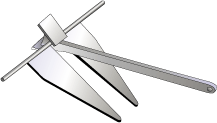
Several basic components make up most anchors: the shank (central bar), flukes or blades (the parts that dig or present area to the seabed), the crown (where shank and flukes meet), and the ring or eye for attaching chain or rope. The anchor rode (the connection to the boat) typically combines chain and rope; chain helps keep the pull near-horizontal at the seabed and improves setting and holding.
Anchors hold by two principal mechanisms: weight (mass) and geometry. Large, heavy objects can resist movement by sheer mass, but for portable anchors the design that allows penetration into the seabed and a wide bearing area is more important. Holding power depends strongly on seabed type—sand and mud favor fluke-style anchors, while rocky or weed-covered bottoms often require grapnels, plow types, or special solutions.
History and development
Earliest anchors were simple stones or baskets filled with stones used to add weight. Over time designs evolved to include wooden anchors with lead or stone ballast, then iron and steel forms. The classic admiralty pattern (with separate stock and curved arms) served for many centuries before being supplanted by modern forged or cast shapes that balance weight, strength, and the ability to set and reset quickly. Permanent moorings commonly use concrete blocks or heavy mushroom anchors depending on depth and seabed.
Usage, selection and safety
Selecting an anchor involves matching anchor type and size to the vessel, expected seabed, and conditions. Proper anchoring technique includes choosing a sheltered spot, paying out sufficient rode so that the angle of pull lies close to the seabed (often several times the water depth—commonly around five to seven times the depth under typical conditions), setting the anchor by reversing slowly until it bites, and monitoring for drag. Regular inspection of chain, shackles, and rope splice integrity reduces failure risk. In rough weather sailors may deploy a drogue or sea anchor to control motion rather than rely solely on the seabed anchor.
Notable distinctions and practical notes
Permanent mooring blocks differ from temporary anchors in that they are intended to remain on the bottom and typically provide very large holding power without occupying space on deck. Different anchors excel in different bottoms: mushroom anchors are effective for long-term moorings in soft mud, while plow or modern fluke designs offer reliable holding across varied bottoms for cruising boats. Anchors should be stowed securely when not in use and fitted with a correctly sized rode and hardware.
For further practical guidance and technical specifications, see anchoring basics, comparative reviews such as anchor design guides, equipment maintenance advice at rode and chain care, and official mooring standards or local regulations at harbor and mooring references.
Questions and answers
Q: What is an anchor used for?
A: An anchor is used to stop boats from moving.
Q: What are anchors usually made of?
A: Anchors are usually made of metal.
Q: What is the purpose of anchors catching the ocean floor?
A: Anchors are made to catch the ocean floor (the seabed) to keep the boat in place.
Q: What are the two main types of anchors?
A: The two main types of anchors are temporary and permanent.
Q: What is a permanent anchor called?
A: A permanent anchor is called a mooring block.
Q: What is the difference between a permanent anchor and a temporary anchor?
A: A permanent anchor is not easily moved and a temporary anchor can be moved and is carried on the boat.
Q: How do anchors work?
A: An anchor works by either weight (mass) or shape. Shape is more important to temporary anchors, and design is very important. Anchors must resist wind and tide, and also the up-and-down movement of waves.
Related articles
Author
AlegsaOnline.com Anchor (nautical device): types, parts, history and usage Leandro Alegsa
URL: https://en.alegsaonline.com/art/3826