
Pterygota: the winged insects and their descendants
Pterygota is the insect subclass that comprises most winged species and groups that lost flight secondarily. Covers defining features, evolution, main clades and ecological importance.
Pterygota is the large insect subclass that contains virtually all winged forms and many lineages that have become secondarily wingless. The name comes from Greek roots meaning "winged" and distinguishes this group from wingless lineages traditionally placed in the Apterygota. Modern treatments regard Pterygota as the dominant branch of the class insects because the acquisition of wings unlocked new habitats and modes of life, producing a substantial adaptive radiation.
Image gallery
3 Images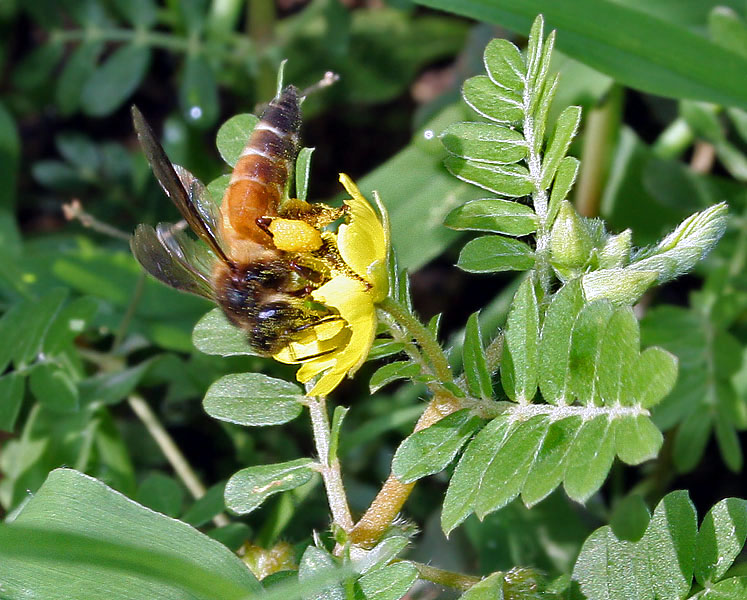


Typical characteristics
Members of Pterygota share a suite of features linked to flight and aerial behaviour, though not all living species fly. Key characters include:
- Paired thoracic wings or wing structures with articulated veins and muscles that allow complex movements.
- Modifications of the thorax and musculature that support wing attachment and control.
- Life-history strategies that may include incomplete or complete metamorphosis; the latter characterizes the Endopterygota, a major subgroup.
- Examples of secondarily wingless adults in several lineages: their ancestors could fly but descendants lost wings for ecological reasons.
Origins and evolution
Flight evolved early in insect history and is thought to have been a key innovation that allowed Pterygota to diversify. Fossil and comparative anatomical evidence indicate wings were present in the common ancestor of the group, and subsequent evolution produced multiple wing forms and wing-loss events. Researchers discuss not only the mechanics of wing origin but also the ecological contexts that favored aerial locomotion and the later loss of wings in some habitats or life strategies; these topics remain active areas of evolutionary research.
Major subdivisions and classification
Taxonomists divide Pterygota into several large assemblages. Two historically important divisions are the Palaeoptera and the Neoptera. The Palaeoptera includes ancient lineages that cannot fold wings flat over the abdomen, but its exact limits are debated and it may be paraphyletic. Neopteran insects can flex their wings over the body and include most modern orders.
Within Neoptera, traditional groupings such as Exopterygota (incomplete metamorphosis) contrast with Endopterygota (complete metamorphosis). While some older terms are under revision, the Endopterygota is widely recognized as a natural, monophyletic group because its members share distinctive developmental features.
Ecological roles and examples
Pterygote insects occupy nearly every terrestrial and many freshwater niches. Flying species pollinate plants, disperse seeds, prey on other arthropods, and serve as food for larger animals. Representative orders include dragonflies and mayflies among the more ancient groups, and diverse modern orders such as beetles, flies, bees, butterflies and wasps in the Endopterygota. Even flightless forms like certain ants, fleas and parasitic lice belong to pterygote lineages that lost wings secondarily.
Notable facts and continuing debates
Pterygota illustrates how a single innovation—functional wings—can reshape animal diversity. Systematists continue to refine the relationships among early branching pterygote lineages and to resolve which conventional groupings are natural. For accessible summaries and taxonomic details see introductions aimed at both general readers and specialists (winged insect overview) and comparative studies of fossil and living taxa (ancestral reconstructions, evolutionary papers). For higher-level treatments and lists of orders consult resources that compare morphological and genetic evidence (insect classification, adaptive radiation, Palaeoptera discussions, Neoptera details, Exopterygota issues, Endopterygota summaries).
Related articles
Author
AlegsaOnline.com Pterygota: the winged insects and their descendants Leandro Alegsa
URL: https://en.alegsaonline.com/art/79884