
Pubis (pubic bone)
The pubis is the anterior part of the hip bone, forming the front of the pelvis, contributing to the acetabulum and pelvic outlet, and serving as an attachment site for muscles and ligaments.
Overview
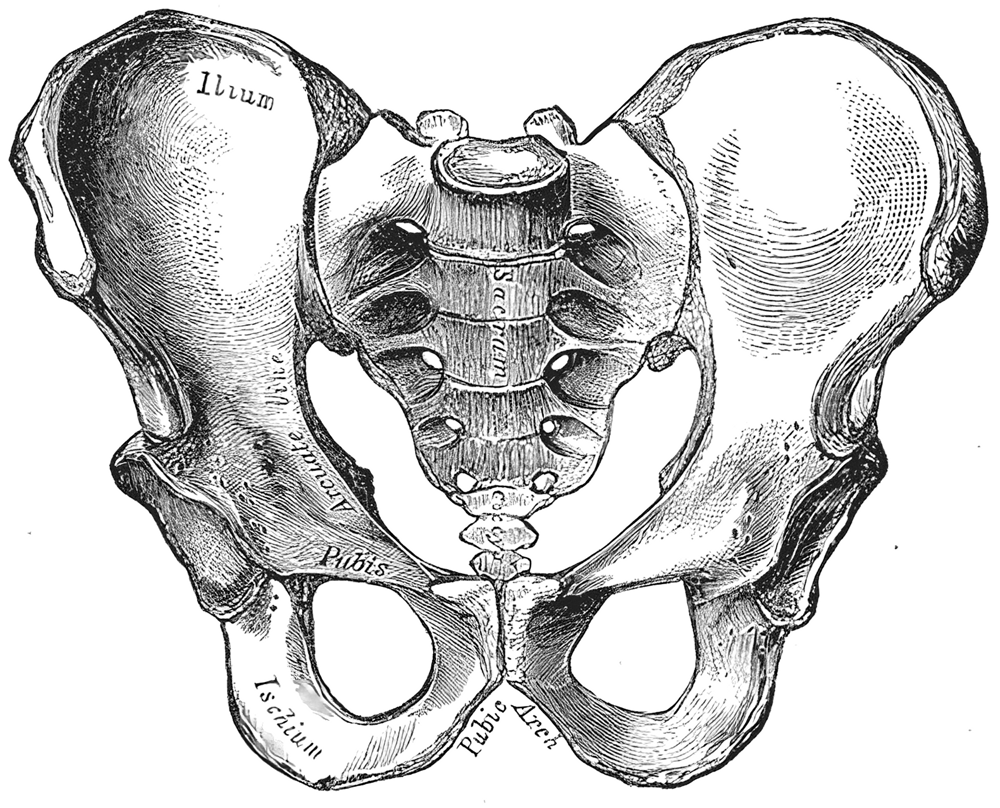
The pubis, commonly called the pubic bone, is the forward-most portion of each hip bone (os coxae) and a key component of the pelvic ring. In humans it lies at the front of the pelvis and meets its counterpart at the midline at the pubic symphysis. Together the left and right pubic bones help form the anterior wall of the lesser pelvis and contribute to the hip joint socket.
Image gallery
10 Images




Structure and parts
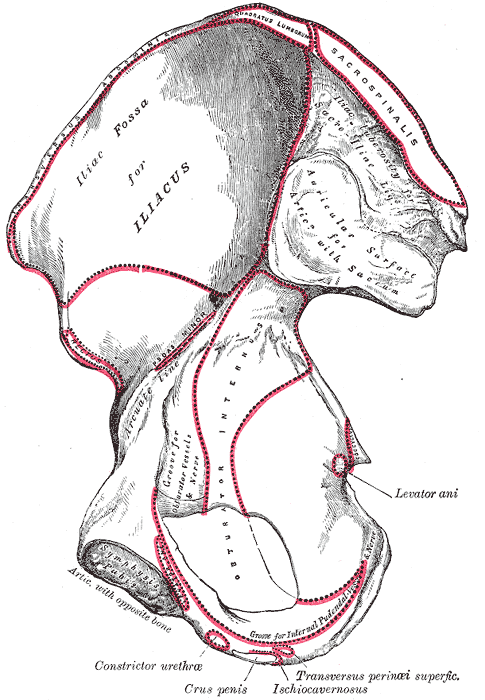
Anatomically, the pubis consists of a central body and two rami: the superior (upper) pubic ramus and the inferior (lower) pubic ramus. The body contributes roughly one fifth of the acetabulum, the concave surface that participates in the hip joint. Landmarks on the pubis include the pubic crest and the pubic tubercle; several muscles and ligaments attach here.
Functions and attachments
The pubis performs several mechanical and supportive roles. It transmits forces across the pelvic ring, forms part of the hip socket, and provides attachment points for muscles such as the adductors and portions of the abdominal wall. The bone's inner surface helps form the boundary of the pelvic cavity and supports pelvic organs.
Clinical importance and differences
- Sexual dimorphism: Male and female pelves differ; the female pubic arch is generally wider to facilitate childbirth.
- Clinical conditions: The pubis can be involved in fractures, osteitis pubis (inflammation), pubic symphysis dysfunction during pregnancy, and degenerative changes visible on imaging.
- Surgical relevance: Surgeons consider pubic landmarks for pelvic fixation and hernia repairs.
Development, evolution and surface anatomy
During growth the pubis develops and fuses with the ilium and ischium to form the mature hip bone. Evolutionarily, its position is ventral and anterior in humans and many mammals; exact orientation and proportions vary across species. Superficially, in females the anterior pubic region is overlaid by subcutaneous fat and soft tissues such as the urethral sponge and the mons pubis; the fatty prominence is commonly called the mons pubis or mons Venus.
Useful references
For more on pelvic anatomy see pelvis. Soft tissue over the anterior pubis is discussed in literature referenced at urethral sponge and fat. General information about the mons pubis appears at mons pubis.
Questions and answers
Q: What part of the body is the pubis bone?
A: The pubis bone is one of the bones that make up the pelvis.
Q: Where is the pubis bone located in humans?
A: The pubis bone is located at the front in humans.
Q: How does the pubis bone differ in humans and most other mammals?
A: The pubis bone is at the front in humans, and below in most other mammals.
Q: Where do the left and right hip bones join?
A: The left and right hip bones join at the pubic symphysis.
Q: What is the function of the urethral sponge in females?
A: The urethral sponge, which covers the pubic bone in front in females, is a layer of fat, forming the mons pubis or mons Venus.
Q: What percentage of the acetabulum does the body of the pubis form?
A: The body of the pubis forms one-fifth of the acetabulum, the area around the hip socket.
Q: What is the inner surface of the pubis bone a part of?
A: The inner surface of the pubis bone is part of the wall of the lesser pelvis.
Related articles
Author
AlegsaOnline.com Pubis (pubic bone) Leandro Alegsa
URL: https://en.alegsaonline.com/art/79891