
Procellariidae — the petrels, prions, and shearwaters
Procellariidae are a family of pelagic seabirds (petrels and shearwaters) adapted to open-ocean life. This article covers their traits, behavior, taxonomy, threats, and conservation.
Overview
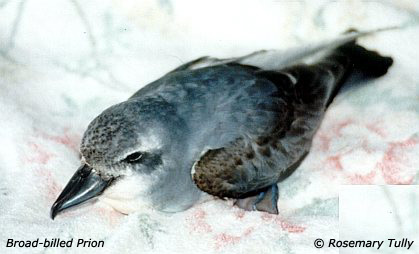
The family Procellariidae comprises a diverse group of pelagic seabirds commonly called petrels, prions, and shearwaters. These birds are part of the broader group of ocean-going birds often referred to as seabirds, and they spend most of their lives at sea, returning to land primarily to breed. Their long wings, salt-excreting glands and ability to soar efficiently over the waves make them well suited to wide-range foraging.
Image gallery
10 Images




Distinctive characteristics
Members of Procellariidae share several anatomical and physiological adaptations to marine life. Like other members of the order Procellariiformes, they have tubular nostrils or "tubenoses" (tubenoses) that help with olfaction and handling salty seawater. They produce a calorie-dense stomach oil used to feed chicks and as a defensive spray against predators. Most species are long-lived, have strong site fidelity to breeding colonies, and lay a single egg per season.
Behavior, diet and reproduction
Procellariids forage for fish, squid and crustaceans, using techniques from surface seizing to plunge-diving and dynamic soaring. Many undertake extensive migrations between breeding and feeding areas. Breeding colonies are typically on remote islands or cliff faces; pairs are often monogamous and share incubation and chick-rearing duties. Reproductive rates are slow, which makes populations vulnerable to increased adult mortality.
Taxonomy and relationships
The family includes several familiar groups: fulmarine petrels, gadfly petrels, prions and the various shearwaters. They are closely related to other tubenoses, such as the albatrosses (albatrosses), storm-petrels and diving petrels, which together form the order Procellariiformes. Classifications vary as research refines species limits and relationships.
Conservation and notable facts
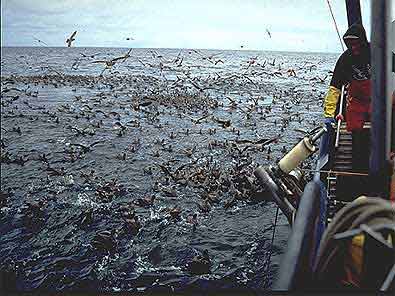
Procellariids face threats from introduced predators at breeding sites, bycatch in fisheries, pollution and habitat disturbance. Many species are considered at risk and benefit from conservation actions like predator eradication, protected nesting areas and fisheries mitigation. Their wide-ranging habits make them indicators of ocean health and subjects of long-term ecological study.
Further reading
- General family overviews and species lists: Procellariidae resources
- Seabird ecology and conservation: Seabirds
- Order-level information: Procellariiformes
- Anatomy and adaptations: Tubenose adaptations
- Related groups and comparisons: Albatrosses and allies
Related articles
Author
AlegsaOnline.com Procellariidae — the petrels, prions, and shearwaters Leandro Alegsa
URL: https://en.alegsaonline.com/art/79319