
Proboscis monkey (Nasalis larvatus)
An overview of the proboscis monkey — its appearance, habitat, diet, behavior, social structure and conservation status, with emphasis on ecological needs and threats.
Overview
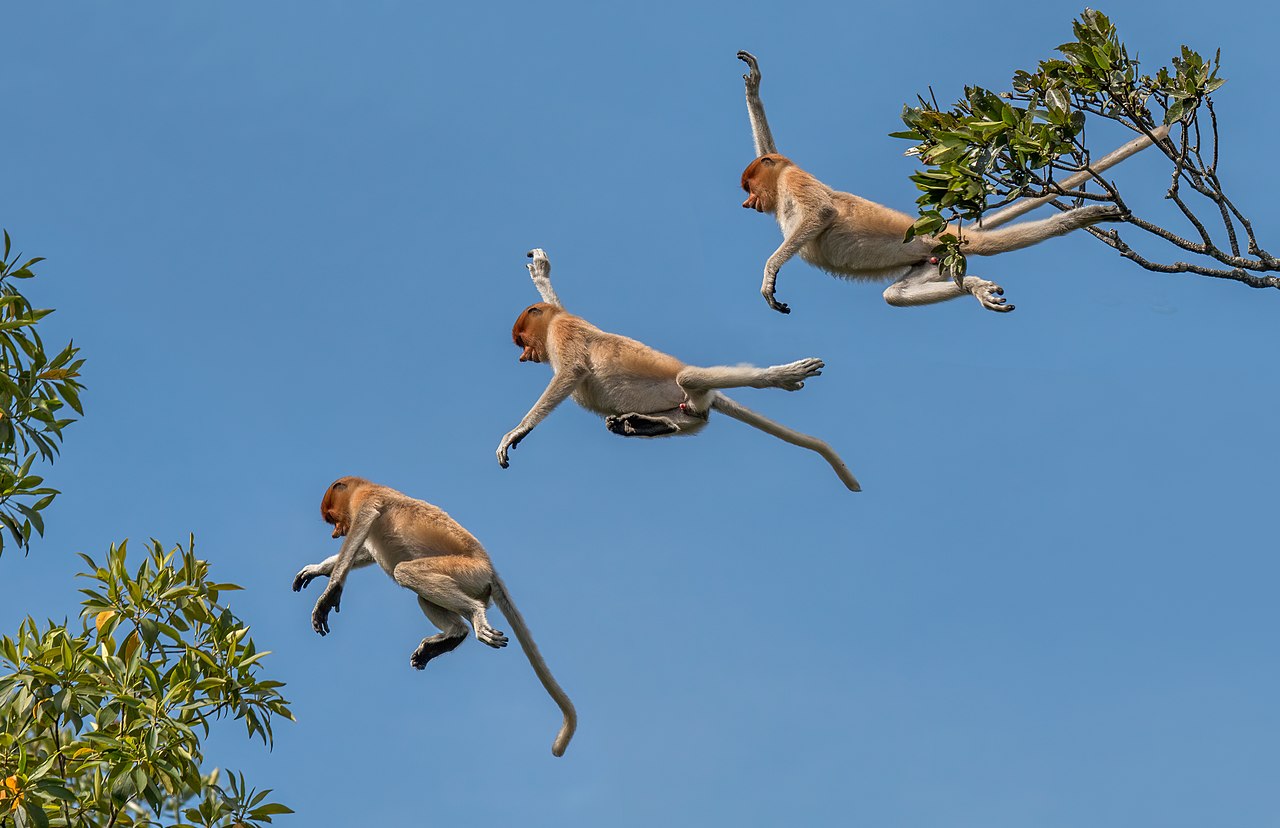
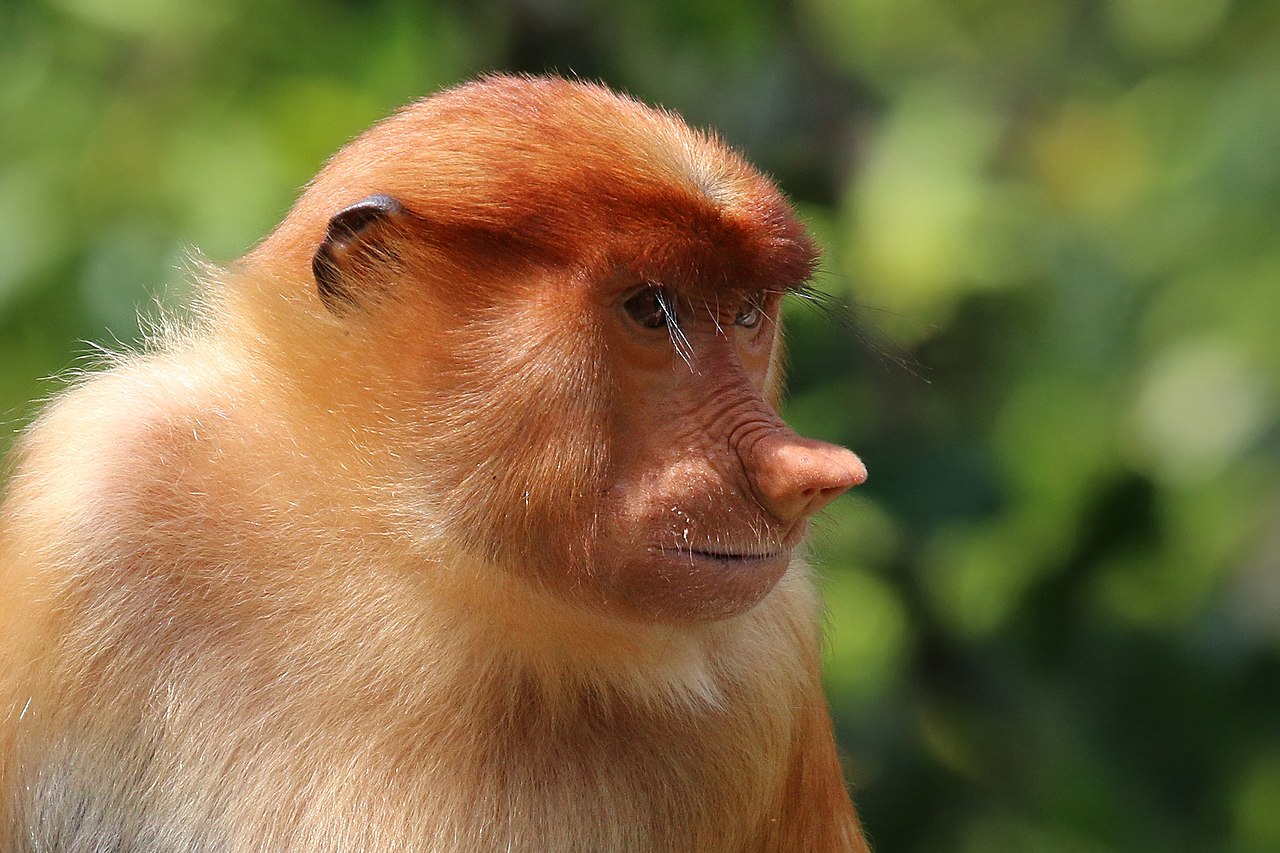
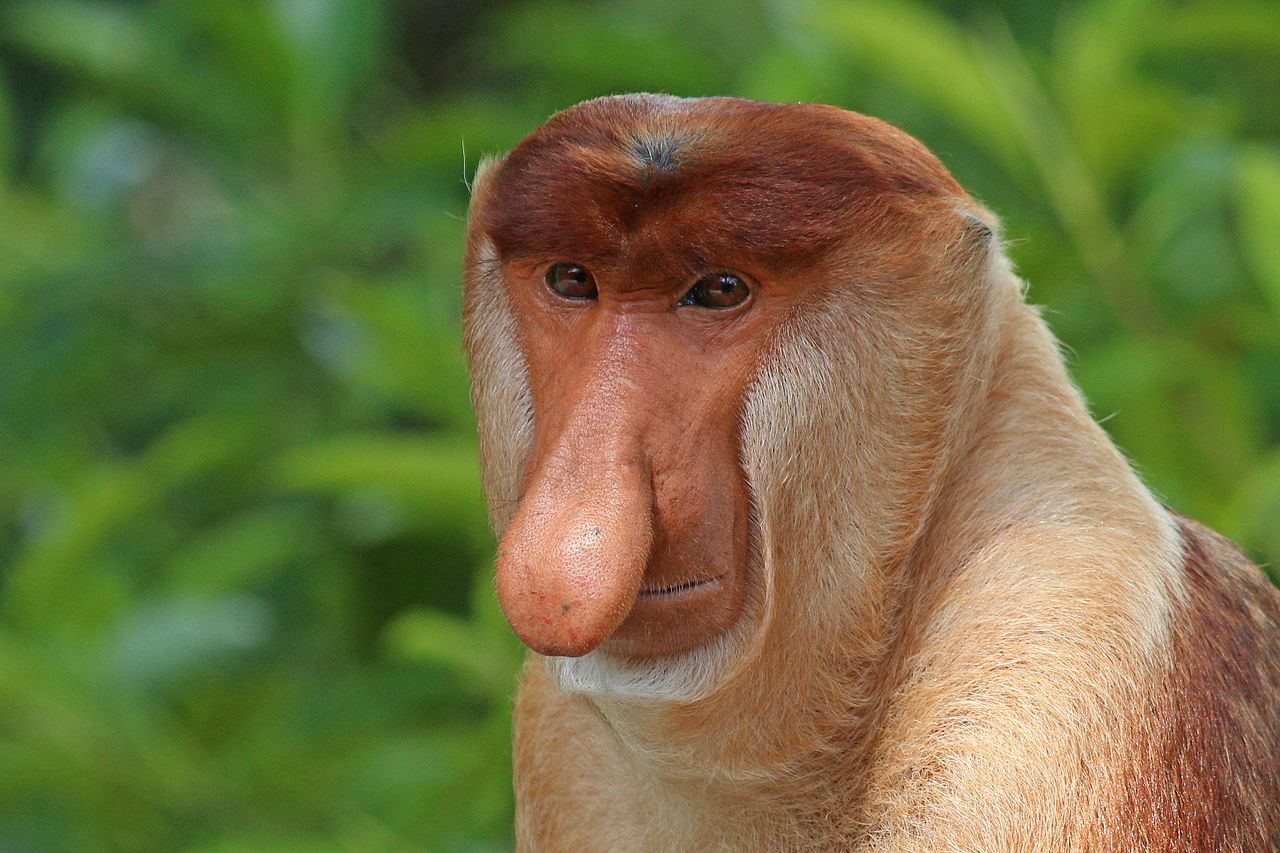
The proboscis monkey (Nasalis larvatus) is an arboreal primate endemic to the island of Borneo in Southeast Asia. It is best known for the large, pendulous nose of adult males and for a body adapted to a leaf-rich diet. Proboscis monkeys occupy coastal and riverine forests and are closely associated with waterways and mangrove habitats.
Image gallery
10 Images





Physical characteristics
Sexual dimorphism is pronounced: males have an enlarged nose and are noticeably larger than females. Both sexes have a pot-bellied appearance caused by an enlarged, sacculated stomach that helps ferment and digest leafy material. Fur coloration ranges from reddish-brown on the back to lighter underparts; infants typically display brighter coloration that changes as they mature. They are primarily arboreal, with long limbs and a tail that aid balance in the trees, and are also competent swimmers.
Habitat and distribution
Proboscis monkeys inhabit riverine and coastal forests, including mangrove swamps and mangrove forests as well as lowland rainforests. They favor areas close to rivers and tidal channels, using riverside trees for sleeping and escape routes. Because of this reliance on waterways and dense forest, they tend to avoid open, deforested land and human settlements.
Diet and behavior
These monkeys are primarily folivores and frugivores: their diet consists mostly of leaves and unripe fruits, supplemented with seeds, flowers and occasional invertebrates. Young leaves and unripe fruits are preferred because they are easier to digest and have fewer toxins. Daily activity typically alternates between feeding, resting, traveling and vigilance. Groups usually move inland to forage and return to riverside trees to sleep.
Social structure and reproduction
Proboscis monkeys form multi-level social groups that may include one-male units and bachelor groups. Social organization helps with predator detection and access to feeding areas. Reproduction is seasonal in some populations, and mothers care for infants within the group until independence. Male nose size and vocalizations appear to play roles in mate attraction and intra-group communication.
Conservation and notable facts
The species is considered threatened by habitat loss and hunting. Conversion of forest to agriculture, logging and expansion of human infrastructure reduce suitable habitat, especially along rivers and coastal zones. Conservation measures focus on protecting remaining mangroves and lowland forests, managing river corridors, and reducing hunting pressure.
- Adaptations: specialized stomach for fermenting leaves, strong swimming ability, and arboreal locomotion.
- Threats: habitat fragmentation, deforestation, and hunting for meat and trade.
- Interesting: males use exaggerated noses and loud calls in social displays; infants often show brighter juvenile coloration.
For further reading and habitat maps, see regional resources on Bornean wildlife and riverine forest conservation (Borneo, Southeast Asia), and material on mangrove ecosystem protection (mangrove forests, lowland rainforests).
Questions and answers
Q: Where is the proboscis monkey found?
A: The proboscis monkey is found only on the island of Borneo in Southeast Asia.
Q: In what type of forests do proboscis monkeys live?
A: Proboscis monkeys live in mangrove forests and lowland rainforests.
Q: What do proboscis monkeys depend on mangroves for?
A: Proboscis monkeys depend on mangroves near river edges for resting and sleeping.
Q: What types of areas do proboscis monkeys avoid?
A: Proboscis monkeys avoid deforested areas and human settlements.
Q: What is the proboscis monkey's diet?
A: The proboscis monkey's diet consists mainly of fruit and leaves. It also eats flowers, seeds, and insects to a lesser extent. At least 55 different plant species are eaten. Young leaves are preferred over mature leaves, and unripe fruits are preferred over ripe fruit.
Q: When is the proboscis monkey's fruit eating season?
A: The proboscis monkey's fruit eating season is from January to May.
Q: What are proboscis monkeys' daily activities?
A: Proboscis monkeys' daily activities consist of resting, traveling, feeding, and keeping vigilant. They start the day foraging and then rest further inland. Groups usually sleep in adjacent trees, and monkeys tend to sleep near rivers if they are nearby.
Related articles
Author
AlegsaOnline.com Proboscis monkey (Nasalis larvatus) Leandro Alegsa
URL: https://en.alegsaonline.com/art/79317
Sources
- link.springer.com : link.springer.com/article/10.1007/BF02739363
- onlinelibrary.wiley.com : onlinelibrary.wiley.com/doi/10.1002/ajp.1350200204/abstract;jsessionid=47F5F9C3316BA29824…