
Problem solving: concepts, methods, and applications
An organized overview of problem solving: definitions, types, historical study, common strategies, applications in disciplines such as AI and engineering, and distinctions like well‑defined vs ill‑defined problems.
Overview
Problem solving is a cognitive process used to move from an undesired or uncertain situation toward a desired goal. It is central to human thought and action, linked closely to reasoning and intelligence. Problems appear whenever a gap exists between a current state and a target state and the path to close that gap is not immediately obvious. The term problem itself traces back to a Greek word meaning an obstacle; historical notes on that origin are discussed by scholars of language and etymology (Greek origin).
Image gallery
1 Image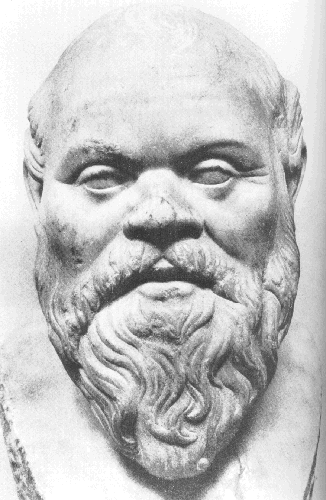
Types and characteristics
Problems vary along several dimensions. A common distinction is between well‑defined problems, which have clear goals, constraints and acceptable solutions, and ill‑defined problems, which lack explicit goals or have many possible outcomes. Well‑defined examples include mathematical puzzles and many engineering design tasks; ill‑defined examples include ethical dilemmas, ambiguous planning, or how to respond to hypothetical future threats. Successful solving requires understanding the goal, available rules, and resources, and often the ability to use abstraction or generate novel ideas.
History and fields of study
Formal study of problem solving spans psychology, philosophy, mathematics and computer science. Gestalt psychologists and later cognitive psychologists examined how people represent problems and achieve sudden insights (Gestalt, cognitive psychology). In parallel, disciplines such as artificial intelligence, computer science, engineering, and mathematics developed formal procedures and theoretical models for finding solutions, from search algorithms to optimization techniques. Even games like chess have served as important testbeds for theories of planning and decision making.
Common strategies and techniques
Problem solving combines systematic and creative methods. Typical stages include problem identification, representation, generation of potential solutions, evaluation, and implementation. Specific techniques include:
- Algorithmic methods: step‑by‑step procedures that guarantee a solution when one exists.
- Heuristics: rules of thumb that speed up search but may not be optimal.
- Analogy: applying solutions from similar past problems.
- Decomposition: breaking a complex problem into smaller parts.
- Insight and creativity: reframing the problem to reveal hidden paths.
Applications and examples
Problem solving appears in everyday life, professional practice and scientific research. Engineers design systems to meet performance targets, computer scientists craft algorithms to process data, and clinicians use diagnostic reasoning to treat patients. Collaborative problem solving—working in teams or communities—uses shared knowledge and coordination to tackle issues that individuals cannot easily resolve alone. Educational programs and business training often teach explicit problem‑solving frameworks to improve decision quality and innovation.
Notable distinctions and practical notes
Important distinctions include individual versus group problem solving, routine versus novel tasks, and convergent versus divergent approaches. While rigorous methods are valuable, many real problems benefit from blending structured analysis with creative exploration. For further reading on problem solving as a topic across disciplines, see resources in psychology and computer science for contrasting perspectives (related discussion, intelligence links, AI approaches). Practical improvement usually comes from practice, reflection on failed attempts, and learning to choose appropriate strategies for the problem type.
For introductions and deeper treatments consult disciplinary surveys and textbooks, including works that compare experimental findings and computational models (computer science, engineering, mathematics). Examples and puzzles drawn from chess and other domains remain useful training tools for sharpening both analytical and intuitive problem‑solving skills.
Related articles
Author
AlegsaOnline.com Problem solving: concepts, methods, and applications Leandro Alegsa
URL: https://en.alegsaonline.com/art/79315