
Progressive supranuclear palsy: overview, features, and management
Progressive supranuclear palsy (PSP) is a degenerative tauopathy causing progressive problems with balance, eye movements, speech, swallowing and cognition. This article outlines presentation, diagnosis, care and research.
Overview
Progressive supranuclear palsy (PSP), also called Steele–Richardson–Olszewski syndrome, is a progressive neurodegenerative disorder in which specific brain regions undergo neuronal loss and accumulation of abnormal tau protein. It commonly appears in late middle age and affects men and women roughly equally. PSP is considered one of the primary tauopathies and occurs worldwide with an estimated prevalence in the low single digits per 100,000 population in many studies.
Image gallery
3 Images

Clinical features
The disorder classically presents with early postural instability and unexplained falls, rigidity of the neck and trunk, slowness of movement (bradykinesia), and a characteristic disturbance of eye movements. Vertical gaze palsy, especially reduced ability to look down, and slowed saccades are typical. Other common problems include difficulty with speech and swallowing, changes in facial expression, and a frontal-type cognitive or behavioral syndrome with apathy, executive dysfunction or reduced social inhibition.
Variants and presentation
PSP can present in different clinical variants. The classic form (Richardson syndrome) shows early falls and eye movement abnormalities. Other presentations may resemble Parkinson's disease (PSP-parkinsonism), predominant gait freezing, or corticobasal syndrome features. Recognizing variants is important because early signs can overlap with other movement disorders.
Investigations and diagnosis
Diagnosis is primarily clinical, supported by structured diagnostic criteria and by imaging. MRI often shows midbrain atrophy, ventricular enlargement and changes in the basal ganglia and frontal lobes that can support the diagnosis. Other tests, such as dopamine transporter imaging, may help exclude alternative diagnoses. Definitive confirmation historically requires neuropathological examination to demonstrate tau pathology, but clinical criteria from expert groups guide probable and possible diagnoses during life.
Pathology and causes
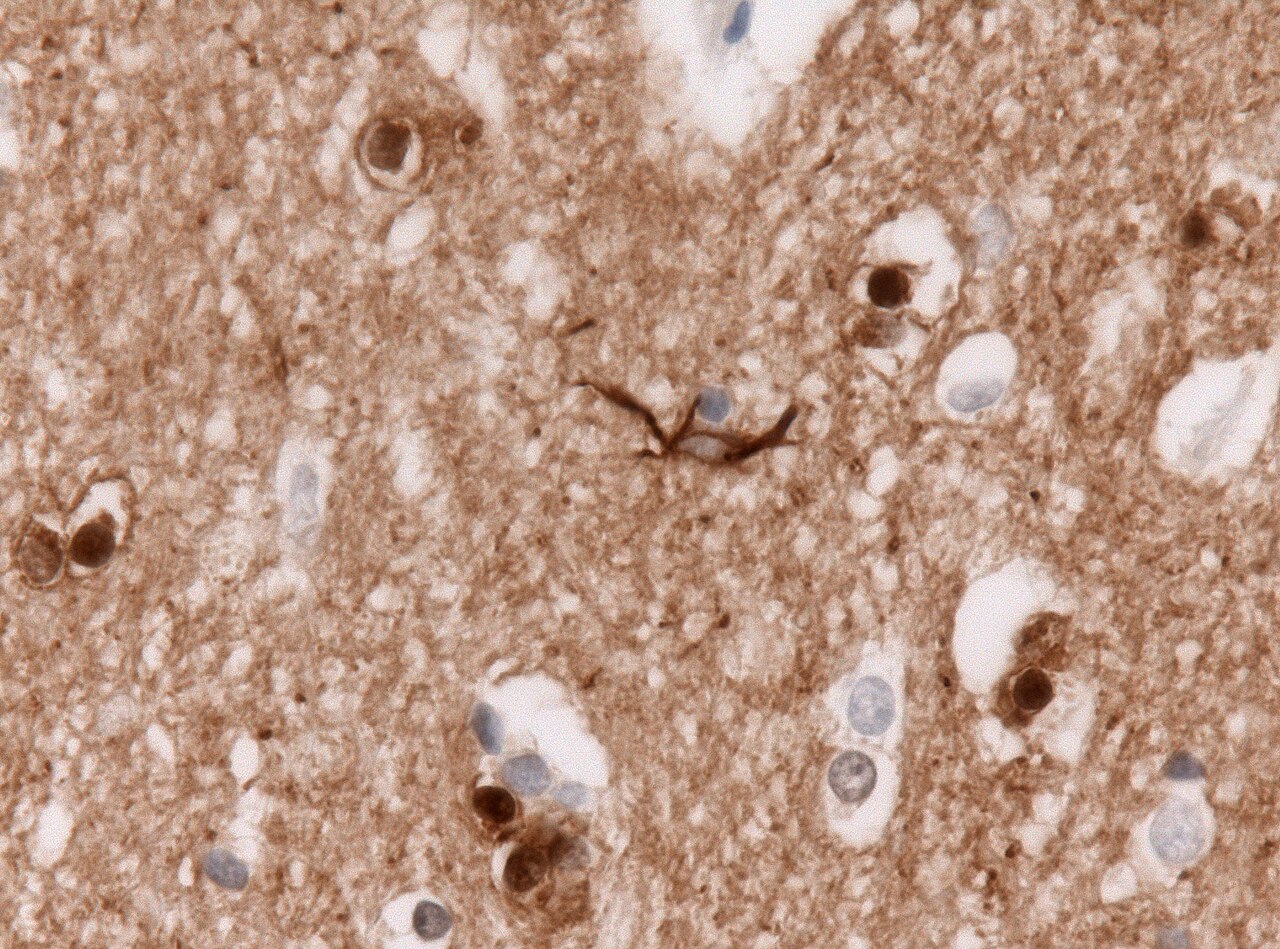
PSP is characterized by neuronal loss, gliosis and tau-positive inclusions in the brainstem, basal ganglia and frontal cortex. The tau protein accumulates in a distinct pattern compared with other tauopathies. Most cases are sporadic; there is an association with genetic susceptibility factors such as certain MAPT region haplotypes, but clear Mendelian inheritance is uncommon.
Management
No therapy has yet been proven to halt disease progression. Treatment focuses on symptom management and multidisciplinary supportive care: physiotherapy to reduce fall risk and improve mobility; speech and language therapy for communication and swallowing; occupational therapy and home adaptations; and nutritional and respiratory support when swallowing becomes impaired. Some patients may have limited, transient benefit from dopaminergic medications. Botulinum toxin can help focal dystonia or eyelid spasm in selected cases.
Prognosis and course
PSP is progressive and typically leads to increasing disability over several years. The pace of decline varies among individuals; many people require substantial assistance with daily activities as the disease advances. Care planning often includes anticipatory measures for mobility, nutrition and end-of-life needs, and involvement of palliative care teams when appropriate.
Research and clinical trials
Research into PSP focuses on better diagnostic biomarkers and on therapies targeting the underlying tau pathology, including immunotherapies and small molecules. Clinical trials continue to evaluate disease-modifying strategies as well as interventions to improve symptoms and quality of life.
Further reading and resources
For clinical summaries and detailed information, see a clinical overview at clinical overview, research and review resources at research resource, epidemiology and statistics at population data, and support or advocacy organizations at support organizations. These sources provide guidance for patients, families and clinicians about diagnosis, management and ongoing studies.
Related articles
Author
AlegsaOnline.com Progressive supranuclear palsy: overview, features, and management Leandro Alegsa
URL: https://en.alegsaonline.com/art/79394
Sources
- pubmed.ncbi.nlm.nih.gov : 14272249
- archneur.ama-assn.org : "Progressive supranuclear palsy: a heterogeneous degeneration involving brain stem, basal ganglia and cerebellum with vertical gaze and pseudobulbar palsy, nuchal dystonia and dementia"
- doi.org : 10.1001/archneur.1964.00460160003001
- pubmed.ncbi.nlm.nih.gov : 14107684
- brain.oxfordjournals.org : "Diffusion-weighted brain imaging study of patients with clinical diagnosis of corticobasal degeneration, progressive supranuclear palsy and Parkinson's disease"
- doi.org : 10.1093/brain/awn195
- pubmed.ncbi.nlm.nih.gov : 18819991