
President of the Democratic Republic of the Congo
The president is the DRC's head of state and commander-in-chief. This article explains the office's role, constitutional requirements, selection, powers, historical development, and notable facts.
The President of the Democratic Republic of the Congo serves as the head of state and commander-in-chief of the armed forces. The modern office is defined by the country's post-2006 constitutional framework, which sets out the president's place in the executive branch, basic eligibility rules, and procedures for election and succession. The title of the office is used in several national languages; for example, in Swahili Rais wa Jamhuri, in Lingala Mokonzi ya Republíki, and in the country's official administrative usage in French the designation is Président de la République. Basic information about the state is often linked in introductions to the office DRC.
Image gallery
10 Images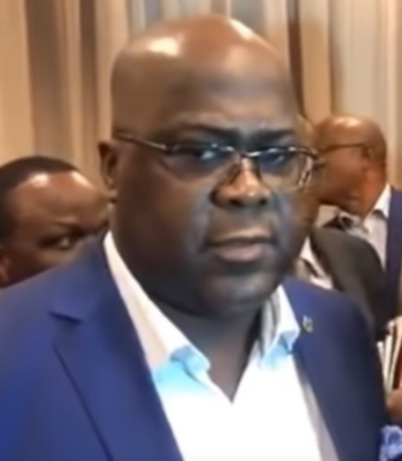


Constitutional role and powers
Under the constitution, the president fulfills several core functions: representing the unity of the nation, directing foreign policy, commanding the armed forces, and ensuring the observance of the constitution and laws. The office has ordinary powers such as signing and promulgating laws, appointing government ministers, and designating a prime minister who generally must come from the parliamentary majority. The president may also exercise emergency powers and has authority over certain appointments in the civil and military administration, within limits established by law and judicial review.
Election, term and qualifications
Presidential elections are conducted by popular vote. The constitution sets specific eligibility requirements: a candidate must be a native-born citizen of the country and meet a minimum age threshold (commonly stated as 30 years). Candidates must also be legally able to exercise their civil and political rights at the time of nomination. The presidential term length and rules on re-election are fixed in the constitution to regulate continuity and turnover; those rules have been central to political debates in the country's recent history.
Succession and vacancy
The constitution provides a procedure for temporary or permanent vacancies. If the presidency becomes vacant for any reason, an interim authority is designated to oversee a transition and organize new elections in the timeframe required by law. In practice, succession arrangements are intended to maintain institutional continuity and to avoid power vacuums, with the legislature and constitutional court playing roles in validating transitions.
Historical background and notable holders
The office has existed since independence and has gone through periods of intense change. Over decades, the presidency has been held by a mix of civilian and military leaders and has been central to the country's political stability and conflicts. Prominent recent figures include long-serving leaders who shaped the post-colonial era and heads of state who led transitions after conflict. For example, Joseph Kabila, who led the country after 2001 and was a key figure in the early 21st century Joseph Kabila, was followed after disputed electoral cycles by Félix Tshisekedi, who assumed office in 2019 Félix Tshisekedi.
Importance and contemporary issues
The presidency is central to governance in the DRC because of the office's influence over security policy, natural resource management and international relations. Elections and transitions of presidential power have frequently attracted intense domestic and international attention because they affect stability in the region. Debates about constitutional interpretation, term limits, and the balance of power between the president, parliament and judiciary remain important topics in Congolese public life.
- Overview: Head of state and commander-in-chief.
- Powers: Foreign policy, appointments, law promulgation, emergency measures within constitutional limits.
- Eligibility: Native-born citizen, minimum age, full civil and political rights.
- Succession: Interim arrangements provided by constitution and validated by institutions.
For further reading and official texts, consult constitutional documents and authoritative analyses which discuss the legal provisions, historical episodes and recent presidential elections in more detail.
Related articles
Author
AlegsaOnline.com President of the Democratic Republic of the Congo Leandro Alegsa
URL: https://en.alegsaonline.com/art/78885
Sources
- businessdailyafrica.com : "The highest and lowest paid African presidents - Business Daily"
- iol.co.za : "20 dead in Congo unrest as Kabila clings on to power"