
President of the European Council
Senior official who chairs the meetings of EU heads of state or government, represents the European Council externally, and coordinates its work; post created by the Treaty of Lisbon.
Overview
The President of the European Council is the permanent chair of the European Council, the body composed of the heads of state or government of the European Union's member countries. The office was formalized by the Treaty of Lisbon to provide continuity and drive the agenda of summit-level EU decision making. The President is distinct from national presidents and from other EU presidencies.
Image gallery
7 Images




Selection and term
The European Council itself elects the President by qualified majority for a term that is set in the treaties and renewable once. The selection seeks a figure able to bridge differing national positions and to work with other EU institutions and external partners.
Role and main functions
The President has several practical and representative duties. Typical functions include:
- Preparing and chairing European Council meetings and setting the agenda in consultation with members.
- Ensuring continuity of the Council's work between meetings and driving follow-up on decisions.
- Representing the Union at the level of heads of state and government for external summits and high-level diplomacy, often together with the President of the European Commission and the High Representative.
- Facilitating compromise among member states and reporting to the European Parliament on the Council's work.
History and development
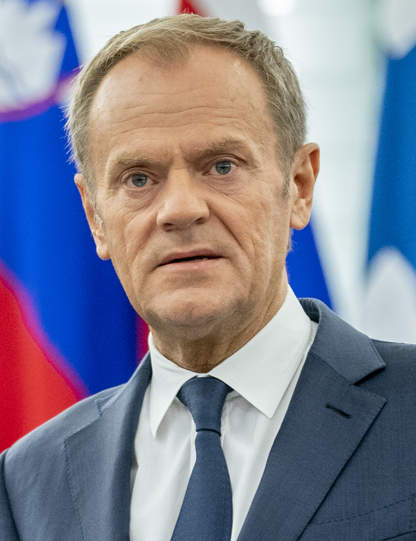
Before the Treaty of Lisbon the chairing of European Council meetings rotated among member states' ministers or prime ministers. The Lisbon reforms created a single, longer-term President to improve coherence and visibility at EU summit level. Notable holders of the office include Herman Van Rompuy, Donald Tusk and Charles Michel, who illustrate how the role has become a recognized element of the EU's institutional architecture.
Relation to other EU institutions
The President of the European Council is separate from the President of the European Commission (who heads the EU's executive arm) and from the rotating presidency of the Council of the EU (which is held by member states for short periods). The President works closely with those offices to coordinate policy, communications and external representation, but does not hold executive authority over the Union's day-to-day administration.
Significance and debates
The post provides continuity and a single interlocutor for international partners at summit level, but it is also the subject of debate. Critics point to limited formal powers and the difficulty of representing sometimes sharply divergent national positions. Proposals for change tend to focus on clarifying responsibilities or strengthening the office's mandate, but any reform requires treaty-level agreement among member states. For more institutional background see the European Council itself: European Council.
Related articles
Author
AlegsaOnline.com President of the European Council Leandro Alegsa
URL: https://en.alegsaonline.com/art/78887
Sources
- consilium.europa.eu : Special meeting of the European Council (30 June, 1 and 2 July 2019) – Conclusions
- register.consilium.europa.eu : "Herman Van Rompuy re-elected president"
- dw.de : "Poland's Donald Tusk takes over as EU Council president"