
Lingala: a Bantu lingua franca of the Congo region
Lingala is a Bantu language widely used in the Democratic Republic of the Congo and the Republic of the Congo as a national language and urban lingua franca, with rich cultural and musical reach.
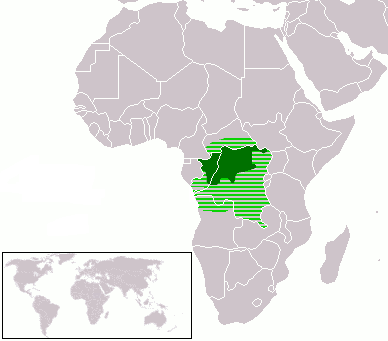
Lingala is a Bantu language spoken widely in the northwestern and central parts of Central Africa, especially in the Democratic Republic of the Congo and the Republic of the Congo. It functions as a national language in both countries and serves as an important urban lingua franca in cities such as Kinshasa and Brazzaville. The language developed as a common means of communication among people from different ethnic groups and remains prominent in media, popular music, and everyday urban life.
Image gallery
4 Images


Characteristics
Lingala shares grammatical traits common to Bantu languages while showing urban simplifications that helped its spread. Typical features include subject–verb–object order, a system of noun classes (reflected in agreement patterns), and a rich verbal morphology with prefixes and tense/mood markers. Tone plays a role in meaning, though everyday colloquial varieties often reduce tonal contrasts. The language has absorbed many loanwords, particularly from French, as well as terms from neighboring languages.
History and development
Lingala emerged from trade and interethnic contact along the Congo River and surrounding regions during the 19th and early 20th centuries. It consolidated into a wider vehicular variety under colonial administration and railway and riverine transport networks, which promoted its use across ethnic boundaries. Over time, urban centers produced more informal varieties that incorporate slang and foreign vocabulary, while mission and educational efforts contributed to literacy and standardized written forms.
Uses and cultural importance
Beyond everyday communication, Lingala has a strong cultural presence. It is the dominant language of much Congolese popular music—rumba, soukous and modern urban styles—helping circulate the language across Africa and the diaspora. It appears in radio, television, and print media and is used in some local administration and schooling contexts, particularly for adult education and informal instruction.
Dialects, writing and notable facts
There are several regional and social varieties, including older riverine forms and contemporary urban Kinshasa/Brazzaville varieties that differ in vocabulary and pronunciation. Lingala is written with the Latin alphabet; orthographic conventions vary, and diacritics or marks for tone are sometimes used in linguistic materials. For maps and demographic references see Democratic Republic of the Congo and Republic of the Congo.
- Language family: Bantu branch of Niger-Congo.
- Typical word order: SVO (subject–verb–object).
- Important cultural domain: popular music and urban media.
Author
AlegsaOnline.com Lingala: a Bantu lingua franca of the Congo region Leandro Alegsa
URL: https://en.alegsaonline.com/art/141557