
Prague Spring (1968): Reform, Invasion, and Aftermath
A 1968 Czechoslovak reform movement led by Alexander Dubček that sought “socialism with a human face,” ended by a Warsaw Pact invasion and followed by a period of political normalization.
The Prague Spring was a period of political liberalization and reform in Czechoslovakia during 1968, associated most visibly with the leadership of Alexander Dubček. Its participants aimed to loosen political controls, expand civil liberties and introduce economic changes while remaining within the communist system. The slogan often used to summarize the initiative was "socialism with a human face." The movement attracted domestic support and international attention as one of the most significant challenges to Soviet-style orthodoxies in the postwar Eastern Bloc.
Image gallery
10 Images


Major reforms and proposals
- Greater freedom of the press, speech and assembly, and reduced censorship.
- Decentralization of economic decision-making and limited market-style reforms.
- Political pluralization within the Communist Party and steps toward democratic participation.
- Legal rehabilitation of political prisoners and a partial opening of public life.
These changes were introduced gradually in the first half of 1968 and provoked debate inside Czechoslovakia and across the Soviet-led bloc. Some Soviet and allied leaders feared that the reforms could spread and weaken communist control in Eastern Europe. Concern in Moscow and among fellow members of the Warsaw Pact led to growing pressure on Prague to roll back its policies.
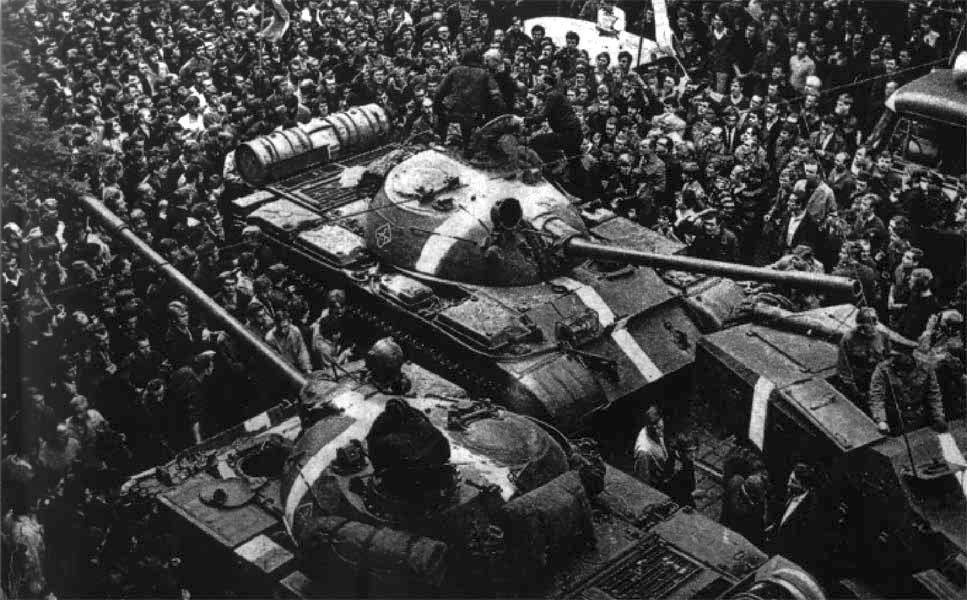
In the night of 20–21 August 1968, forces from the Soviet Union, Bulgaria, Poland and Hungary entered the country to halt the reforms. The invasion met popular non‑violent resistance: citizens staged demonstrations, workers mounted strikes and other acts of civil disobedience. The intervention resulted in deaths, arrests and a rapid curtailment of the reform program.
Aftermath and significance
Following the occupation, Czechoslovakia entered a period known as "normalization," in which many of the Prague Spring’s reforms were reversed and the Communist Party restored tighter control. An institutional change that survived was federalization, which took formal effect on 1 January 1969. Over the following decades the memory of 1968 remained a potent reference for dissidents and reformers, contributing to later movements for change in the 1970s and 1980s.
The Prague Spring is often placed in the wider context of global unrest in 1968, alongside events such as the protests of May 1968 in France and student demonstrations against the Vietnam War (see) and resistance to authoritarian regimes elsewhere. Its suppression highlighted the limits of sovereignty within the Soviet sphere and influenced intellectual and political debates about reform, sovereignty and human rights across Europe.
Today the Prague Spring is remembered both for its concrete reforms and for its symbolic role as an attempt to reconcile socialism with expanded personal and political freedoms. Its legacy informed later Czech and Slovak politics and contributed to the broader trajectory that led to the collapse of communist governments in Central Europe two decades later.
For further context see materials on Alexander Dubček, the history of Czechoslovakia, and the role of the Warsaw Pact and its member states: Soviet Union, Bulgaria, Poland, Hungary. Additional international reactions connect to broader 1968 movements including those against the Vietnam War (LINK).
Related articles
Author
AlegsaOnline.com Prague Spring (1968): Reform, Invasion, and Aftermath Leandro Alegsa
URL: https://en.alegsaonline.com/art/78599