
Prehistory: the human past before writing
Prehistory is the span of human existence prior to written records. It is reconstructed from material remains, environmental data, and scientific analyses and ends at different times across the world.
Overview
Prehistory refers to the period of human existence that predates written records. Because there are no contemporary texts from these times, knowledge about prehistoric peoples and societies comes from their material remains, environmental traces and the application of scientific methods. The word itself has roots in classical languages and was popularized in the 19th century as scholars sought to classify human antiquity.
Image gallery
10 Images


How researchers study prehistory
Reconstructing the prehistoric past is an interdisciplinary effort. Archaeology is the primary field that examines artefacts, features and settlement patterns, but it works alongside other sciences to build a fuller picture. Key approaches include stratigraphic excavation, typological study of tools, and absolute dating techniques such as radiocarbon analysis. Genetic studies of ancient DNA, paleoenvironmental reconstructions from sediments and pollen, and comparative anatomy from paleontology all contribute evidence.
- Archaeology: digs, context, and artefact analysis (archaeology).
- Paleoanthropology and paleontology: fossil humans and animals.
- Geology and dating: stratigraphy, radiometric methods and geology (geology).
- Biology and genetics: ancient DNA and comparative biology (biology).
- Anthropology and ethnography: comparing modern and historic hunter-gatherer and early farming societies (anthropology).
Chronology and regional differences
Prehistory spans the long interval from the emergence of the first stone tools and hominins to the first sustained uses of writing in a region. Broad labels such as Paleolithic, Mesolithic and Neolithic refer to tool technology and subsistence changes, with the Neolithic marking the spread of farming and settled life in many areas. However, the end of prehistory is not the same everywhere: in parts of the Near East and Nile Valley written records appear early, while in other regions the transition to history occurred much later.
Well-documented early historical records come from riverine civilizations such as those in Mesopotamia (Mesopotamia), the Nile in Ancient Egypt (Ancient Egypt) and along the Yellow River in China (China), where inscriptions and administrative texts survive. By contrast, many Pacific islands and parts of interior New Guinea only developed local writing systems or had extensive contact with literate cultures late in the second millennium CE, so their prehistoric interval extended longer (New Guinea).
Daily life, technology and social change
Prehistoric communities adapted to a wide range of climates and resources. Early hunter-gatherers used stone tools such as flaked flint (flint), simple wooden implements and bone points to hunt and process food. Control of fire allowed cooking (cooking) and heat. Over millennia people developed clothing from skins and, later, woven textiles (clothing, weaving). The adoption of farming during the Neolithic led to permanent villages, food surpluses and increasing social complexity. Division of labour and specialisation emerged as groups took on different tasks (division of labour), laying groundwork for later civilizations (civilizations).
Art, belief and monumental works
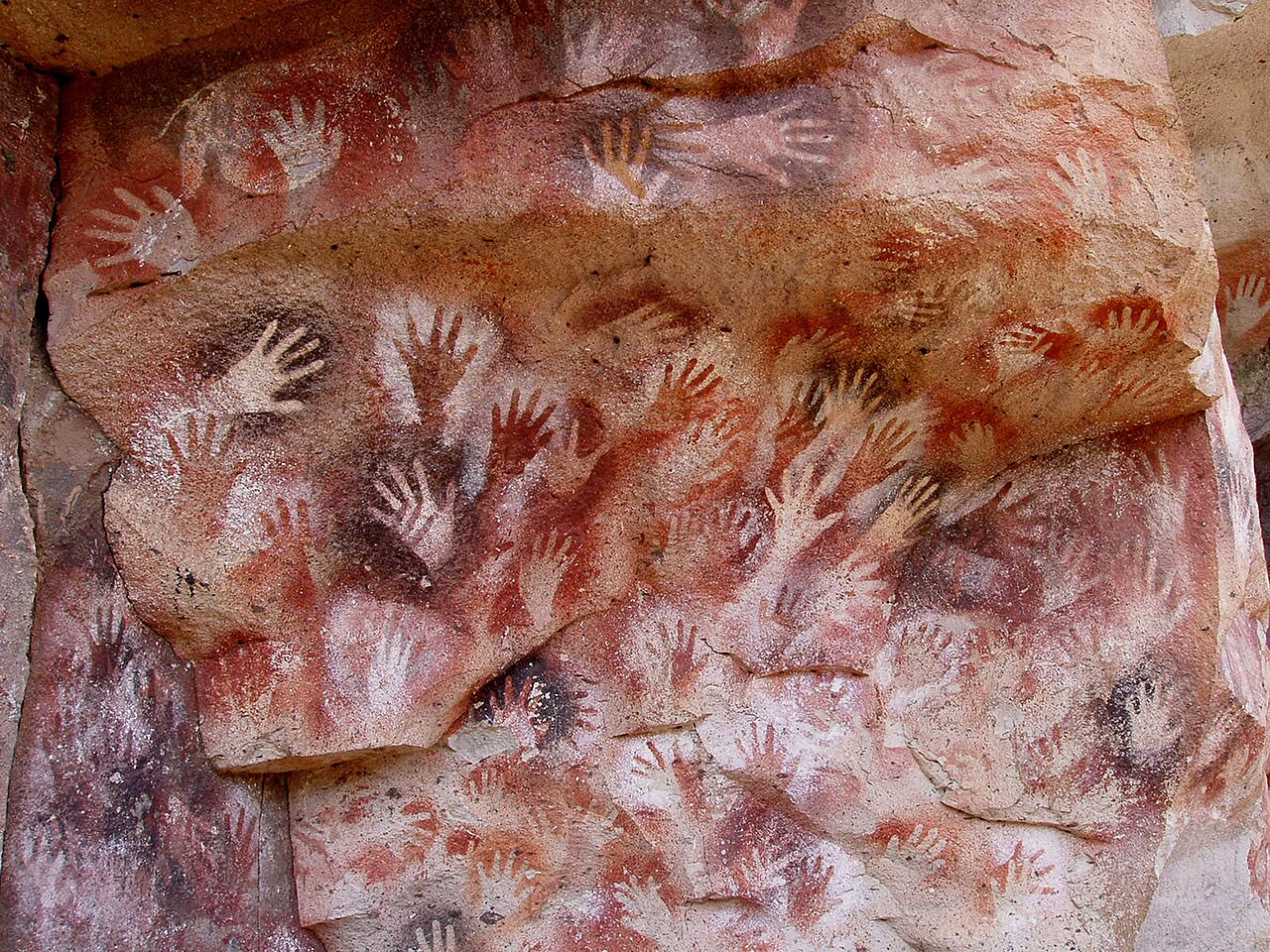
Objects from prehistory reveal symbolic life and ritual practice. Cave paintings, carved figurines and ritual deposits speak to beliefs, identity and social memory. Megalithic constructions, burial mounds and long barrows mark collective investments in landscape and ancestors. Early pictorial systems and simple signs preceded fully developed scripts; researchers sometimes refer to these visual records as pictographs (pictographs), which helped societies communicate before standard writing systems arose.
From prehistory to recorded history
The defining boundary between prehistory and history is the appearance of reliable, continuous written records for a society. Writing allowed direct testimony about rulers, events and institutions: names of leaders such as kings and queens, laws, economic records and narrative accounts became available to historians (Kings and Queens). The timing of this shift varies by region and by the preservation of materials. Some conventionally used chronological markers include the later part of the Neolithic and the early Bronze Age in areas where metallurgy and literacy spread. Researchers describe very ancient epochs with other terms when discussing geological and human prehistory, since those intervals extend far beyond the scale of human civilizations (Neolithic).
Further resources and topic links
- Writing and its origins
- Classical language roots
- Definitions of history
- Early French terminology
- Key archaeological cave finds
- English adoption of the term
- Neolithic period overview
- Archaeology methods
- Social organisation and tribes
- Early shelters and tents
- Stone tool technology
- Flint and raw materials
- Use of fire and cooking
- Prehistoric clothing
- Origins of weaving
- Development of societies
- Division of labour
- Emergence of civilizations
- Scientific disciplines used
- Astronomical data in archaeology
- Biological evidence and analysis
- Geological context
- Anthropological perspectives
- Early pictorial signs
- Rulers and recorded names
- Mesopotamian records
- Early Chinese writing
- Egyptian inscriptions
- Late transition examples: New Guinea
Studying prehistory requires careful interpretation of fragmentary evidence and cautious inference about past human lives. While no written testimonies exist for most of this span, the material and scientific record provides a rich and evolving picture of how human societies and behaviours developed long before chronicles and archives began.
Questions and answers
Q: What does the term "prehistory" mean?
A: Prehistory is the time before people began to write. It is usually used to refer to the period from 4.5 billion BC – 3000 BC, roughly speaking, the Neolithic.
Q: Who first used the French word Préhistorique?
A: Paul Tournal first used the French word Préhistorique.
Q: How did prehistoric people live?
A: In the more ancient stone age pre-history, people lived in tribes and lived in caves or tents made from animal skin. They had simple tools made from wood and bones, and cutting tools from stone such as flint which they used to hunt and make simple things. They also made fire for cooking and warmth, and clothing out of animal skins.
Q: What are some important sciences that help us learn about pre-history?
A: Some important sciences that are used to find out more about pre-history are palaeontology, astronomy, biology, geology, anthropology, and archaeology. Archaeologists study things left over from prehistory while anthropologists study traces of human behavior to learn what people were doing and why.
Q: When did history start?
A: After people started recording events by drawing symbols (called pictographs) or writing down information it became much easier to tell what happened so history started at this point in time when records were kept safe or found later on. This varies depending on when different places began writing down their records but generally dates back around 3200 BC in Ancient Egypt for example.
Q: What led to more complex civilizations during pre-historic times?
A: Society started when people began doing specialized jobs which is called division of labour - this made people depend on one another leading to more complex civilizations during prehistoric times.
Related articles
Author
AlegsaOnline.com Prehistory: the human past before writing Leandro Alegsa
URL: https://en.alegsaonline.com/art/78713