
Prince of Conti (French noble title)
Hereditary French noble title borne by a cadet branch of the House of Bourbon; a prince du sang with court privileges, territorial associations, and a role in early modern French politics and society.
Overview
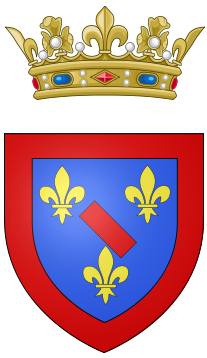
The title Prince of Conti (French: prince de Conti) was a dignified rank within the ancien régime of France. It belonged to a cadet branch of the royal House of Bourbon and identified its holder as a prince of the blood (prince du sang). As a peer of high standing at the royal court, the Prince of Conti enjoyed precedence, ceremonial privileges, and an elevated social position distinct from ordinary nobility.
Image gallery
2 Images
Origins and historical development
The designation originated as a territorial or appanage title attached to lands and revenue granted to junior members of the royal family. Over the early modern period the family established itself in court life and national politics. Princes of Conti appear in sources tied to seventeenth- and eighteenth-century affairs: they were patrons, military commanders and participants in the factional politics that shaped France before the Revolution. The line eventually ceased to be represented in the nineteenth century, leaving a legacy in art collections, patronage records and court ceremonial.
Rank, style and subsidiary titles
Holders of the title were recognized as princes of the blood, a status that conveyed legal and ceremonial privileges at Versailles and in other royal institutions. They were commonly entitled to the style often translated as "Serene Highness"; contemporary references to that style are part of the formal address and etiquette surrounding princely ranks (see court styles). The heir apparent of a Prince of Conti frequently used subsidiary territorial titles, notably Prince of La Roche-sur-Yon, and members of the family also held the county title Count of La Marche at times.
Functions and social importance
As senior members of the extended royal family, Princes of Conti combined public duties and private patronage. They commanded troops, served in high office, and maintained households that were centers of cultural and political influence. Their marriages reinforced alliances among prominent noble houses; their collections and patronage supported artists, musicians and architects. In court protocol they occupied a place near other princes of the blood, which affected seating, procession order and ceremonial precedence.
Distinctions and legacy
The title should not be confused with sovereign princely titles found outside France; it was a noble, non-sovereign dignity within the French monarchical system. The Cadet-branch character of the Conti title meant the holders were closely related to the reigning kings but did not possess independent sovereignty. Records of the princes, their estates, and their roles in events such as mid-seventeenth-century noble uprisings and eighteenth-century cultural life contribute to studies of court society, patronage networks and the politics of succession.
Notable features
- Ranked among the princes of the blood, with attendant protocol rights.
- Often associated with territorial designations such as La Roche-sur-Yon and La Marche.
- Played visible roles in military, political and cultural affairs of early modern France.
- Title usage and family fortunes were affected by changes in royal policy, marriage alliances and the upheavals of the revolutionary era.
For readers seeking primary documentation or further summary, consult specialist works on French court ranks and the Bourbon cadet branches for detailed genealogies and chronological lists of holders.
Related articles
Author
AlegsaOnline.com Prince of Conti (French noble title) Leandro Alegsa
URL: https://en.alegsaonline.com/art/79174