
Amphitrite (Greek sea goddess)
Amphitrite, a Greek goddess of the sea, is best known as Poseidon’s consort and a Nereid. This article summarizes her origins, myths, iconography, cult associations, and later cultural influence.
Overview
Amphitrite is a figure of ancient Greek religion and myth associated with the life of the sea, especially sea springs, marine creatures and coastal waters. In classical tradition she appears as the spouse and queen of the sea god Poseidon, sharing the royal role in myths and cult. Most ancient authors identify her among the Nereids, the fifty daughters of Nereus and Doris, though some accounts present her as an Oceanid or otherwise vary the genealogy.
Image gallery
10 Images





Myth and origins
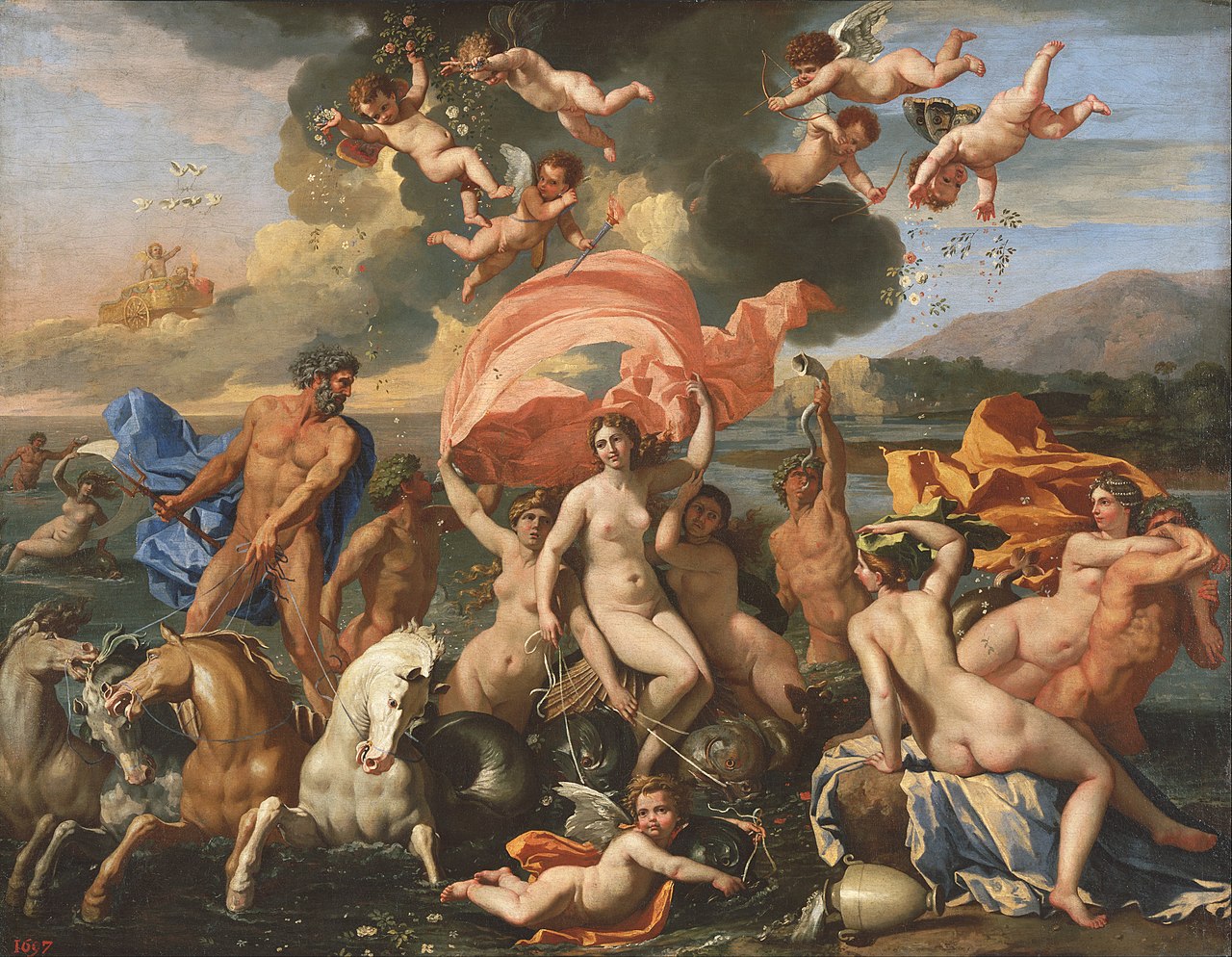
Stories about Amphitrite reflect the fluid and local nature of Greek myth. One common narrative describes Poseidon pursuing her; she initially withdrew into the sea to avoid him and was persuaded to accept him by a dolphin. That dolphin was later honored in myth and sometimes said to have been placed among the stars. Ancient poets and mythographers give differing genealogies and episodes, so details—such as the number and names of her children—change between sources.
Characteristics and associations
As a marine goddess Amphitrite personifies fertility of the sea and its living springs. She is frequently linked with dolphins, fish and the hippocamp, and often appears in the company of other sea deities. Some traditions emphasize her role in calming or accompanying Poseidon rather than ruling independently; in others she has a more active persona.
- Typical identity: usually a Nereid; sometimes an Oceanid.
- Consort: Poseidon, in most classical accounts.
- Symbols: dolphins, sea-horses (hippocamps), chariot, crown.
- Notable offspring: mythic figures such as the sea-god Triton are commonly named as her children; exact lists vary.
Worship and iconography
Amphitrite was less often the focus of major independent cults than her husband, but she shared sanctuaries and rites with him in coastal cities and island communities. In art and coinage she appears as a graceful figure of the sea, sometimes enthroned beside Poseidon or riding a chariot pulled by hippocamps. Painters and sculptors in later classical and Hellenistic periods treated her as an essential element of marine imagery.
Legacy and cultural influence
Through the Roman era and into modern times Amphitrite has remained a recognizable emblem of the sea. Writers and artists of the Renaissance and later revived her image in paintings, operas and decorative programs, and her name has been adopted for ships, vessels and other maritime uses. Scholarly interest treats her as an example of how fluid mythic identities combine divine spouse roles, local cult practice and symbolic marine motifs.
For further reading on ancient sea-deities and related myths see general works on Greek mythology and classical sources; interpretations and genealogies differ, so consult multiple accounts. The term sea springs and ocean life summarizes the domain traditionally associated with Amphitrite, while alternate genealogies and classifications—such as the label Nereid versus Oceanid—reflect ancient diversity in storytelling and local worship.
Related articles
Author
AlegsaOnline.com Amphitrite (Greek sea goddess) Leandro Alegsa
URL: https://en.alegsaonline.com/art/3653