
Awakenings (1990 film)
1990 drama directed by Penny Marshall, adapted from Oliver Sacks's 1973 book. It portrays a neurologist's experimental use of a dopamine precursor to revive catatonic patients and examines medical and ethical consequences.
Overview
Awakenings is a 1990 American drama film directed by Penny Marshall that dramatizes medical cases from the late 1960s. Adapted from the 1973 book by neurologist Oliver Sacks, the film centers on the attempts of a physician to treat long‑dormant, catatonic patients in a Bronx psychiatric hospital. The story is set in 1969 in the Bronx borough and fictionalizes Sacks as Dr. Malcolm Sayer, allowing the filmmakers to condense and combine real clinical encounters for dramatic purposes.
Image gallery
1 Image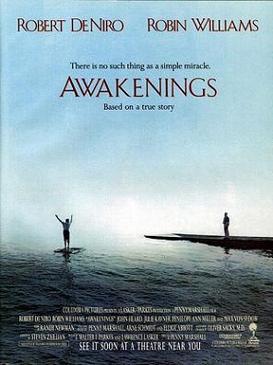
Plot summary
The narrative follows a shy, observant physician who discovers that an experimental treatment with a dopamine precursor can temporarily restore awareness and motor function to survivors of encephalitis lethargica. One central patient awakens after decades of near‑motionless existence, and his return to the world becomes both joyful and fragile. The film traces the practical and emotional consequences of these recoveries, the limits of the treatment, and the impact on patients, families, and hospital staff.
Historical basis and accuracy
While rooted in Sacks's clinical case histories, the film is a dramatization rather than a documentary. It follows the humanistic emphasis of the original book but compresses timelines and changes names. The underlying medical condition—encephalitis lethargica and its long‑term survivors—was a real and puzzling phenomenon for neurologists of mid‑20th century Europe and North America. The portrayal invites viewers to examine how personal stories are shaped for cinema and how medical questions are translated into a popular narrative.
Cast and characters
- Robin Williams plays Dr. Malcolm Sayer, the physician based on Sacks.
- Robert De Niro portrays Leonard, a patient whose awakening is central to the plot.
- Judith Malina appears in a supporting role among the hospital staff.
- Max von Sydow is featured in the ensemble cast, contributing to the film's restrained tone.
Production and style
The film balances clinical detail with intimate character moments. Its production design evokes a hospital environment of the era, and direction emphasizes close observation of faces and gestures to convey recovery and retreat. Music, cinematography, and editing are used to underscore shifts between stillness and animation, reflecting the unusual medical circumstances at the story's core.
Themes and questions
Awakenings raises enduring issues in medicine and ethics: how experimental treatments are offered and explained, how patient autonomy and consent are respected, and how caregivers cope with fleeting improvements or renewed decline. It also explores identity and memory, showing how sudden changes in function can reconfigure a person's sense of self and relationships.
Reception and legacy
Critics and audiences praised the film for its performances and its humane approach to a difficult medical subject. The movie helped bring public attention to encephalitis lethargica and to Oliver Sacks's writing, stimulating interest in narrative medicine and the ethical dimensions of neurological care. Scholars often point out the differences between the cinematic account and the fuller clinical record in Sacks's book.
Further reading and resources
For readers seeking the original clinical perspective, the source text by Oliver Sacks remains the primary resource. Background on the Bronx setting and the hospital environment is discussed in historical accounts of medicine in New York here and in institutional histories of care facilities here. Biographical and contextual information about Sacks and his career is available through general profiles of the British neurologist Oliver Sacks, and contemporary coverage that highlights the principal actors appears in interviews and filmographies featuring Robin Williams, Robert De Niro, Judith Malina, and Max von Sydow.
Awakenings continues to be used in discussions of neurology, medical humanities, and film studies as an example of how clinical material can be adapted to address broader human and ethical questions.
Related articles
Author
AlegsaOnline.com Awakenings (1990 film) Leandro Alegsa
URL: https://en.alegsaonline.com/art/7808