
Babes in Arms (1939 film)
1939 MGM musical starring Judy Garland and Mickey Rooney, adapted from a 1937 stage show; notable for its youthful cast, altered score, and its place in the Garland–Rooney series.
Overview
Babes in Arms is a 1939 American musical film produced by Metro-Goldwyn-Mayer and directed by Busby Berkeley. The picture stars Judy Garland and Mickey Rooney as a pair of talented young performers who organize a show to prove their worth after their parents, former vaudeville entertainers, are sidelined by changing tastes. The film blends comedy, song-and-dance numbers, and the energetic screen partnership that made Garland and Rooney a recurring team for MGM in the late 1930s and early 1940s. For more film-specific information see film entry.
Image gallery
3 Images

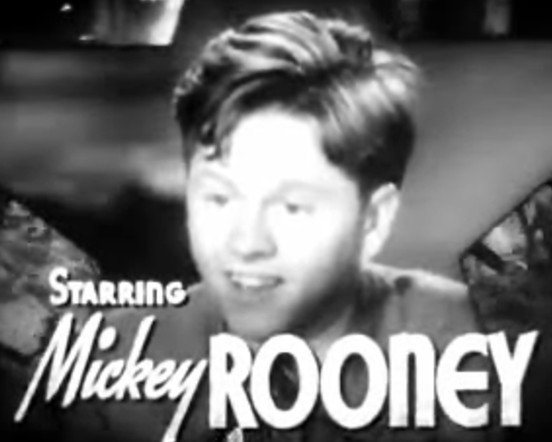
Story and characters
The central plot follows two teenagers who rally a group of friends to stage a production aimed at convincing their elders and a skeptical public that young performers can succeed on the legitimate stage. The storyline echoes the decline of traveling variety shows in the early 20th century and taps into contemporary themes of youthful ambition, self-reliance, and show-business continuity. Judy Garland and Mickey Rooney lead an ensemble cast; Garland's warm singing and Rooney's exuberant comic energy form the emotional core of the picture. See the performers' biographies at Judy Garland and Mickey Rooney. The film was staged by director and choreographer Busby Berkeley, whose visual approach emphasized synchronized movement and cinematic spectacle.
Adaptation and production
The movie is adapted from a successful 1937 Broadway stage musical originally associated with the team of Richard Rodgers and Lorenz Hart; the transition from stage to screen involved significant changes. MGM revised the book, altered casting, and replaced or cut most of the original stage numbers to suit cinematic pacing and the studio's musical style. The stage show had stronger ties to vaudeville traditions; the film reshaped those elements to emphasize the young stars and to provide a more family-friendly, screen-friendly narrative. The stage origins and Broadway lineage are often noted in discussions of the title; additional context can be found via Broadway resources and the composer Richard Rodgers.
Music, choreography and notable numbers
Although many songs from the stage production did not survive the adaptation, the film did introduce or popularize material connected to other Hollywood musicals. A new number, "Good Morning," written by Freed and Brown for the movie, later became widely known through its use in a different cinematic context; it featured prominently in the classic musical Singin' in the Rain, associated with Gene Kelly. The film also closed with an expansive finale created for the screen sometimes referred to as "God's Country." Berkeley's staging combined Broadway-derived choreography with cinematic camera movement to create lively production sequences that highlighted the young cast's dancing and group work.
Reception, awards and legacy
On release the picture was popular with contemporary audiences for its buoyant performances and MGM polish. It received two Academy Award nominations, including a Best Actor nod for Mickey Rooney and a music-scoring nomination, recorded among the Academy Awards entries of the year; see Academy Awards for details. Over time, film historians have treated the movie both as an example of the studio-era youth musical and as a less faithful adaptation of its stage source. The Garland–Rooney team remained one of the era's most marketable pairings.
Notable scenes and later edits
The film once included a brief satirical sketch in which Garland and Rooney caricatured contemporary political figures, a sequence that was later removed from some re-releases after the death of the real-life figure being lampooned. The movie's representation of veterans of traveling entertainment reflects larger shifts in American popular culture as vaudeville (referenced here as vaudeville) gave way to radio, film, and Broadway shows. Modern viewers often compare the film to the original stage version and to other MGM musicals when assessing its place in Hollywood history.
Distinctive facts
- The cinematic score deviated substantially from the 1937 stage score; most original stage songs were omitted or replaced.
- A number written for the film, "Good Morning," gained second life in later Hollywood musicals and is often associated with the golden age of screen choreography.
- The production helped cement the careers of its young stars and demonstrated MGM's formula for pairing juvenile talent in features aimed at mass audiences.
- For supplementary biographical and filmography information consult the studio and performer references such as Busby Berkeley and the actor pages above.
- Contemporary reporting and archival materials occasionally list variations in credits and attribution; the film's relationship to its stage progenitor is a frequent subject in musical-theatre studies.
Today, Babes in Arms is remembered both as a showcase for Garland and Rooney and as an example of Hollywood's habit of reshaping stage works to suit the demands of cinematic storytelling and star-driven marketing. For further background on performers, creators, and connected titles, see the referenced entries on the film and related artists: film entry, Garland, Rooney, Rodgers, and material about later uses such as Singin' in the Rain. For a note on the political caricature segment and the First Family, see contemporary commentary on the Roosevelts.
Questions and answers
Q: Who starred in the 1939 musical movie Babes in Arms?
A: The 1939 musical movie Babes in Arms starred Judy Garland and Mickey Rooney.
Q: Who directed the movie Babes in Arms?
A: The movie Babes in Arms was directed by Busby Berkeley.
Q: What is the movie Babes in Arms about?
A: The movie Babes in Arms is about the children of vaudeville performers who want to prove to their elders that they can sing and dance on Broadway.
Q: What is the source material for the movie Babes in Arms?
A: The movie Babes in Arms is based on the 1937 Broadway musical of the same name by Richard Rodgers and Moss Hart.
Q: Was all of the original music from the Babes in Arms musical used in the movie?
A: No, most of the original music from the Babes in Arms musical was cut for the movie.
Q: What popular song was written for the movie Babes in Arms?
A: The song "Good Morning" by Arthur Freed and Nacio Herb Brown was written for the movie Babes in Arms and was later featured in the Gene Kelly movie Singin' in the Rain.
Q: Was the movie Babes in Arms nominated for any Academy Awards?
A: Yes, Babes in Arms was nominated for two Academy Awards: Best Actor in a Leading Role (Mickey Rooney) and Best Music, Scoring (Roger Edens and Georgie Stoll).
Tags
Related articles
Author
AlegsaOnline.com Babes in Arms (1939 film) Leandro Alegsa
URL: https://en.alegsaonline.com/art/8028