
Babes in Toyland (1961 film)
1961 Walt Disney family musical adapting Mother Goose characters into a stage‑influenced fantasy; stars Tommy Sands and Annette Funicello and draws on the operetta tradition for its songs and staging.
1961 saw Walt Disney release a colorful family Disney production presented as a lighthearted musical movie built around nursery-rhyme figures. The film stars Tommy Sands as Tom Piper and Annette Funicello as Mary Contrary. Its characters and much of the story draw on familiar Mother Goose figures, giving the picture a deliberately storybook tone and broad appeal for children and families.
Image gallery
1 Image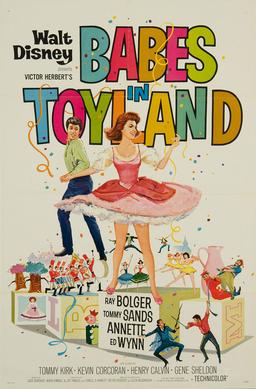
Overview
The picture adapts the toyland motif and many nursery-rhyme personalities into a single narrative, combining romance, light comedy and ensemble musical numbers. Costumes, sets and choreography are staged to evoke a theatrical, exaggerated fairy-tale world rather than naturalistic detail, with an emphasis on spectacle and family entertainment.
Origins and score
The film’s source material traces back to an early 20th-century operetta and to the long tradition of stage entertainments that assembled Mother Goose characters. The production incorporates music associated with that tradition, including well-known tunes often linked to the original stage pieces, reworked for a mid-century cinematic musical context.
Cast and performances
Principal performances highlight the leads’ screen personas and the film’s family-oriented tone. Supporting players and ensemble casts provide much of the choreography and comic interplay, helping to translate stage-style vignettes into a coherent film narrative with recurring musical motifs.
Production and release
Produced during a period when live-action family musicals were a regular part of the studio’s slate, the film emphasizes colorful production values and accessible songs. It was marketed to parents and children as a wholesome, theatrical family outing and later circulated in television and home formats as part of the studio’s catalog.
Reception and legacy
- Seen as a representative example of mid-20th-century family musicals that adapted stage material for the screen.
- Remembered for its use of familiar nursery imagery and spectacle rather than for realism.
- Part of a longer history of adaptations of the same operetta and toyland theme, each reflecting different production styles and audience expectations.
- Maintains a cultural presence through occasional broadcasts, home-video releases and recognition among fans of classic family musicals.
While tastes and critical responses vary, the 1961 film remains notable for its attempt to translate the charm of nursery-rhyme characters into a full-length cinematic musical, using catchy numbers, stylized design and family-friendly storytelling to reach a broad audience.
Related articles
Author
AlegsaOnline.com Babes in Toyland (1961 film) Leandro Alegsa
URL: https://en.alegsaonline.com/art/8029