
Polymer clay: composition, uses, and care for modeling and craft
Polymer clay is a pliable, PVC-based modeling material cured by heat. This article explains its composition, working properties, common techniques, uses in crafts, safety advice, and how it differs from natural clays.
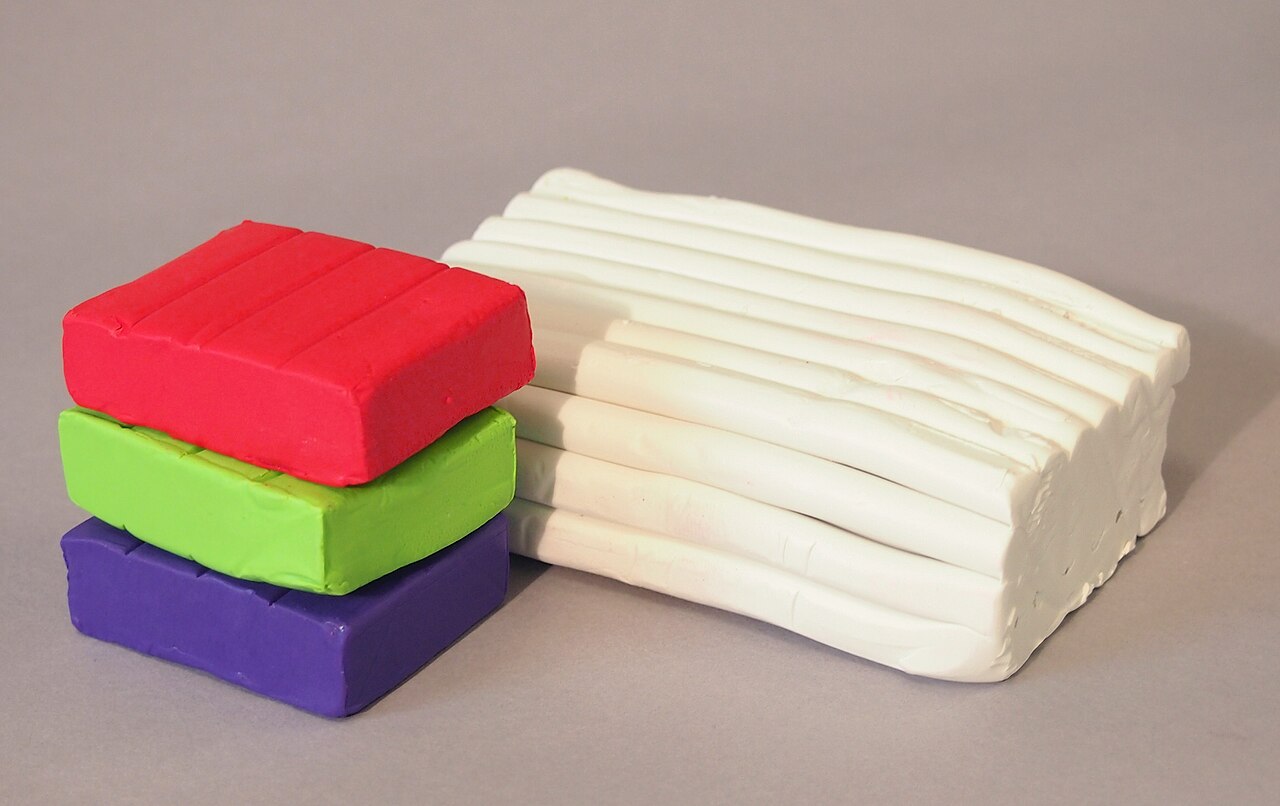
Polymer clay is a versatile modelling material used by hobbyists and professional makers. Unlike earthen clays, it contains little or no natural clay minerals and is instead a plasticized vinyl compound. The basic ingredient is a synthetic polymer, commonly polyvinyl chloride, combined with plasticizers, pigments and fillers to create a soft, kneadable mass often called "clay" in craft contexts. It serves many of the same functions as traditional modelling media while offering a different set of working and finishing options.
Image gallery
4 Images


Composition and working properties
The material is manufactured from dry polymer particles that are mixed with liquid plasticizers and other additives to give a putty-like consistency. Because it lacks natural clay constituents such as kaolin or bentonite, some writers refer to it simply as "polymer" rather than true clay. It is available in many colors and can be blended to produce custom shades. Key characteristics include long working time at room temperature, the need to condition by kneading before use, and flexibility when cured depending on formula and thickness.
Curing, finishing and tools
Polymer clay is made permanent by heating in a household or dedicated oven, which causes the polymer and plasticizers to set. Bakers and crafters typically follow the manufacturer's recommended schedule and avoid overheating. After curing, pieces can be sanded, drilled, painted or varnished. Common tools and techniques include caning and millefiori for patterned beads, armatures for sculpture, onlay and mokume gane for surface effects, and surface texturing with stamps and blades.
Uses, examples and popular brands
It is widely used for jewellery, miniatures, ornaments, doll parts, and decorative elements in mixed-media art. Known consumer brands and product lines are often tailored to specific needs—some formulas are softer for sculpting, others firmer for fine detail. Polymer clay occupies a prominent place in modern arts and craft practice because of its color range and ease of finishing.
- Typical techniques: conditioning, caning, texturing, encapsulation, finishing.
- Common tools: blades, pasta machines for conditioning, molding tools, heat-safe trays.
As a type of modelling clay, polymer differs from oil-based putties and water-based ceramic clays in handling and cure method. It does not rely on evaporation or firing in a kiln to harden; instead, heat activates the chemical set. Because the material is formulated from PVC and additives, it should be used according to safety guidance: avoid burning, do not use household cookware to bake craft pieces, and work in a well-ventilated area.
For more detailed technical or safety information consult manufacturer instructions and material datasheets. Additional reading on the chemical nature of the ingredients and comparisons with natural clay minerals or with other polymer systems can be found through manufacturer resources and specialty craft sources. A few dedicated resources and supplier pages give step-by-step project guidance and ingredient overviews for beginners and experienced users alike (polymer basics) and (comparisons).
For community tutorials, galleries, and marketplaces look to hobby forums and craft networks where techniques and finishing tips are shared; many such portals and forums host galleries and how-to guides that complement product documentation (modelling resources) and material reviews (polymer references). Safety, correct curing and informed finishing are the best ways to get durable, attractive results from polymer clay.
Related articles
Author
AlegsaOnline.com Polymer clay: composition, uses, and care for modeling and craft Leandro Alegsa
URL: https://en.alegsaonline.com/art/77859