
Plywood: manufactured wood panels made from cross‑layered veneers
Overview of plywood: how it is made, its structure and grades, common types (marine, structural, decorative), main uses, advantages and limitations, and environmental considerations.
Plywood is an engineered wood panel produced by bonding together thin layers of wood veneer with the grain of each layer rotated relative to the adjacent layers. This cross‑grain construction reduces the tendency of the board to split, swell, shrink or warp, producing a stable, strong sheet useful in many building and manufacturing applications. Plywood can combine inexpensive interior core layers with more attractive outer veneers to give both structural performance and a finished appearance.
Image gallery
9 Images
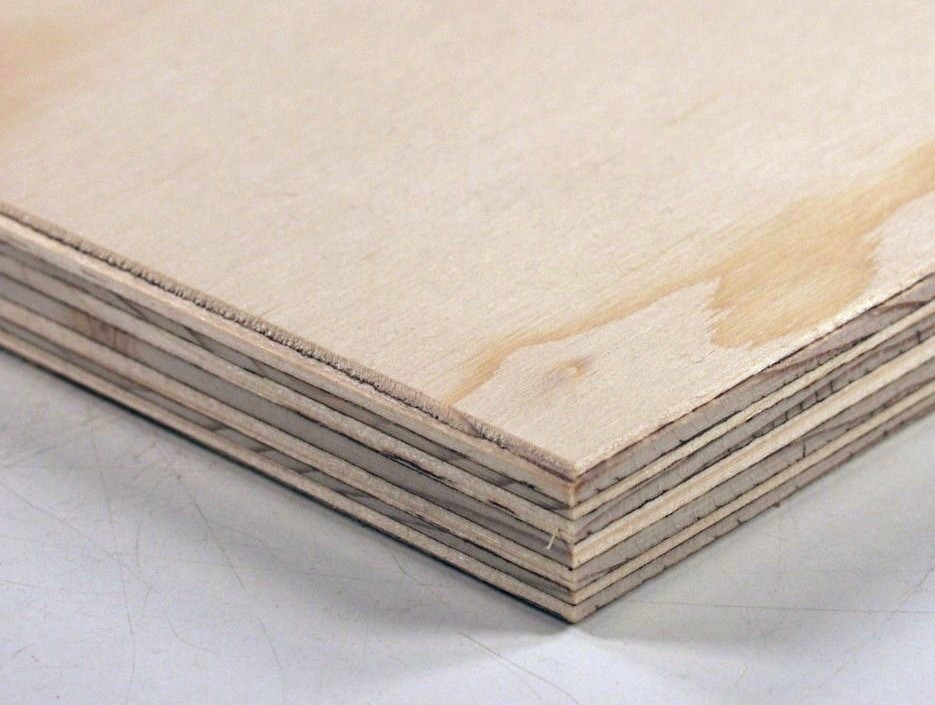





How plywood is made
Manufacture usually begins with rotary peeling, slicing or sawing logs to produce veneers that are a few millimetres thick. These veneers are dried, inspected and assembled into a layup in which the grain direction alternates between adjacent plies. Adhesives appropriate to the intended exposure are applied between plies, and the assembly is pressed—often under heat—to cure the glue and compress the panel into a uniform sheet. Typical glues include urea‑formaldehyde for indoor panels and more water‑resistant phenolic resins for exterior or marine grades. For further technical details see manufactured wood and adhesive considerations at gluing.
Characteristics and varieties
Plywood is valued for its combination of strength, dimensional stability and relatively low cost compared with solid timber of equivalent size. It is available in a range of face veneers—softwood species for structural panels or decorative hardwoods for furniture faces—and in many thicknesses, from a few millimetres to several centimetres, produced by varying the number of plies. Special varieties include:
- Marine plywood: manufactured with higher‑quality veneers and durable adhesives to resist moisture and reduce the risk of delamination in damp conditions.
- Exterior and structural plywood: designed for load‑bearing uses in construction and exposed applications.
- Decorative and furniture plywood: with attractive hardwood faces for visible surfaces.
- Flexible (bendy) plywood: very thin plies enabling curvature for joined furniture or interior panelling.
- Specialty types: aircraft and boat grades historically used particular species and strict manufacturing controls for critical applications.
Grades, standards and identification
Plywood is often graded by face quality and intended end use. A common face grading system runs from a high‑quality finish (often labeled A) to lower grades (such as D) that accept more knots or repairs. Separate structural classifications address load capacity, moisture resistance and compliance with building codes; consult local standards when specifying panels for structural work. For an overview of cosmetic and performance grading, see grading.
Common uses and examples
Plywood appears across construction and manufacturing: sheathing, subfloors and roofing in buildings; cabinetry and furniture where veneered faces provide a finished look; exterior cladding and architectural panels; and specialty uses such as boat interiors where marine grades are needed. It is also widely used for temporary works, packaging and small structures like garden sheds. Examples include garden and hobby projects such as sheds, exterior applications like cladding, and household joinery such as cabinets. Major furniture producers frequently use plywood and related panel products in affordable furniture lines—see product examples from global retailers like IKEA.
Advantages, limitations and sustainability
Plywood offers a favorable strength‑to‑weight ratio and better dimensional stability than an equivalent solid board, with efficient use of timber and the option to display high‑quality veneers. Limitations include exposed edges that reveal ply layers and require finishing, potential delamination if the wrong adhesive or exposure conditions occur, and emissions from some formaldehyde‑based resins. Environmental considerations include responsible sourcing of veneers, certification schemes to ensure sustainable forestry practices, and developments in lower‑emission adhesives. Choosing the right grade, species and glue line for the intended environment helps maximize service life and reduce maintenance.
In summary, plywood is a versatile engineered panel whose layered construction offers mechanical and practical benefits across many industries. Selection should balance appearance, strength, moisture resistance and environmental criteria to suit the application.
manufactured wood · gluing · sheds · cladding · cabinets · grading · IKEA
Related articles
Author
AlegsaOnline.com Plywood: manufactured wood panels made from cross‑layered veneers Leandro Alegsa
URL: https://en.alegsaonline.com/art/77542