
Polyethylene (PE): Properties, Types, Uses, and Environmental Aspects
Polyethylene (PE) is a common thermoplastic polymer used in packaging, pipes, films and many molded products. Overview, major grades, production history, applications, recycling and environmental issues.
Overview
Polyethylene, commonly abbreviated PE (also called polyethene), is a versatile thermoplastic polymer made from the monomer ethylene. It is one of the most widely produced plastics worldwide, used for everything from thin film wraps to heavy-duty piping. Global production exceeds tens of millions of tonnes annually, reflecting its importance to modern manufacturing and packaging.
Image gallery
10 Images




Structure and major grades
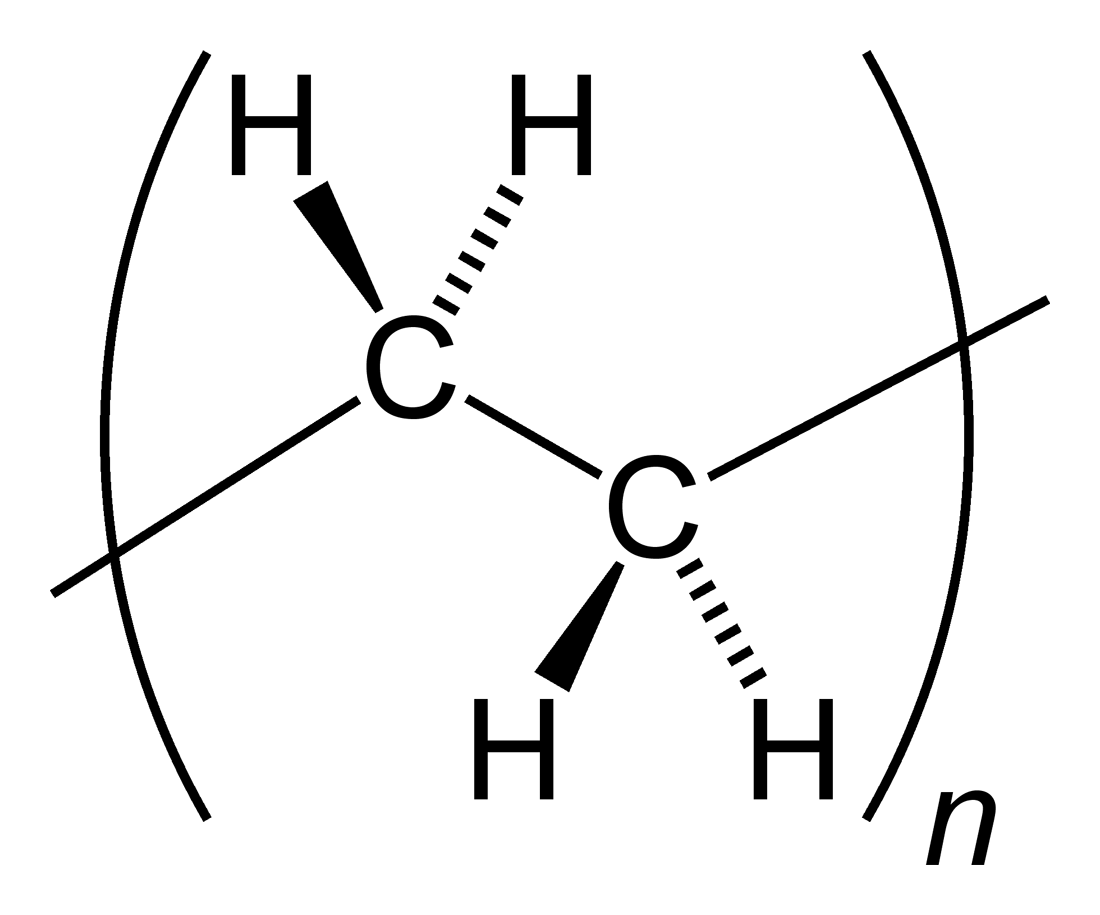
Polyethylene is a long-chain hydrocarbon polymer. Variations in branching and molecular weight give distinct commercial grades with different densities and mechanical properties. The principal families are:
- Low-density polyethylene (LDPE): highly branched, flexible, transparent films and bags.
- Linear low-density polyethylene (LLDPE): copolymers offering improved tensile strength and tear resistance, commonly blended into film products such as plastic wrap.
- High-density polyethylene (HDPE): more linear and crystalline, stiffer and tougher — used for bottles, containers and pipes.
- Ultra-high-molecular-weight polyethylene (UHMWPE): extremely long chains giving exceptional abrasion resistance and impact strength for specialized engineering uses.
History and production
Early laboratory observations of polyethylene date back to the late 19th and early 20th centuries, with commercial production beginning in the 1930s. Different polymerization methods produce different grades: high-pressure free-radical processes yield LDPE, while catalytic processes (using Ziegler–Natta or related catalysts) enable the production of HDPE and linear copolymers. These process choices control branching, molecular weight and, consequently, material performance.
Applications and importance
PE’s combination of chemical resistance, ease of processing, and low cost makes it ubiquitous. Common uses include packaging films and bags, bottles, containers, geomembranes, electrical cable insulation, and piping for water and gas. It is widely used in both consumer goods and industrial products and can be processed by extrusion, blow molding and injection molding.
Recycling and environmental considerations
Polyethylene is recyclable and is identified by resin identification codes (for example, HDPE often appears as code 2 and LDPE as code 4). Recycling helps reduce waste but collection and reuse rates vary by region. Like other durable plastics, PE resists natural degradation and can contribute to plastic pollution and microplastic formation when mismanaged. Efforts to improve recycling infrastructure, design for recyclability, and development of chemically or biologically based recovery technologies are ongoing.
Distinctions and notable facts
PE is chemically distinct from other common polymers such as polyvinyl chloride (PVC); it lacks chlorine and typically offers better chemical resistance but different mechanical and flame properties. Blends and copolymers are frequently used to tailor properties for specific applications, and additives can modify color, UV stability, slip or tack for films. Its broad utility and range of grades are why polyethylene remains foundational to modern materials engineering.
Related articles
Author
AlegsaOnline.com Polyethylene (PE): Properties, Types, Uses, and Environmental Aspects Leandro Alegsa
URL: https://en.alegsaonline.com/art/77848
Sources
- essentialchemicalindustry.org : "Poly(ethene) (Polyethylene)"
- wikidata.org : wikidata.org/wiki/Q143429
- id.ndl.go.jp : 00569150