
Power transmission
Overview of power transmission: how energy is carried from source to use, common methods (mechanical, electrical, fluid), history, applications, and key distinctions.
Overview
Power transmission is the process of moving usable energy from the place it is generated to where it is consumed. In technical terms, energy delivered per unit time is called power. The International System of Units defines the basic unit of power as the watt, equivalent to one joule per second or one newton-metre per second. Practical power transmission deals with how to move that rate of work efficiently, safely and reliably.
Image gallery
3 Images

Common methods and components
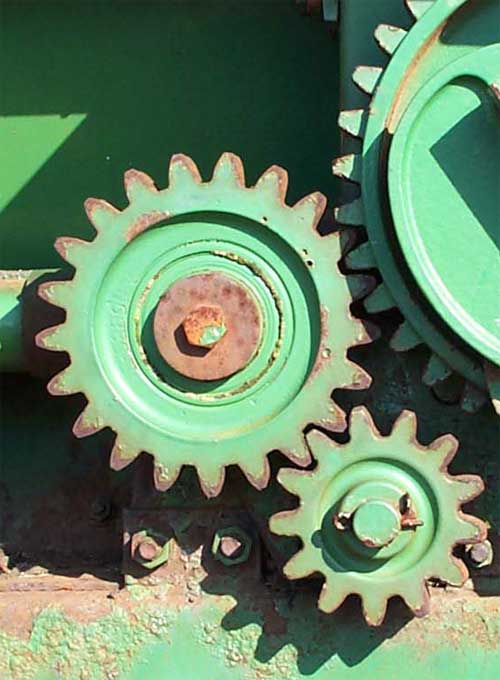
Power can be transmitted by several physical means. Typical categories include mechanical systems that use rotating shafts, gears, belts and couplings; electrical systems using conductors, transformers and switchgear; and fluid systems such as hydraulic lines or pneumatic pipes. Components that matter across methods include conductors or shafts, converters (motors, generators, transformers), protective devices and support infrastructure to reduce losses and maintain stability.
History and development
Historically, power transmission began with simple mechanical linkages—mills and water wheels turned nearby machinery. The industrial revolution introduced long shafting and belt drives. The rise of electric generation in the late 19th and early 20th centuries shifted emphasis to electrical transmission, spawning national grids, high-voltage alternating current (AC) systems and later high-voltage direct current (HVDC) for long-distance links. Advances in materials, power electronics and control have continually improved capacity and efficiency.
Applications and importance
Power transmission underpins modern life: transmitting electricity from power plants to homes and industry, delivering mechanical power inside machines, and carrying torque in vehicles. It is central to integrating renewable energy sources, linking remote generation sites to load centers, and supporting transportation and manufacturing. Efficient transmission reduces energy waste and enables reliable service.
Key considerations and distinctions
- Energy vs. Power: energy is a quantity (how much), power is a rate (how fast).
- Transmission vs. Distribution: transmission moves large quantities over long distances; distribution delivers to end users.
- Losses and efficiency: heat, friction and electrical resistance cause losses that designers minimise with appropriate materials, insulation and topology.
- Safety and control: protective relays, circuit breakers and governors prevent damage and manage stability.
Further reading and technical standards cover specific design practices, insulation coordination, conductor sizing, and international terminology; for general definitions see authoritative technical glossaries and engineering textbooks (energy, power, time). Additional resources explain the unit definitions referenced above (watt, joule, newton).
Related articles
Author
AlegsaOnline.com Power transmission Leandro Alegsa
URL: https://en.alegsaonline.com/art/78552