
Power system harmonics: causes, effects and mitigation
An overview of electrical power harmonics: what they are, typical sources, effects on equipment and networks, measurement and standards, and common mitigation methods including filters.
Overview
Power system harmonics are voltage or current components whose frequencies are integer multiples of the fundamental utility frequency. Instead of a pure sinusoid at the system nominal frequency, waveforms become distorted when harmonic components are present. This distortion is a common power quality concern because most electrical equipment and protection systems are designed to operate at the fundamental frequency.
Image gallery
3 Images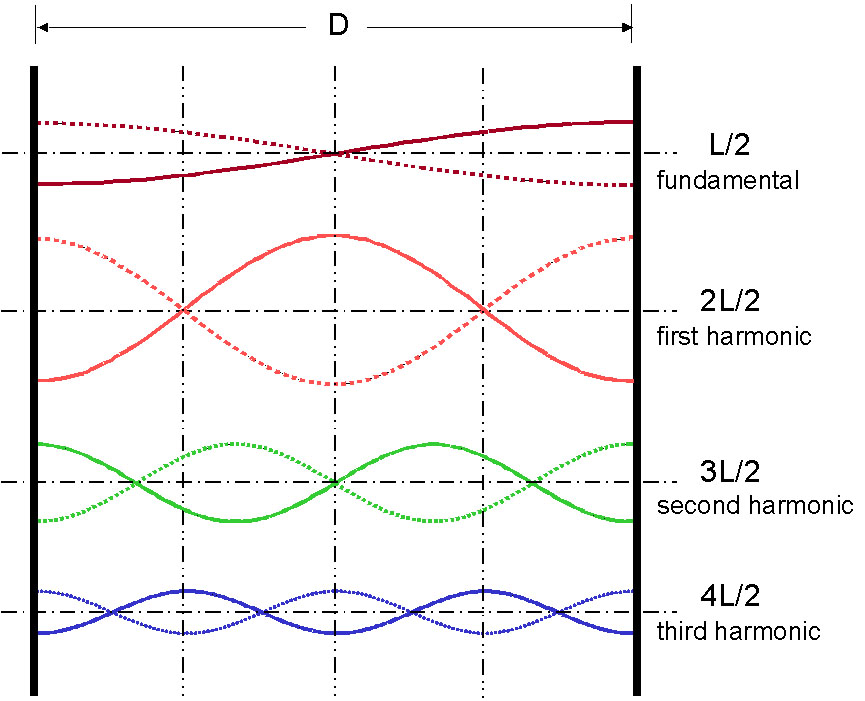


Definition and characteristics
Harmonics are described by their order (2nd, 3rd, 5th, etc.), where the order is the multiple of the base frequency. Harmonic distortion is often quantified by indices such as total harmonic distortion (THD) for voltage or current. Some harmonics, for example triplen (third, ninth, etc.), have particular behaviour in three-phase systems and can accumulate in neutrals, causing overheating and unexpected neutral currents.
Common sources
Nonlinear loads draw current that is not proportional to the applied voltage and therefore generate harmonics. Typical sources include:
- Converters and rectifiers in variable-frequency drives and motor controls (technical overview).
- Uninterruptible power supplies and switch-mode power supplies used in electronic equipment (power electronics).
- Fluorescent lighting with electronic ballasts and certain types of industrial furnaces (lighting and loads).
- Large computer data centers and telecommunications equipment (data center concerns).
Effects and examples
Harmonic currents and voltages can increase heating in transformers, motors, and cables, reduce the life of capacitors and insulation, cause nuisance tripping of protection devices, and introduce measurement errors in meters. Resonant interaction between network impedance and capacitors can amplify certain harmonic orders. Practical examples include overheated neutrals in 4-wire systems and audible noise in motors or transformers under harmonic stress (case studies).
Measurement and standards
Engineers measure harmonics using spectrum analysis and report metrics such as THD and individual harmonic magnitudes. Industry guidelines and limits are provided by standards to manage acceptable levels of harmonic injection and to protect utility and customer equipment (standards info).
Mitigation and filters
Mitigation strategies aim to reduce the generation of harmonics or to remove them from the network. Common approaches include:
- Passive filters tuned to absorb selected harmonic orders.
- Active harmonic filters that inject counteracting currents to cancel harmonics.
- Design choices such as multi-pulse converters, phase-shifting transformer connections, and K-rated transformers to tolerate harmonic heating.
- Proper system planning to avoid resonant conditions and to place harmonic mitigation at strategic points in the network (filter design).
Understanding harmonics requires attention to both the sources within a facility and the wider network impedance. Effective management combines measurement, adherence to standards, and appropriate mitigation to reduce the risk of equipment damage and maintain reliable power quality.
Related articles
Author
AlegsaOnline.com Power system harmonics: causes, effects and mitigation Leandro Alegsa
URL: https://en.alegsaonline.com/art/78551
Sources
- snowman.com.au : "Electrical heating"