
Pneumatics: Principles, Components, History and Common Uses
Survey of pneumatics—the use of compressed air for mechanical work—covering basic components, historical development, typical applications, advantages and limitations.
Overview
Pneumatics is the branch of engineering that uses pressurized gases, most commonly compressed air, to transmit power and produce mechanical motion. Systems convert electrical or mechanical input into stored air pressure and then use that pressure to drive actuators such as cylinders and air motors. Pneumatic technology appears throughout manufacturing, transportation and tools because of its relative simplicity and robustness. See general specifications for compressed air supplies at compressed air.
Image gallery
3 Images
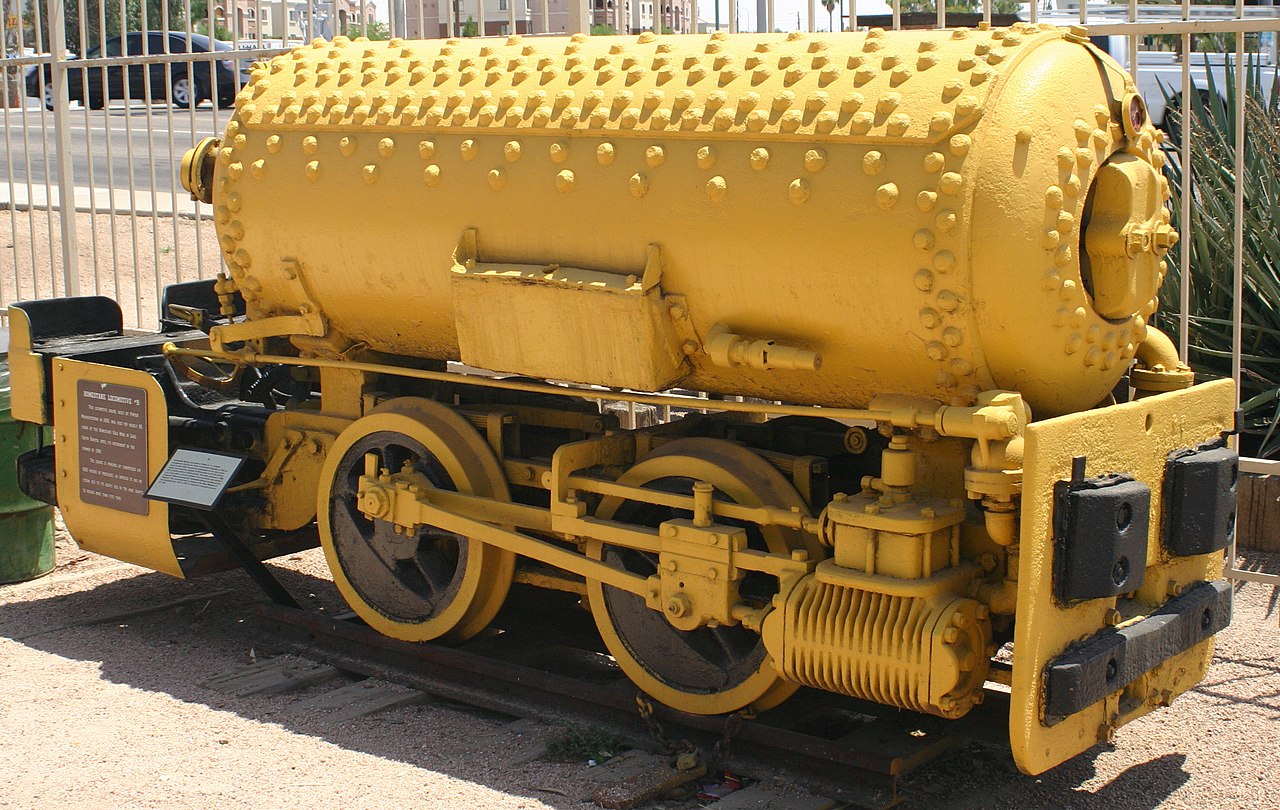

Key components and characteristics
Typical pneumatic systems include a compressor, an air reservoir (receiver), filtration and drying equipment, pressure regulators, directional and flow-control valves, tubing and fittings, and final actuators. Common actuator types are linear cylinders and rotary air motors. Because the working fluid is a gas, pneumatics exhibits compressibility, which affects control precision and cushioning behavior.
- Compressor: produces and pressurizes air.
- Preparation: filters, dryers and regulators that protect equipment.
- Control: valves, sensors and manifolds govern motion.
- Actuator: cylinders, motors or vacuum devices that perform work.
History and development
Interest in pneumatic effects dates back to early scientific experiments with air pressure and vacuum. Practical pneumatic tools and industrial systems expanded rapidly from the 19th century as reliable compressors and valves became available. Over the 20th and 21st centuries, advances in materials, seals, and electronic controls (including integration with PLCs and sensors) increased speed, repeatability and the complexity of pneumatic automation.
Uses and examples
Pneumatic systems appear in many settings: factory automation for pick-and-place and clamping; pneumatic conveying systems that move powders and granules; construction tools such as jackhammers and nail guns; vehicle braking systems (air brakes on heavy trucks and trains); and specialized environments where electrical equipment is unsuitable. Pneumatics is often chosen where electric motors cannot be used for safety reasons, for example in atmospheres with explosive dust or gases; consult guidance on electrical alternatives at electric motors and safety considerations at safety. Mining and process industries may rely on air-operated devices when combustible gases are present.
Advantages, limitations and notable facts
Advantages include simple design, cleanliness (no hydraulic oil leaks), fast response, and good power-to-weight for many hand tools. Limitations arise from air compressibility, which can limit positional accuracy and produce rebound or cushioning, and from energy losses in compressing air. Noise and the need to treat and dry compressed air are practical considerations for system design. Modern electro-pneumatic controls mitigate many earlier precision issues, making pneumatics a flexible choice for a wide range of industrial tasks.
Questions and answers
Q: What is pneumatics?
A: Pneumatics is a type of mechanical motion that uses compressed air.
Q: What are some uses of pneumatics?
A: Pneumatics can be used in many industries to move powders and devices. It is also used in situations where electric motors are unsafe, such as in mines where explosive dust or gases may be present.
Q: What is a pneumatic transfer system?
A: A pneumatic transfer system is a system that uses compressed air to move powders or devices.
Q: Why would electric motors be unsafe in certain situations?
A: Electric motors may be unsafe in situations where explosive dust or gases may be present, such as deep in a mine.
Q: What industries employ pneumatic transfer systems?
A: Many industries employ pneumatic transfer systems, including the food and beverage industry, the pharmaceutical industry, and the chemical industry.
Q: What are some advantages of using pneumatics?
A: Some advantages of using pneumatics include its simplicity, reliability, and safety.
Q: How is pneumatics different from hydraulics?
A: Pneumatics uses compressed air, while hydraulics uses liquid to create mechanical motion. Additionally, pneumatics is more suitable for applications where cleanliness is important, as compressed air is cleaner than hydraulic fluid.
Related articles
Author
AlegsaOnline.com Pneumatics: Principles, Components, History and Common Uses Leandro Alegsa
URL: https://en.alegsaonline.com/art/77548