
Piranha: biology, behavior and interactions with people
Piranhas are South American freshwater fishes known for sharp teeth and schooling behavior. This article summarizes their anatomy, ecology, reproduction, distribution, cultural reputation and distinctions among species.
Overview
Piranhas are a group of freshwater fishes native to lowland rivers and lakes in South America, especially east of the Andes. The common name covers several species with a reputation for aggressive feeding and distinctive razor-like teeth. While popular culture often portrays them as man-eating, their behavior in nature is more varied and context-dependent.
Image gallery
8 Images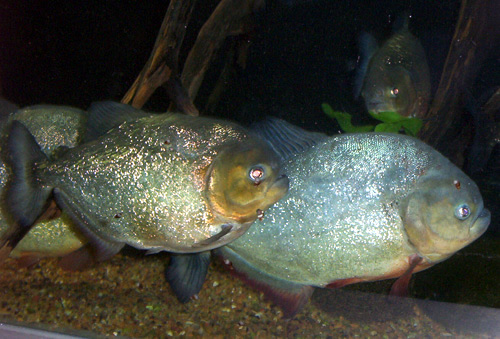


Anatomy and behavior
Piranhas share several recognizable features: a deep, laterally compressed body; triangular, interlocking teeth set in robust jaws; and a strong bite for their size. Many species form schools, a behavior that can reduce predation risk and improve feeding efficiency. Diets range from opportunistic scavenging to active predation and include insects, fish, plant material and carrion.
Distribution and habitat
Most piranha species occur in tropical and subtropical river basins such as the Amazon and Orinoco systems. They prefer warm, slow-moving waters with abundant cover such as submerged vegetation or fallen trees. Human activity has led to introduced populations in some regions outside their native range, and they have been recorded in captive and released situations.
Reproduction and life cycle
Piranhas reproduce by laying eggs; many species build nests in shallow water and show some parental care, with adults guarding eggs and newly hatched young. Life history traits vary by species and habitat, but seasonal flooding often influences spawning periods and juvenile growth by changing available food and shelter.
Human interactions and cultural notes
Piranhas have cultural prominence in South America and worldwide because of sensational reports and film portrayals. In reality, attacks on humans are uncommon and usually involve small bites or defensive responses. They are also of interest to fisheries, aquarists and researchers studying feeding mechanics and ecosystem roles.
Species, taxonomy and useful resources
Several genera include fish commonly called piranhas; among the better-known are Pygocentrus and Serrasalmus. Distinguishing species relies on body shape, dentition, coloration and behavior. For general background and region-specific information consult habitat overviews and taxonomic guides: Freshwater fish overview, South America river systems, Andes watershed context, Regional distribution notes, Island introductions and records, Conservation and human interactions.
Related articles
Author
AlegsaOnline.com Piranha: biology, behavior and interactions with people Leandro Alegsa
URL: https://en.alegsaonline.com/art/77071