
Pianola (player piano): self-playing piano and its mechanism
A pianola, or player piano, is an acoustic piano fitted with a pneumatic or electric mechanism that reads punched paper rolls to play music automatically, popular in homes and venues circa late 19th–early 20th century.
The pianola, commonly called the player piano, is a traditional acoustic piano fitted with an internal mechanism that permits automatic performance. Instead of a performer depressing keys manually, a set of pneumatics and valves reads patterns of holes in a paper roll and converts them into motion that causes the corresponding keys to sound. Early instruments were powered by foot-operated bellows; later examples used electric blowers or motors. When active, a pianola's keys appear to "play themselves," while levers on the instrument allow a human operator to influence tempo, dynamics and phrasing.
Image gallery
9 Images




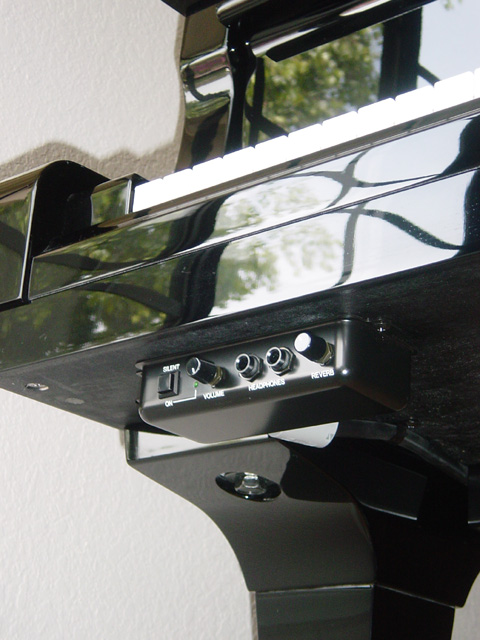
Mechanism and main parts
The core of a pianola's system is the paper music roll: a long strip of paper with holes punched to represent notes and some expressive instructions. Air pressure from the foot pedals or an electric pump flows through a tracker bar that senses these holes and opens tiny valves. Each of the piano's 88 notes is served by a small pneumatic called a valve or tracker pneumatic that triggers the key action. Larger bellows generate the vacuum or pressure necessary to operate the mechanism and to drive the roll spool. Additional pneumatics control features such as motor speed, tracking (to keep the roll aligned), and the sustain and soft pedal effects. Reproducing pianos, a later refinement, automated expressive nuances by encoding dynamics and timing onto specialized rolls.
History and development
The pianola emerged in the late 19th century and was developed through the 1880s and 1890s as manufacturers refined pneumatic systems and standard roll formats. Inventors and firms across Europe and North America competed to produce reliable actions and roll circulation. By the late 19th century and into the early 20th century the player piano became a desirable domestic luxury: it allowed amateurs to enjoy complex repertoire and enabled popular tunes to be widely distributed as roll sets and printed sheet music. The technology evolved from purely mechanical bellows to electrically assisted models, broadening where and how the instruments were used.
Uses, cultural impact and decline
Pianolas were common in middle-class parlors, saloons and public gathering spaces. They provided entertainment before widespread radio and phonograph access and were sometimes used for accompaniment in small theatres. Users termed "pianolists" or "player-pianists" could manipulate expression levers to interpret a roll. The rise of recorded sound—principally the gramophone and phonograph—along with changing musical tastes and the economic shifts of the 1920s contributed to a decline in mass-market player-piano sales. Nevertheless, enthusiasts, collectors and restorers have preserved many instruments, and modern artisans produce new rolls and restoration services.
Distinctive facts and legacy
- Not all player pianos are identical: basic player-piano models simply trigger notes, while reproducing systems aimed to replicate pianists' expressive timing and dynamics more faithfully.
- Some later models used electric motors rather than foot-operated bellows, making continuous performance easier.
- Pianolas shaped music distribution: the roll format allowed popular and classical pieces to circulate widely before widespread recording technologies matured.
- Interest in player pianos continues among collectors, museums and digital-hybrid projects that combine mechanical action with modern MIDI control.
Because of their combination of mechanical ingenuity and musical purpose, pianolas remain an important chapter in the history of automated music. They illustrate how engineering and domestic culture intersected to change how people listened to and participated in music around the turn of the 20th century. For further technical or historical details see sources on early pneumatic instruments and the evolution of the 1880s innovations, the instrument's rise through the late 19th century and early 20th century, and its decline in the 1920s following the spread of the gramophone.
Related articles
Author
AlegsaOnline.com Pianola (player piano): self-playing piano and its mechanism Leandro Alegsa
URL: https://en.alegsaonline.com/art/76699